Model Answer:
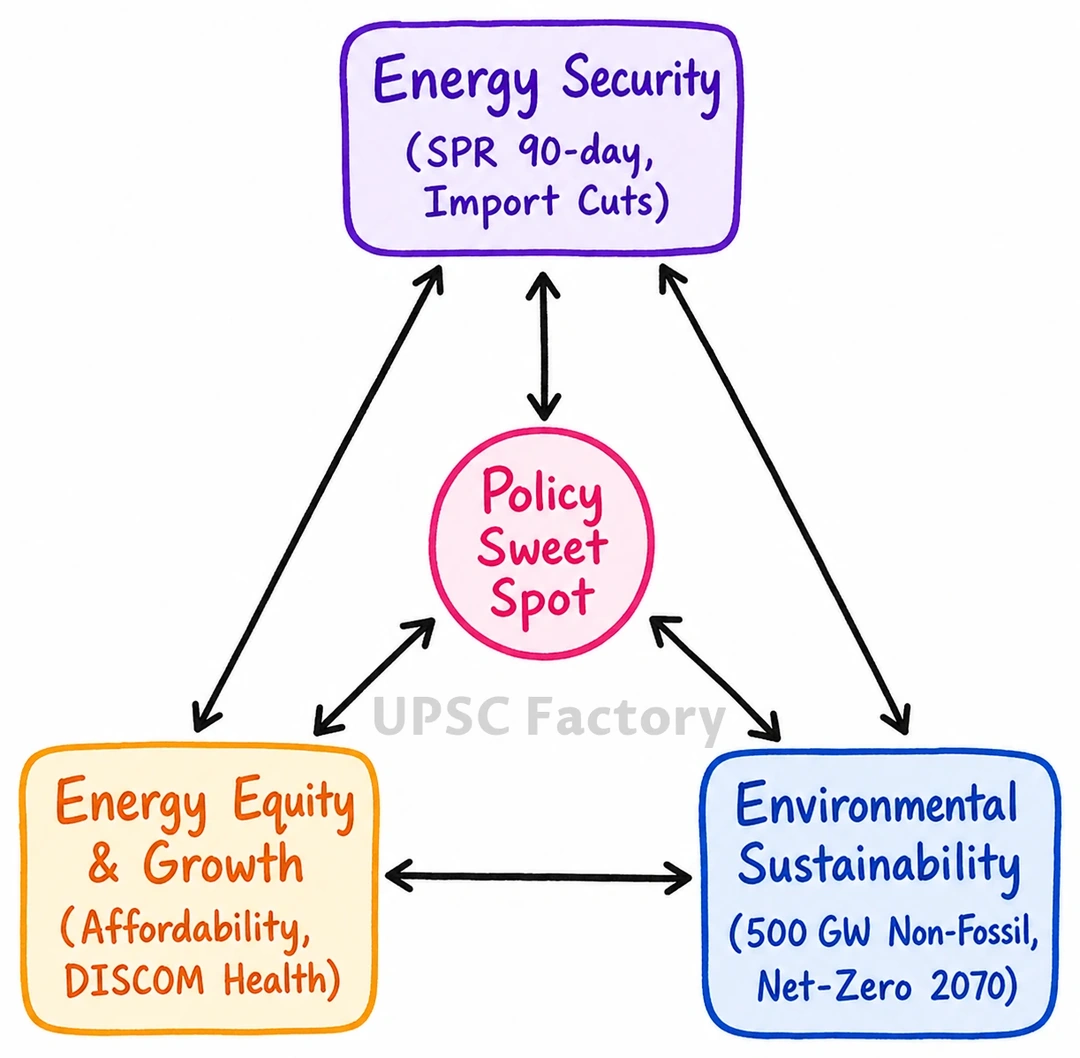
India’s energy security involves navigating the World Energy Council’s Energy Trilemma—balancing energy security, energy equity (affordability/access), and environmental sustainability to support a $5-trillion economic trajectory.
Key Challenges to India’s Energy Security
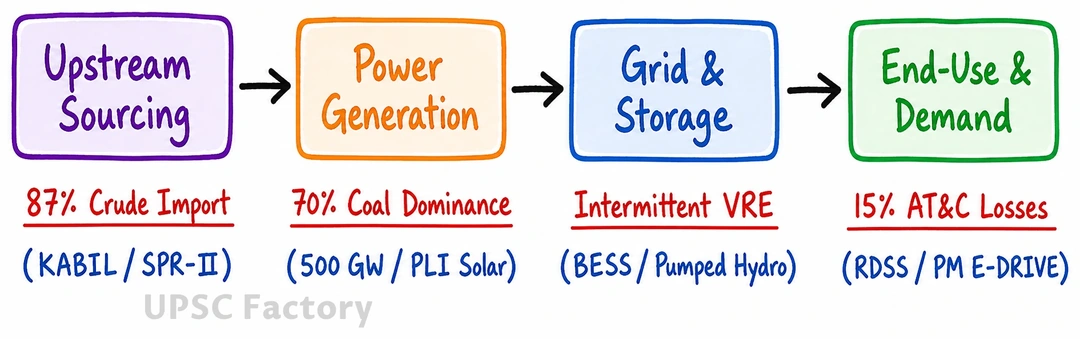
- High Import Dependency: India imports over 87% of its crude oil and 50% of natural gas, exposing macro-stability to geopolitical shocks (e.g., West Asian conflicts, Red Sea crisis).
- Limited Strategic Petroleum Reserves (SPR): Existing underground SPR capacity (ISPRL: ~9.5 days) falls significantly short of the 90-day International Energy Agency (IEA) mandate.
- Coal Dominance and Logistics Bottlenecks: Despite decarbonization goals, coal fuels ~70% of electricity; domestic supplies face high ash content and rake shortages (Indian Railways freight congestion).
- DISCOM Financial Distress: High Aggregate Technical & Commercial (AT&C) losses (~15%) and tariff gaps constrain infrastructure modernization and timely payments to green power generators.
- Clean Energy Supply-Chain Vulnerabilities: Heavy import reliance on China for solar PV cells (60-70%) and critical minerals (Lithium, Cobalt, Nickel) creates supply-side risks for EVs and storage.
- Grid Intermittency and Storage Deficits: Rising share of variable renewable energy (VRE) threatens grid stability due to inadequate Battery Energy Storage Systems (BESS) and pumped hydro capacity.
Strategic Measures for the Energy Trilemma
- Accelerate Green Energy Alternatives: Expand non-fossil capacity to 500 GW by 2030 and scale alternative fuels (National Green Hydrogen Mission, 20% Ethanol Blending by 2025-26).
- Expand Strategic & Domestic Upstream Capacity: Expedite SPR Phase-II (commercial-cum-strategic models) and boost domestic exploration under the Open Acreage Licensing Policy (OALP).
- Strengthen Grid Flexibility & Storage: Deploy utility-scale Battery Energy Storage Systems (BESS viability gap funding) and develop closed-loop Pumped Storage Plants (PSPs).
- DISCOM Modernization & Tariff Rationalization: Enforce prepaid smart metering, eliminate cross-subsidies, and push dynamic time-of-day tariffs (Revamped Distribution Sector Scheme – RDSS).
- Secure Critical Mineral Value Chains: Acquire overseas mineral assets through Khanij Bidesh India Ltd. (KABIL), leverage the Mineral Security Partnership (MSP), and promote domestic battery recycling.
- Decarbonize End-Use Sectors: Electrify transport (PM E-DRIVE scheme), enforce energy-efficient construction (ECBC codes), and operationalize the Indian Carbon Market (CCTS).
Synchronizing strategic storage, supply-chain localization, and aggressive clean energy adoption will ensure an energy-independent, cost-resilient foundation for Viksit Bharat @2047 while meeting Net-Zero 2070 commitments.