Model Answer:
India hosts the world’s third-largest startup ecosystem (>1.4 lakh DPIIT-recognized startups), acting as an engine of decentralized growth, high-value employment, and technological self-reliance.
Promoting Entrepreneurship, Innovation, and Employment
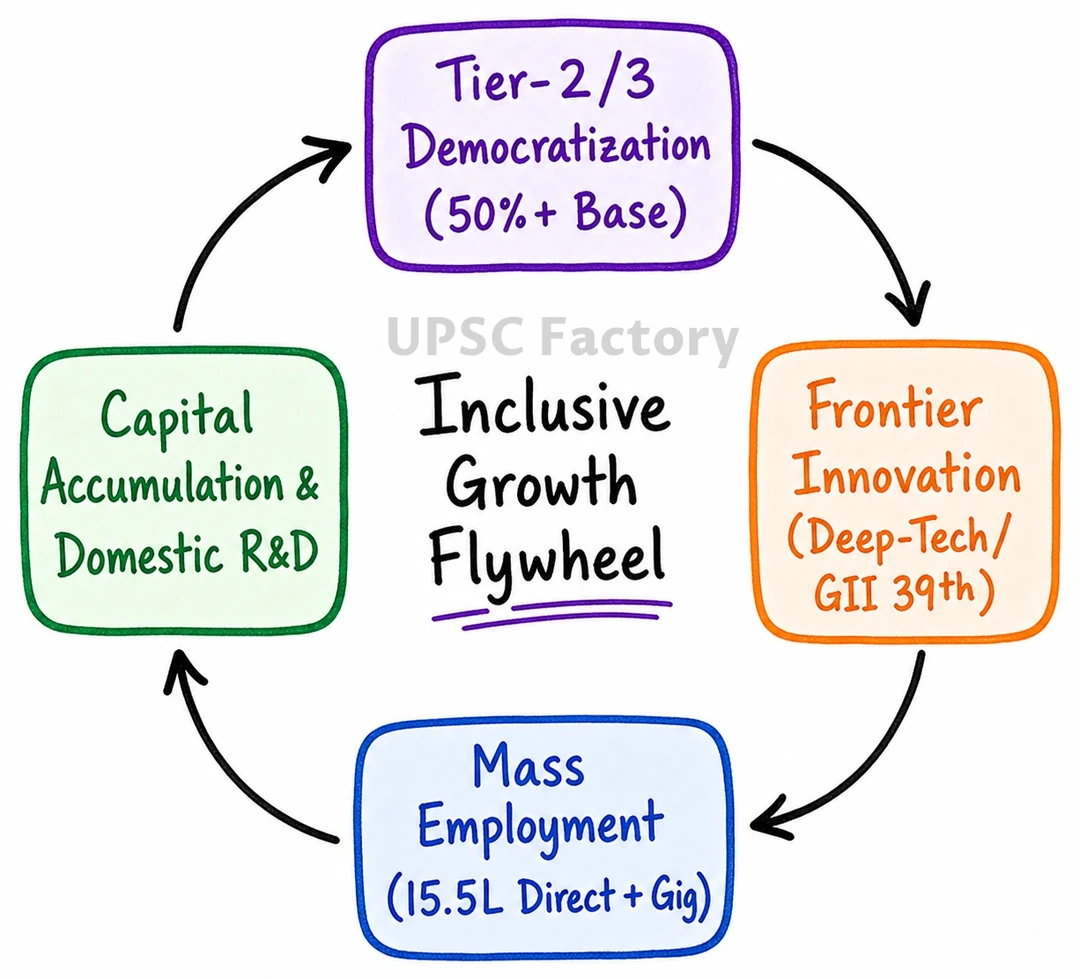
- Democratizing Entrepreneurship: Over 50% of recognized startups emerge from Tier-2 and Tier-3 cities, fostering grassroots enterprise and women-led innovation (e.g., Stand-Up India, WEP).
- Frontier Innovation: Fostering high-tech capabilities in space-tech, fintech, and agritech (e.g., Agnikul Cosmos, DeHaAT), elevating India to 39th on the Global Innovation Index.
- Mass Employment Generation: Generated over 15.5 lakh direct jobs (DPIIT data) alongside millions of tech-enabled gig livelihoods (e.g., Zomato, Porter).
- Import Substitution: Building indigenous alternatives in defence manufacturing, drones, and medical devices under Atmanirbhar Bharat.
Dual Bottlenecks: Domestic vs. Global Challenges
- Domestic Challenges:
- Funding Winter & Regulatory Friction: Reduced late-stage capital availability, high compliance burden, and complex corporate restructuring.
- Low R&D Commercialization: Sub-optimal industry-academia linkages and low gross domestic R&D expenditure (~0.64% of GDP).
- External Flipping: Startups incorporating abroad due to taxation disparities and easier access to overseas public markets.
- Global Challenges:
- Macroeconomic Headwinds: Sustained global inflation, high overseas interest rates, and cautious foreign venture capital sentiment.
- Regulatory & Trade Barriers: Stringent cross-border data localization laws (e.g., EU-GDPR) and aggressive IP litigations by foreign incumbents.
Strategic Measures to Overcome Challenges
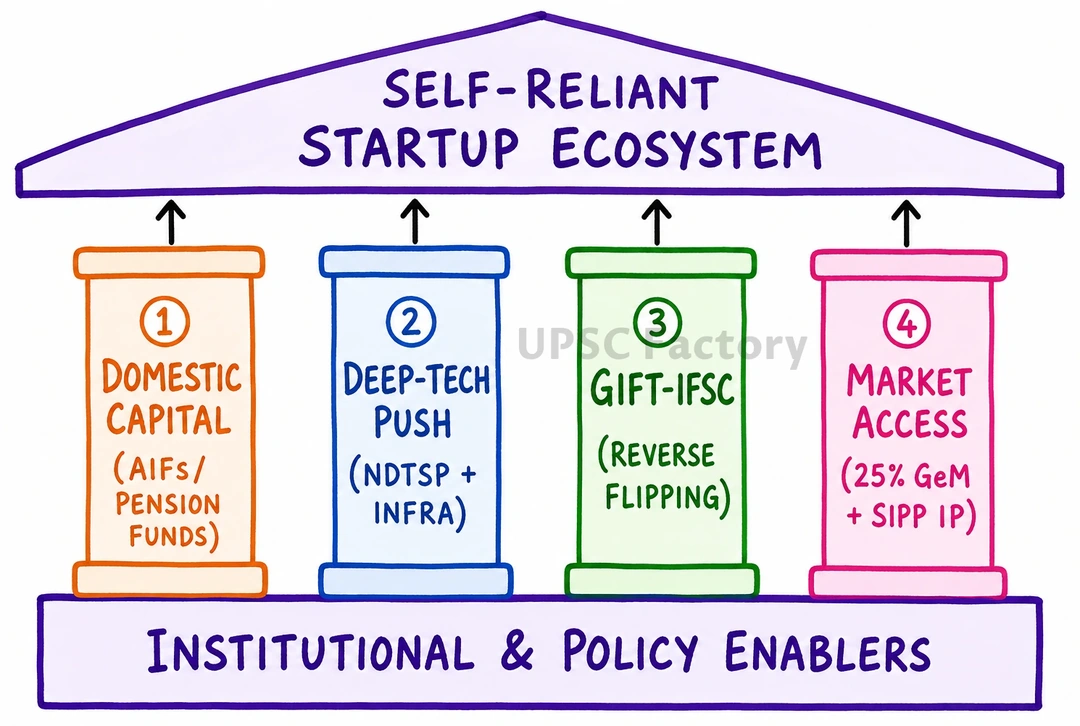
- Unlocking Domestic Capital: Mobilize domestic pension funds and insurance pools into AIFs; capitalize on the abolition of the Angel Tax.
- Operationalizing Deep-Tech Policy: Implement the National Deep Tech Startup Policy (NDTSP) with dedicated viability-gap funding and shared supercomputing infrastructure.
- Incentivizing Reverse Flipping: Fast-track NCLT approval timelines and grant capital-gains tax neutrality for startups relocating to GIFT-IFSC.
- Market Access & IP Enablement: Enforce the 25% public procurement mandate via the GeM startup runway and expand the Start-ups Intellectual Property Protection (SIPP) scheme.
Strengthening institutional funding, R&D capabilities, and regulatory ease will transform Indian startups from valuation-driven enterprises into resilient pillars of Viksit Bharat @2047.