Model Answer:
The dilemma pits technological efficiency in crime control against algorithmic discrimination, civil liberties (Art. 14, 21), and the erosion of police-community trust.
1. Ethical Issues & Biases in AI-Driven Policing
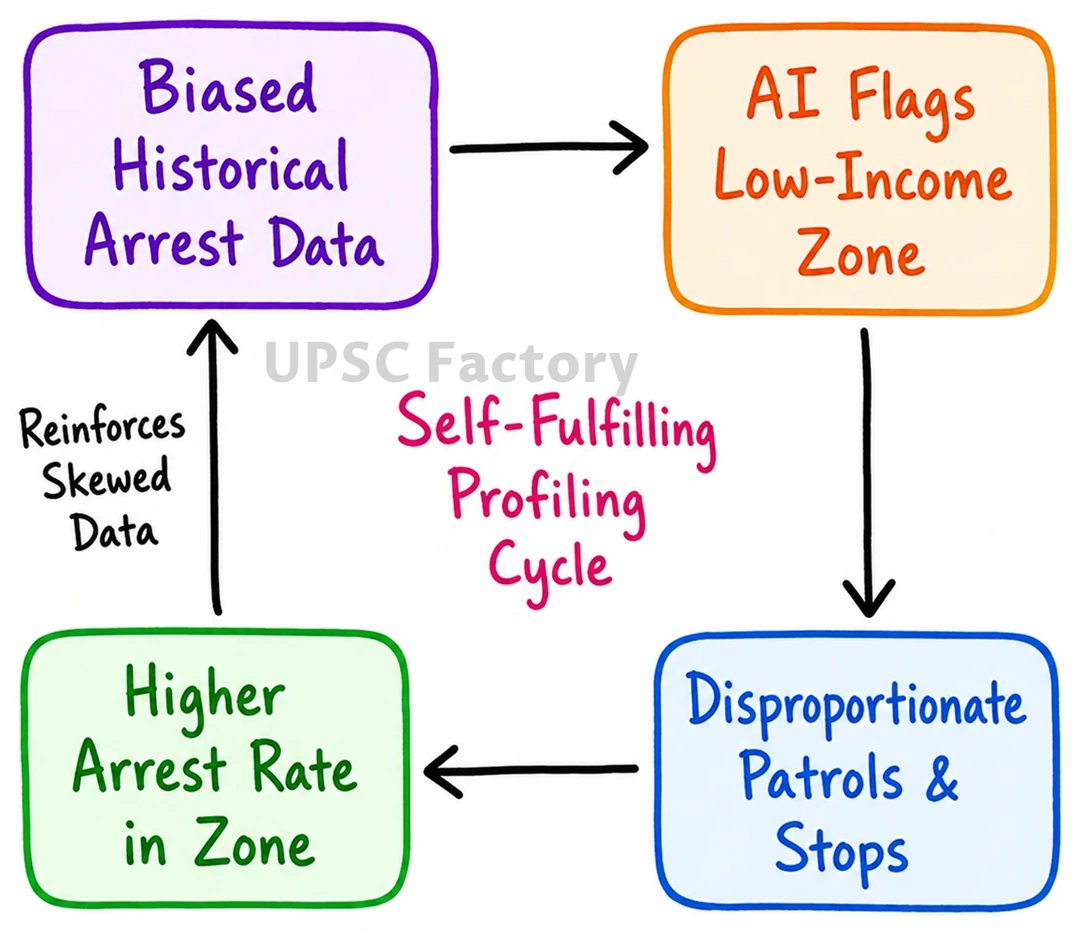
- Reinforcement of Historical Bias: AI models trained on skewed arrest records institutionalize systemic discrimination against marginalized groups (e.g., US COMPAS bias).
- Feedback Loop of Over-Policing: Disproportionate patrol allocation in target zones creates higher arrests, artificially validating flawed algorithmic predictions.
- Infringement of Privacy & Due Process: Mass biometric harvesting without informed consent breaches procedural fairness and data privacy (K.S. Puttaswamy; DPDP Act, 2023).
- “Black-Box” Opacity & Non-Accountability: Lack of algorithmic explainability prevents citizens from knowing, verifying, or challenging criminal tagging against their names.
- Chilling Effect & Collective Criminalization: Pervasive surveillance breeds psychological fear, stigmatizes entire neighbourhoods, and damages community-police relations.
2. Evaluation of Alternatives & Justified Action Plan
| Alternative | Merits | Demerits |
|---|---|---|
| 1. Unchanged AI Deployment | Maintains deterrence and low crime rates. | Deepens alienation; risks legal challenge under Art. 14 & 21. |
| 2. Complete Scrapping of AI | Restores community trust; eliminates algorithmic bias. | Sacrifices technological efficiency in riot-prone terrain. |
| 3. Calibrated Ethical Governance | Balances public order with constitutional morality. | Requires administrative restructuring and resources. |
Justified Course of Action (Alternative 3)
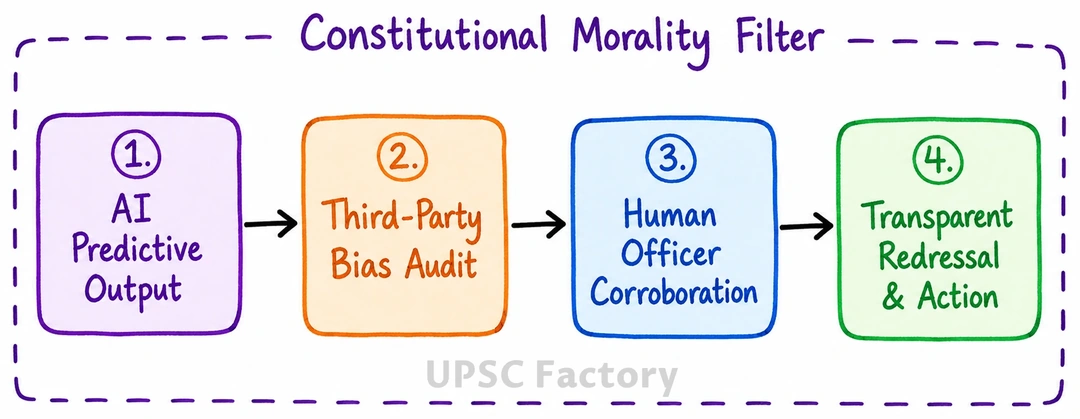
- Third-Party Algorithmic Audit: Temporarily halt automated predictive profiling to audit training datasets for socio-economic biases with independent technical experts.
- “Human-in-the-Loop” Protocol: Mandate that AI outputs serve only as secondary advisory inputs; prohibit automatic preventive detentions without independent evidentiary corroboration.
- Data Transparency & Redressal: Establish a standard operating procedure for data transparency, allowing citizens to contest incorrect records (Principles of Natural Justice).
- Community-Centric Policing: Re-channel police presence from hostile checkpoints to participatory community outreach (e.g., Janamaithri model) to heal civic trust.
Ethical policing demands that technological tools align with constitutional morality, ensuring crime prevention does not compromise human dignity, equity, and the rule of law.