Model Answer:
Geographical factors—encompassing topography, climate, and resource endowments—act as foundational ecological parameters that structurally constrain, direct, and stimulate societal evolution and developmental trajectories.
Geographical Dynamics in Social Transformation
- Agrarian Surplus and Complexity: Jared Diamond demonstrates how geographic luck, continental axes, and domesticable biodiversity historically governed the uneven onset of sedentary agriculture and technological development.
- Morphology and Division of Labour: Émile Durkheim noted that physical terrain and spatial distribution (material density) shape communicative interaction (moral density), driving structural evolution from mechanical to organic solidarity.
- State Formation and Bureaucracy: Karl Wittfogel’s hydraulic thesis illustrated how arid ecologies necessitating centralized water management spurred the rise of agro-managerial, centralized political regimes.
- Developmental Distortions: Geographic mineral abundance can either catalyze industrial growth or induce the resource curse, resulting in rentier economies, enclave development, and institutional decay.
- Exogenous Shocks and Mobility: Ecological ruptures—such as desertification and natural hazards—induce rapid social reorganization, accelerating rural-to-urban distress migration and reshaping local demographic structures.
- Possibilism over Determinism: Geography defines boundaries rather than rigid outcomes; human agency, culture, and technological innovations consistently mediate and overcome ecological limitations.
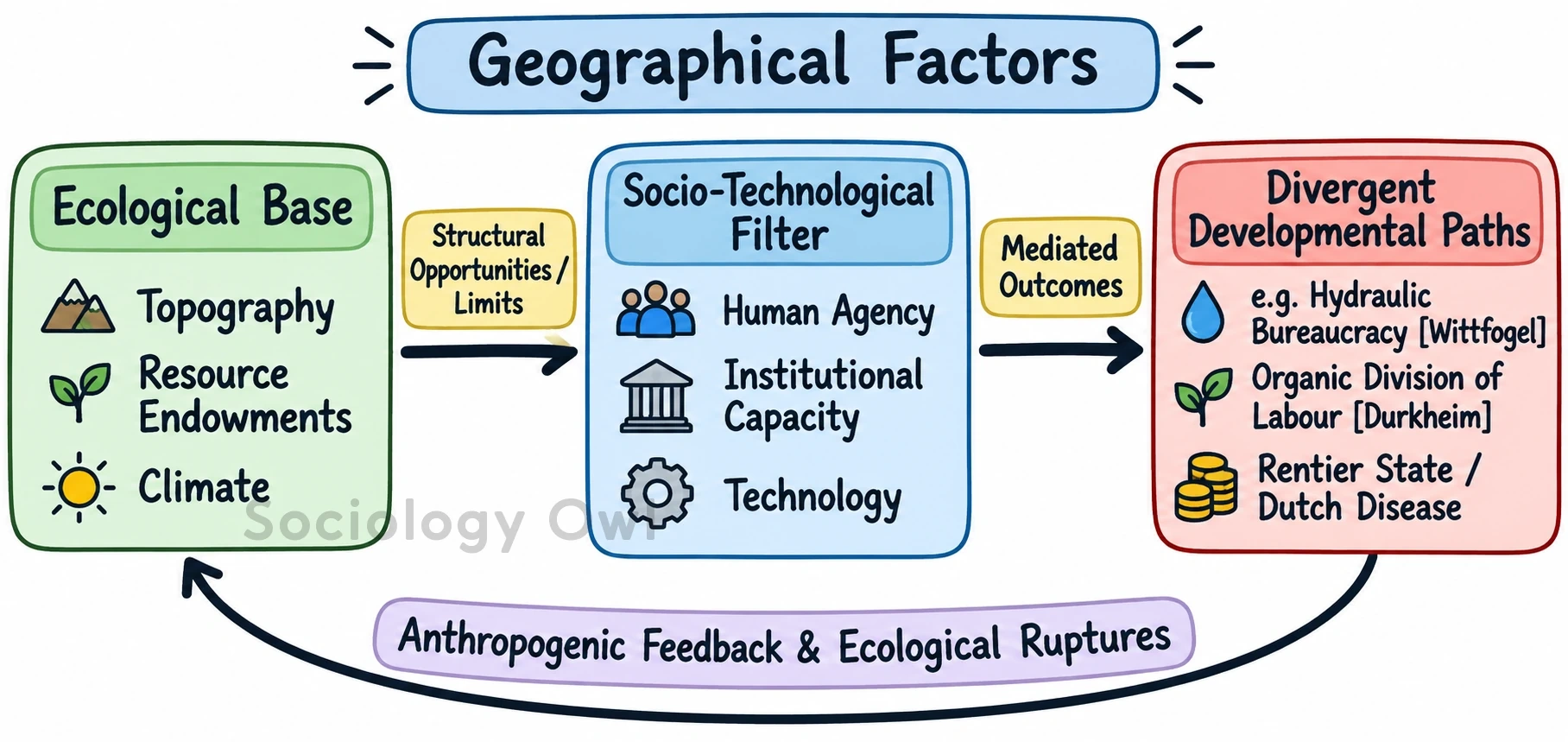
Ultimately, geography provides the foundational canvas, but human technology and cultural agency actively mediate its developmental consequences.