Model Answer:
New religious movements, sects, and cults emerge as charismatic alternatives to orthodox traditions, fundamentally reconfiguring intercaste relations through spiritual egalitarianism, alternative status systems, and contested social spaces.
Impact of Cults and Sects on Intercaste Dynamics
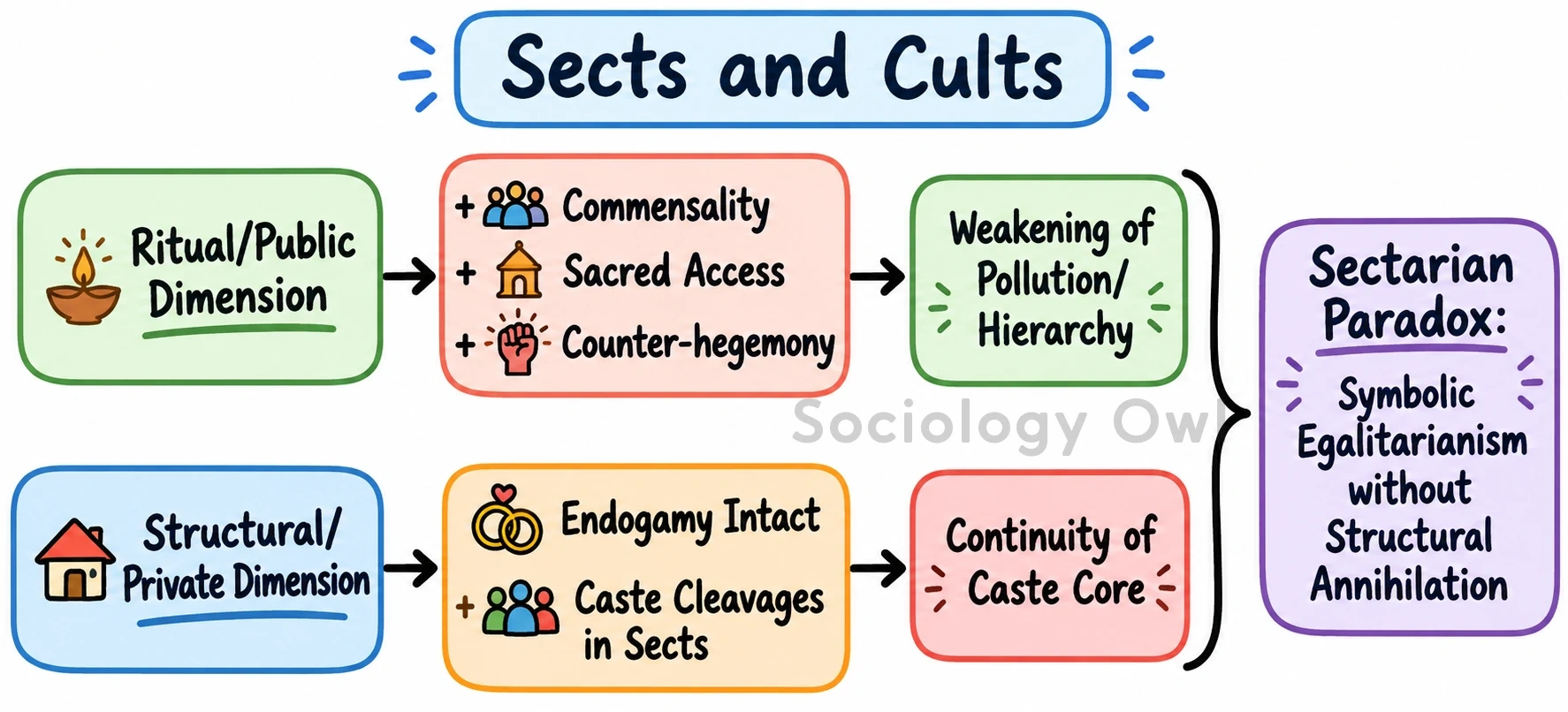
- Erosion of Ritual Pollution: Shared sacred spaces, congregation, and collective dining weaken traditional notions of ritual purity and pollution (Louis Dumont), enabling unprecedented intercaste physical proximity.
- Alternative Dignity and Counter-Hegemony: Marginalized castes construct autonomous spaces of self-respect through sects, such as Dalit assertion in Punjab’s Deras analyzed by Ronki Ram, directly challenging dominant-caste agrarian hegemony.
- Instrumental Sanskritization: Many modern guru-led cults universalize Vedantic idioms, allowing lower and intermediate castes to access sacred texts and practices, subtly mimicking upper-caste cultural capital without structural disruption.
- New Sectarian Polarization: Rather than eliminating caste, sectarian affiliations often crystallize along existing caste cleavages, generating new inter-group rivalries between caste-dominated sects and orthodox traditionalists.
- Urban Decasting Illusion: Cosmopolitan cults repackage spirituality into individualized therapeutic practices, fostering an illusion of castelessness in public while privatizing and masking entrenched caste advantages.
- Endurance of Endogamous Boundaries: While sects successfully promote intercaste commensality and social fellowship, they rarely mandate intercaste marriages, leaving the fundamental structural pillar of caste endogamy intact.
Cults and sects democratize ritual spaces, yet they modify the symbolic expressions of caste rather than destroying its structural foundations.