Model Answer:
In Social Background of Indian Nationalism, A. R. Desai uses a historical-materialist framework, arguing that modern Indian social classes are dialectical products of colonial capitalism rather than organic outgrowths of indigenous feudalism.
Desai’s Analysis of Class Formation via Colonial Production
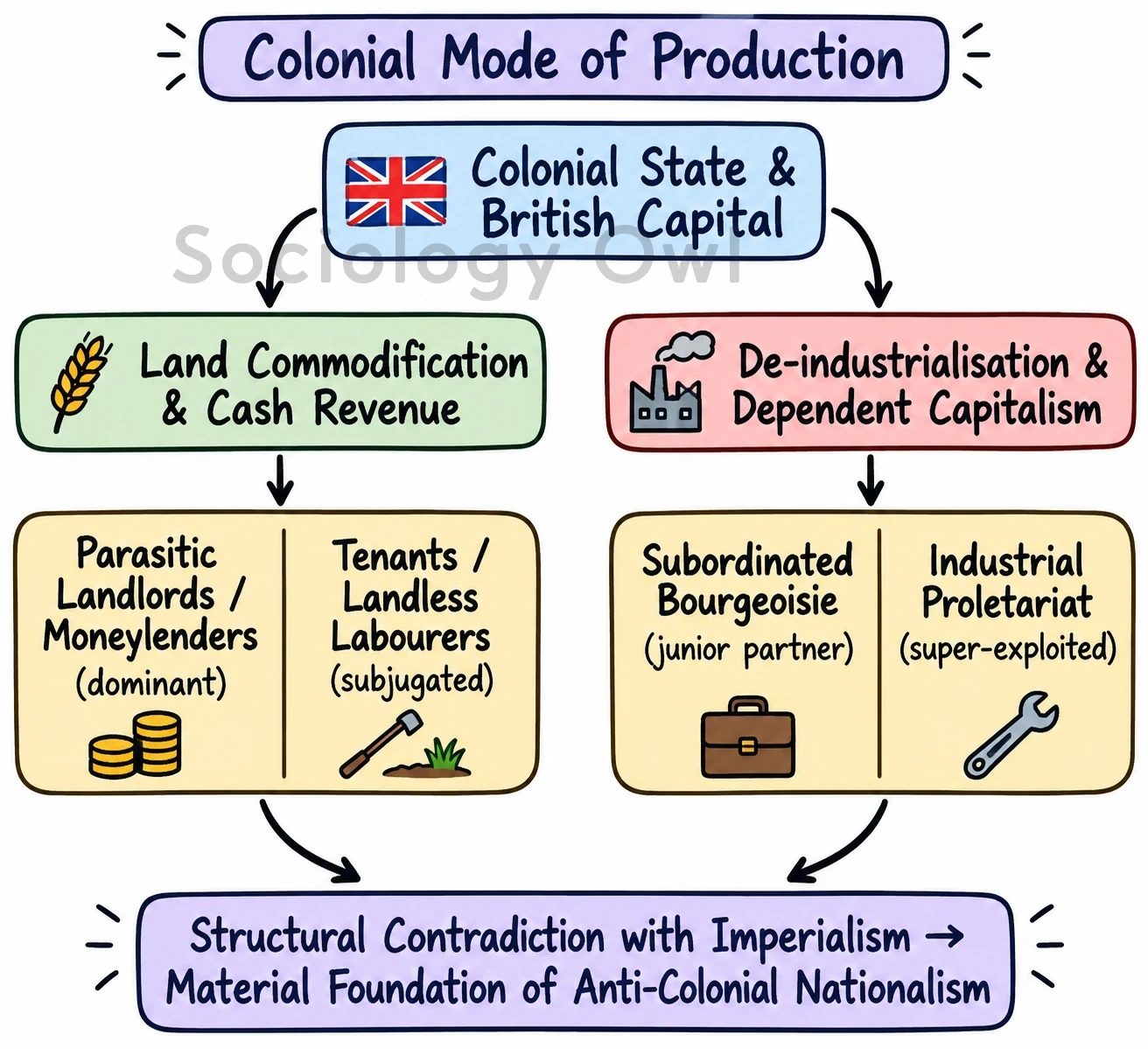
- Commodification of Land: Colonial revenue settlements (Zamindari and Ryotwari) transformed land into private property, replacing traditional communal usufruct rights with contractual market relations.
- Agrarian Class Polarisation: The imposition of cash revenue and commercial agriculture generated an unprecedented agrarian hierarchy—parasitic absentee landlords, rich usurious moneylenders, insecure tenants, and landless agricultural labourers.
- De-industrialisation and Proletarianisation: The influx of British machine-made goods shattered traditional urban and village handicrafts, forcibly ruralising ruined artisans into unfree farm labourers.
- Emergence of Subordinated Bourgeoisie: Indigenous industrial and commercial capitalists developed as junior, constrained partners within imperial trade networks rather than an independent, classic European bourgeoisie.
- Genesis of Modern Industrial Proletariat: Colonial infrastructural projects like railways, plantations, and early textile mills birthed a modern working class subjected to super-exploitation without welfare protections.
- Material Basis of Nationalism: The structural contradictions between the material interests of these emerging classes and colonial expropriation formed the fundamental engine of the anti-imperialist movement.
Desai thus demonstrates that Indian social stratification transformed fundamentally from traditional caste status to an exploitative, colonial-capitalist class structure.