Prelims Solution

Q. In the expression 5 * 4 * 3 * 2 * 1, * is chosen from +, -, * each at most two times. Which is the smallest non-negative value of the expression?

Q. In the expression 5 * 4 * 3 * 2 * 1, * is chosen from +, -, * each at most two times. Which is the smallest non-negative value of the expression?

a) 3
b) 2
c) 1
d) 0
Correct answer: d) 0

Question from UPSC Prelims 2024 CSAT

Explanation : 

Smallest non-negative value of the expression

5 – 4 – 3 + 2 × 1 = 0

Q. In the expression 5 * 4 * 3 * 2 * 1, * is chosen from +, -, * each at most two times. Which is the smallest non-negative value of the expression? Read More »

Q. Which is the least possible number of cuts required to cut a cube into 64 identical pieces?

Q. Which is the least possible number of cuts required to cut a cube into 64 identical pieces?

a) 8
b) 9
c) 12
d) 16
Correct answer: b) 9

Question from UPSC Prelims 2024 CSAT

Explanation : 

Least possible number of cuts

Let’s approach this step-by-step:
1) We need to divide the cube into 64 identical pieces. This means we need to divide each dimension of the cube into 4 equal parts (4 x 4 x 4 = 64).
2) For each dimension, we need 3 cuts to divide it into 4 equal parts.
3) So, we need:
– 3 cuts parallel to the xy-plane
– 3 cuts parallel to the yz-plane
– 3 cuts parallel to the xz-plane
4) In total, this gives us 3 + 3 + 3 = 9 cuts.
Therefore, the least possible number of cuts required to cut a cube into 64 identical pieces is 9.
The correct answer is b) 9

Q. Which is the least possible number of cuts required to cut a cube into 64 identical pieces? Read More »

Q. Consider the following animals: 1.Hedgehog 2.Marmot 3.Pangolin To reduce the chance of being captured by predators, which of the above organisms rolls up/roll up and protects/ protects its/their vulnerable parts?

Q. Consider the following animals:
1.Hedgehog
2.Marmot
3.Pangolin

To reduce the chance of being captured by predators, which of the above organisms rolls up/roll up and protects/ protects its/their vulnerable parts?

a) 1 and 2
b) 2 only
c) 3 only
d) 1 and 3
Correct Answer: d) 1 and 3

Question from UPSC Prelims 2021 GS Paper

Explanation : 

Defense Mechanisms of Hedgehogs and Pangolins

Hedgehogs: When threatened, hedgehogs are known to curl into a tight ball with their spines sticking outwards. This defense mechanism makes it difficult for predators to get to their soft, unprotected underbelly. The spines are sharp and can deter many would-be attackers.
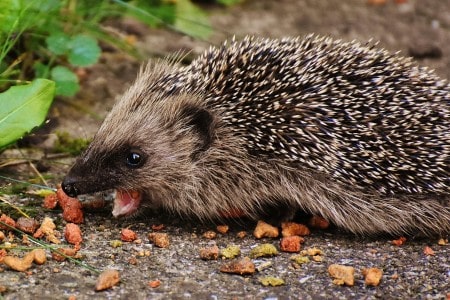
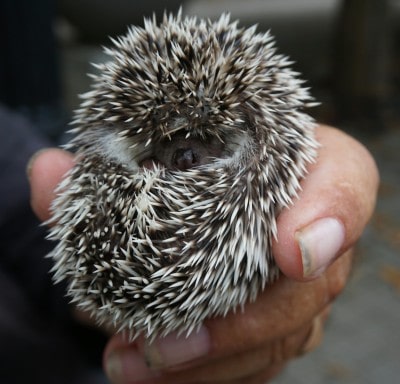
Hedgehog 1

Hedgehog 2

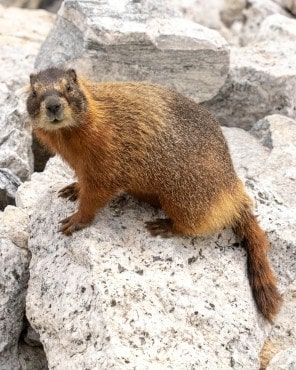
Marmots’ Survival Strategies

Marmots do not roll up into a ball for protection. Instead, they rely on other strategies to avoid predation, such as burrowing and using their sharp senses to detect and escape from predators. They may also use alarm calls to warn others in their group of danger.
Pangolins’ Unique Defense

Like hedgehogs, pangolins can roll up into a tight ball when threatened. Pangolins are covered in hard, overlapping scales that provide excellent protection when they are curled up. This defense mechanism is particularly effective against predators that are unable to penetrate the tough armor of the scales.
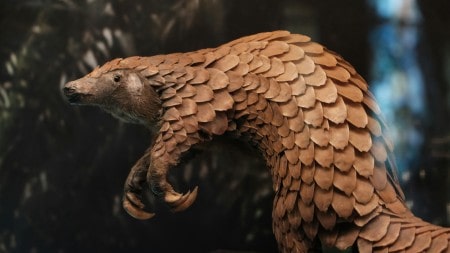
Pangolin

Therefore, hedgehogs and pangolins share the ability to roll up and protect themselves, making the correct answer “1 and 3“.

Q. Consider the following animals: 1.Hedgehog 2.Marmot 3.Pangolin To reduce the chance of being captured by predators, which of the above organisms rolls up/roll up and protects/ protects its/their vulnerable parts? Read More »

Consider the following statements: 1.‘Right to the City’ is an agreed human right and the UN-Habitat monitors the commitments made by each country in this regard.

Q. Consider the following statements:
1.‘Right to the City’ is an agreed human right and the UN-Habitat monitors the commitments made by each country in this regard.
2.‘Right to the City’ gives every occupant of the city the right to reclaim public spaces and public participation in the city.
3.Right to the City’ means that the State cannot deny any public service or facility to the unauthorized colonies in the city.
Which of the statements given above is/are correct?
a) 1 only
b) 3 only
c) 1 and 2
d) 2 and 3
Correct Answer: d) 2 and 3

Question from UPSC Prelims 2021 GS Paper

Explanation : 

Not Available

Consider the following statements: 1.‘Right to the City’ is an agreed human right and the UN-Habitat monitors the commitments made by each country in this regard. Read More »

Q. Consider the following in respect of prime number p and composite number c. 1. p+c / p-c can be even. 2. 2p+ c can be odd. 3. pc can be odd.

Q. Consider the following in respect of prime number p and composite number c.
1. p+c / p-c can be even.
2. 2p+ c can be odd.
3. pc can be odd.

Which of the statements given above are correct?
(a) 1 and 2 only
(b) 2 and 3 only
(c) 1 and 3 only
(d) 1, 2 and 3
Correct Answer: (d) 1, 2 and 3

Question from UPSC Prelims 2023 CSAT

Explanation : 

Prime and Composite Number Analysis

To determine which statements are correct, let’s analyze each one individually:

1. p + c / p – c can be even:

  • For this expression to be even, the numerator (p + c) and the denominator (p – c) must both be either even or odd.
  • Prime numbers (p) are mostly odd, except for 2.
  • Composite numbers (c) can be either even or odd.
  • If p is odd and c is even, then:
    • p + c is odd + even = odd
    • p – c is odd – even = odd
    • An odd number divided by an odd number can be even if the result is an integer.
  • If p is 2 (even) and c is odd, then:
    • p + c is even + odd = odd
    • p – c is even – odd = odd
    • An odd number divided by an odd number can be even if the result is an integer.

Therefore, it is possible for p + c / p – c to be even.

2. 2p + c can be odd:

For 2p + c to be odd:

  • 2p is always even because 2 times any integer is even.
  • For the sum to be odd, c must be odd (even + odd = odd).
  • Since composite numbers can be odd, this statement is true.

3. pc can be odd:

For the product pc to be odd:

  • Both p and c must be odd.
  • Since prime numbers (except 2) are mostly odd and composite numbers can be odd, this statement is true.

Given the analysis, all three statements are correct. Therefore, the correct answer is:

(d) 1, 2 and 3

Prime Numbers:

  • A prime number is a natural number greater than 1 that has no positive divisors other than 1 and itself.
  • In other words, a prime number is a number that can only be divided evenly (without a remainder) by 1 and itself.
  • Examples of prime numbers include 2, 3, 5, 7, 11, 13, 17, 19, etc.
  • Note that 2 is the only even prime number; all other prime numbers are odd.

Composite Numbers:

  • A composite number is a natural number greater than 1 that is not prime, meaning it has more than two positive divisors.
  • In other words, a composite number can be divided evenly by numbers other than 1 and itself.
  • Examples of composite numbers include 4, 6, 8, 9, 10, 12, 14, 15, etc.
  • Composite numbers can be even or odd. For instance, 4 (even) and 9 (odd) are both composite numbers.

Q. Consider the following in respect of prime number p and composite number c. 1. p+c / p-c can be even. 2. 2p+ c can be odd. 3. pc can be odd. Read More »

Q. If ABC and DEF are both 3-digit numbers such that A, B, C, D, E and F distinct and F are non-zero digits such that ABC + DEF = 1111, then what is the value of A+B+C+D+E+F?

Q. If ABC and DEF are both 3-digit numbers such that A, B, C, D, E and F distinct and F are non-zero digits such that ABC + DEF = 1111, then what is the value of A+B+C+D+E+F?

(a) 28
(b) 29
(c) 30
(d) 31
Correct Answer: (d) 31

Question from UPSC Prelims 2023 CSAT

Explanation : 

Sum of ABC and DEF

Since the sum of ABC and DEF is 1111, and all the digits are distinct and non-zero, one of the possible combinations for ABC and DEF is 785 and 326.

In the first case, the sum of the digits A+B+C+D+E+F is 7+8+5+3+2+6 = 31

So, in both cases, the sum of the digits is 31. Therefore, the correct answer is (d) 31.

Q. If ABC and DEF are both 3-digit numbers such that A, B, C, D, E and F distinct and F are non-zero digits such that ABC + DEF = 1111, then what is the value of A+B+C+D+E+F? Read More »

Q. Consider a 3-digit number. Question: What is the number? Statement-1: The sum of the digits of the number is equal to the product of the digits. Statement-2: The number is divisible by the sum of the digits of the number.

Q. Consider a 3-digit number.
Question: What is the number?
Statement-1: The sum of the digits of the number is equal to the product of the digits.
Statement-2: The number is divisible by the sum of the digits of the number.

Which one of the following is correct in respect of the above Question and the Statements?
(a) The Question can be answered by using one of the Statements alone, but cannot be answered using the other Statement alone.
(b) The Question can be answered by using either Statement alone.
(c) The Question can be answered by using both the Statements together, but cannot be answered using either Statement alone.
(d) The Question cannot be answered even by using both the Statements together.
Correct Answer: (d) The Question cannot be answered even by using both the Statements together.

Question from UPSC Prelims 2023 CSAT

Explanation : 

Let’s take the 3-digit number as XYZ, where X, Y, and Z are its digits.

Statement-1:

The sum of the digits of the number is equal to the product of the digits.

This means X+Y+Z = XYZ. There are multiple 3-digit numbers that satisfy this condition, such as 123, 132, 213, 231, 312, 321, etc.

Statement-2:

The number is divisible by the sum of the digits of the number.

This means XYZ is divisible by (X+Y+Z). Again, there are multiple 3-digit numbers that satisfy this condition, such as 111, 222, 333, etc.

Even if we use both statements together, we still have multiple options for the 3-digit number. For example, both 111 and 222 satisfy both conditions. Therefore, even by using both statements together, we cannot definitively answer the question.

Q. Consider a 3-digit number. Question: What is the number? Statement-1: The sum of the digits of the number is equal to the product of the digits. Statement-2: The number is divisible by the sum of the digits of the number. Read More »

Q. Let pp, qq and rr be 2-digit numbers where p< q

Q. Let pp, qq and rr be 2-digit numbers where p< q<r. If pp + qq + rr = tt0, where tt0 is a 3-digit number ending with zero, consider the following statements:

1. The number of possible values of p is 5.
2. The number of possible values of q is 6.
Which of the above statements is/are correct?
(a) 1 only
(b) 2 only
(c) Both 1 and 2
(d) Neither 1 nor 2
Correct Answer: (c) Both 1 and 2

Question from UPSC Prelims 2023 CSAT

Explanation : 

Analysis of 2-Digit Numbers – pp, qq & rr

The problem is based on the concept of number theory and algebra.

The given condition is that pp, qq and rr are 2-digit numbers where p< q< r and their sum is a 3-digit number ending with zero.

This means that the sum of the digits p, q and r is either 10 or 20, as the sum of their double-digit representations (pp, qq, rr) is a three-digit number ending in zero (either 110 or 220).

For the first statement, we need to find the possible values of p. Since p is the smallest digit and the sum of p, q and r is either 10 or 20, the possible values of p can be 1 or 2 for the sum 10, and 1, 2, 3, 4 or 5 for the sum 20. So, there are 5 possible values for p, making the first statement correct.

For the second statement, we need to find the possible values of q. Since q is the middle digit and the sum of p, q and r is either 10 or 20, the possible values of q can be 2, 3 or 4 for the sum 10, and 6, 7 or 8 for the sum 20. So, there are 6 possible values for q, making the second statement correct.

Therefore, both statements are correct, and the answer is (c) Both 1 and 2.

Q. Let pp, qq and rr be 2-digit numbers where p< q<r. If pp + qq + rr = tt0, where tt0 is a 3-digit number ending with zero, consider the following statements: Read More »

Q. How many natural numbers are there which give a remainder of 31 when 1186 is divided by these natural numbers?

Q. How many natural numbers are there which give a remainder of 31 when 1186 is divided by these natural numbers?

(a) 6
(b) 7
(c) 8
(d) 9
Correct Answer: (d) 9

Question from UPSC Prelims 2023 CSAT

Explanation : 

The remainder when a number is divided by another number is the difference between the dividend and the largest multiple of the divisor that is less than or equal to the dividend.

In this case, we are given that the

remainder is 31 when 1186 is divided by a certain number.

This means that the number we are looking for must be a divisor of (1186 – 31) = 1155.

The divisors of 1155 are 1, 3, 5, 7, 11, 15, 21, 33, 35, 55, 77, 105, 165, 231, 385, 1155.

However, since the remainder is 31, the divisor must be greater than 31.

So, the possible numbers are 33, 35, 55, 77, 105, 165, 231, 385, 1155.

Hence, there are 9 such natural numbers. So, the correct answer is (d) 9.

Q. How many natural numbers are there which give a remainder of 31 when 1186 is divided by these natural numbers? Read More »

Q. ABCD is a square. One point on each of AB and CD; and two distinct points on each of BC and DA are chosen. How many distinct triangles can be drawn using any three points as vertices out of these six points?

Q. ABCD is a square. One point on each of AB and CD; and two distinct points on each of BC and DA are chosen. How many distinct triangles can be drawn using any three points as vertices out of these six points?

(a) 16
(b) 18
(c) 20
(d) 24
Correct Answer: (c) 20

Question from UPSC Prelims 2023 CSAT

Explanation : 

ABCD square. Points on sides AB, CD, BC, DA.
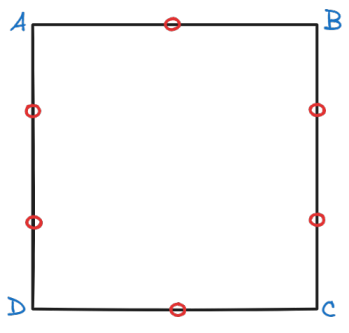
abcd is a square

The total number of ways to choose 3 points out of 6 is given by the combination formula C(n, r) = n! / [r!(n-r)!], where n is the total number of items, r is the number of items to choose, and “!” denotes factorial.

So, the total number of triangles is C(6, 3) = 6! / [3!(6-3)!] = 20.

Q. ABCD is a square. One point on each of AB and CD; and two distinct points on each of BC and DA are chosen. How many distinct triangles can be drawn using any three points as vertices out of these six points? Read More »