Model Answer:
Kinship constitutes the bedrock of Indian social structure. Irawati Karve, in Kinship Organization in India, comprehensively mapped its immense regional and descent-based diversity.
Regional and Descent-Based Diversity
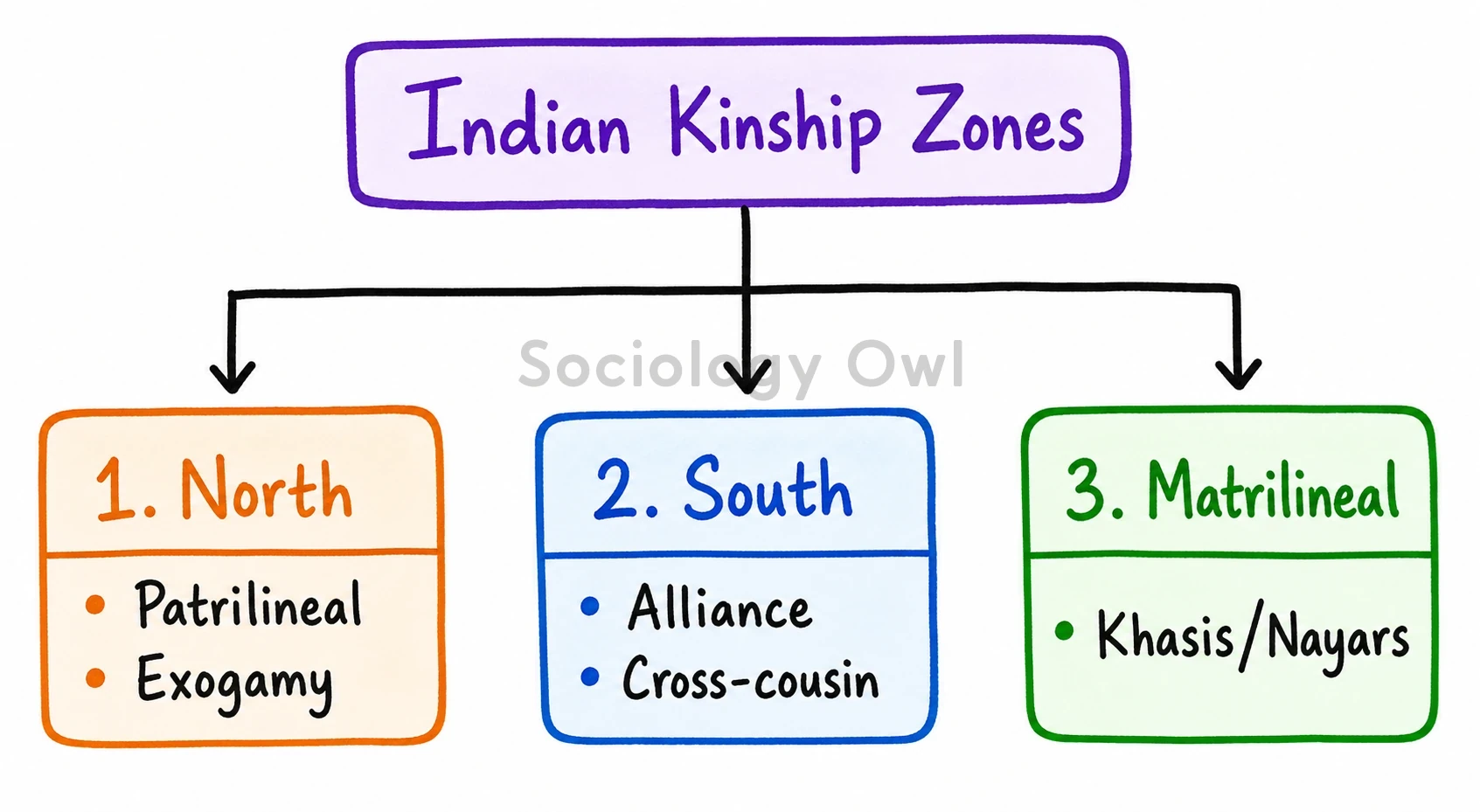
- Northern System: Strictly patrilineal and village-exogamous. Feminist Leela Dube highlights how its “Seed and Earth” metaphor justifies patriarchal control over female labor and sexuality.
- Southern System: Features cross-cousin marriage. Louis Dumont defines this as a continuous “Marriage Alliance” (affinity) over generations rather than mere consanguinity.
- Matrilineal Pockets: Found among Nayars (South) and Khasis (East). Kathleen Gough highlighted the unique Nayar Sambandham (“visiting husband”) system.
Kinship, Caste, and Tribe
- Caste Endogamy: B.R. Ambedkar argued that strict kinship endogamy is the central mechanism perpetuating the caste system.
- Tribal Kinship: Often egalitarian, featuring totemic, exogamous clans (e.g., Gonds).
The Hindu Succession (Amendment) Act, 2005 legally disrupts traditional patriliny by granting daughters coparcenary rights. Furthermore, modernization has birthed transnational kinship networks (NRI marriages) and LGBTQ+ “chosen families”.
Conclusion
Indian kinship is dynamically transitioning from rigid, structural-functional ascriptive hierarchies toward increasingly negotiated and egalitarian ties, reflecting modern democratic ideals (Patricia Uberoi).