Model Answer:
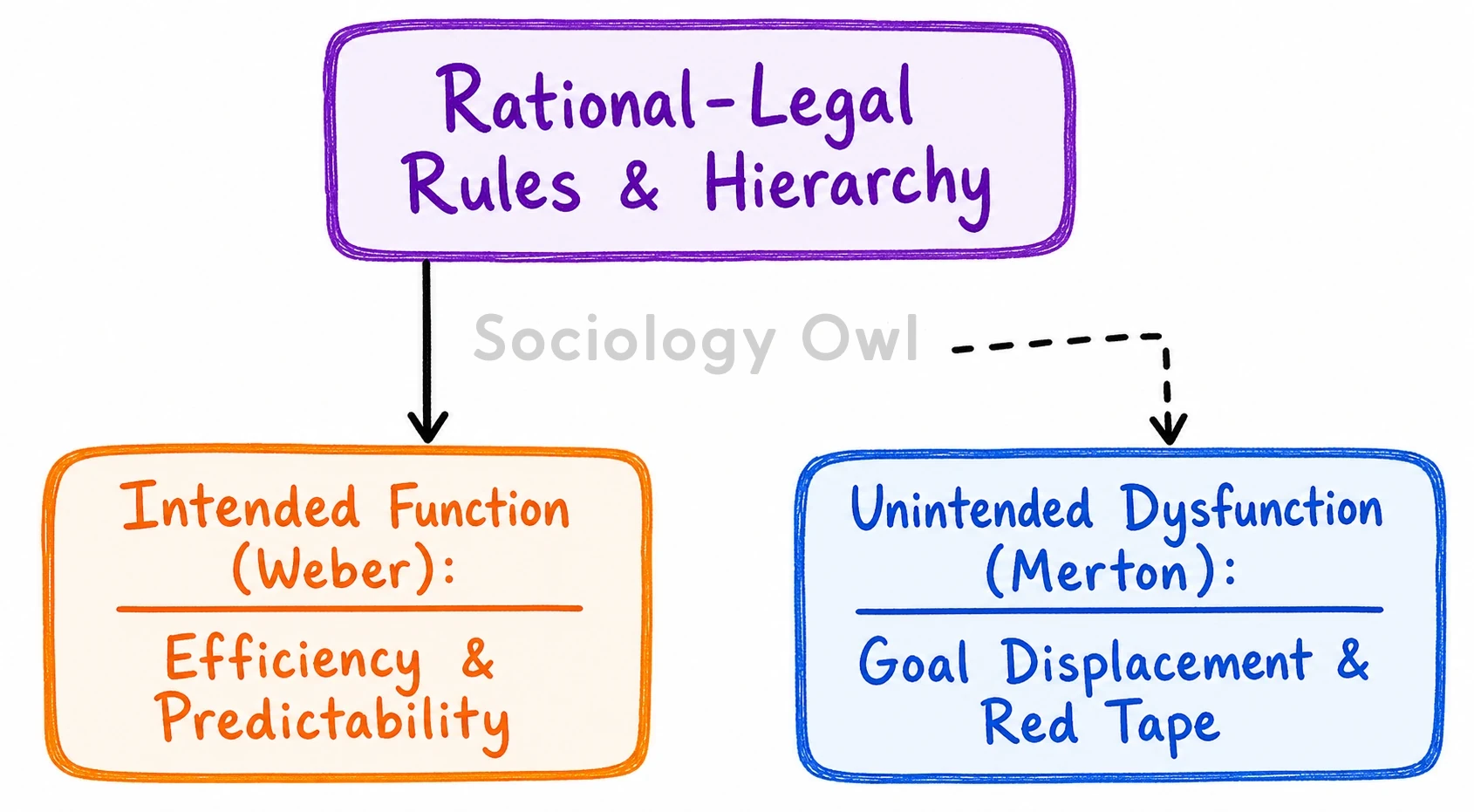
Max Weber defined bureaucracy as an “Ideal Type” of rational-legal authority, marking a historical shift from traditional patrimonial rule to formal, predictable organizations.
Salient Features of Bureaucracy
- Structural Hierarchy: A graded chain of command with a strict division of labour based on technical competence.
- Rule-bound Process: Administration is governed by exhaustive written rules and files, ensuring calculability and impersonality (decisions made without personal bias).
- Professionalization: Features merit-based recruitment, fixed salaries, career orientation, and a strict separation of private and official property.
Critiques:
- Max Weber himself feared this system traps individuals in a soulless “Iron Cage of Rationality”.
- Robert Merton warned of “Goal Displacement” and the rigid “Bureaucratic Personality”, where blind rule-following supersedes organizational goals.
Weberian calculability and impersonality manifest today in algorithmic gig-economies and George Ritzer’s “McDonaldization”, even as modern tech firms attempt to shift towards flexible “Adhocracies”.
Conclusion
Despite dysfunctions like rigidity and oligarchic tendencies, the Weberian model remains the foundational bedrock of organizational sociology and the inescapable structural blueprint of global capitalism.