Model Answer:
Objectivity in Interpretative Research
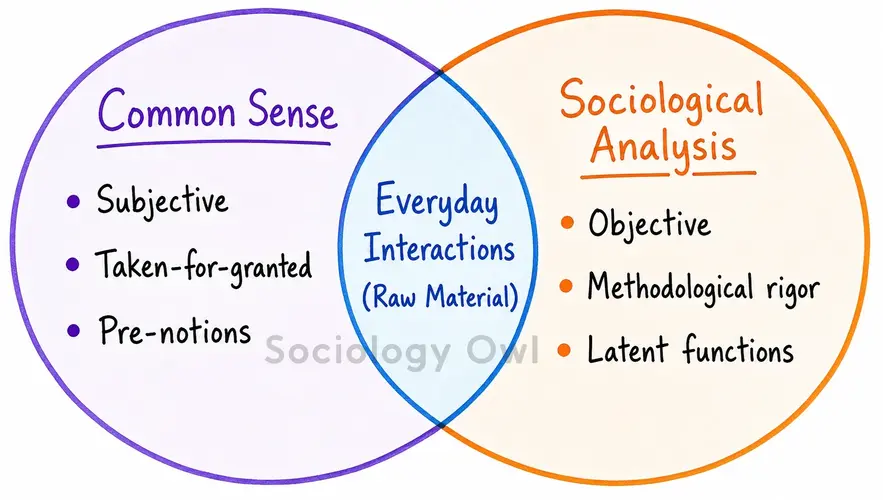
Interpretative research, rooted in Max Weber’s Verstehen (empathetic understanding), rejects absolute positivist detachment. Instead, it aims for “intersubjective reliability” and Value-Neutrality (Wertfreiheit) while analyzing subjective meanings.
Achieving Objectivity
Researchers utilize several key strategies to maintain rigor:
- Weberian Tools: Researchers use Ideal Types as analytical benchmarks to objectively measure deviations in subjective social action.
- Reflexivity: Drawing from Alvin Gouldner’s Reflexive Sociology, researchers critically examine their own positionality and biases as objects of sociological inquiry.
- “Thick Description”: Clifford Geertz emphasized deep, transparent contextualization, allowing readers to independently validate the researcher’s subjective interpretations.
- Intersubjective Validation: Employing methodological triangulation and member-checking explicitly cross-verifies qualitative data.
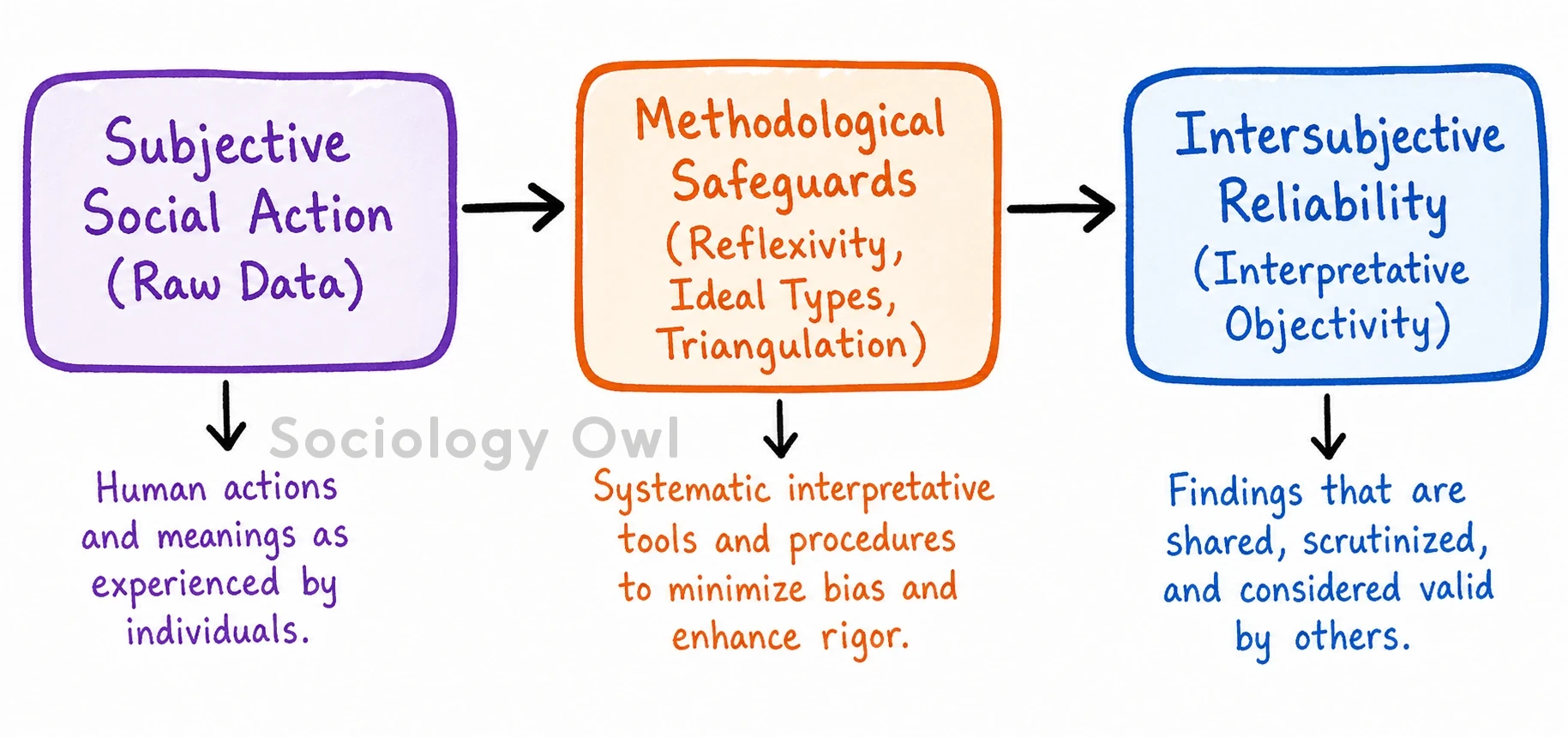
In Gang Leader for a Day, Sudhir Venkatesh navigated interpretative biases through intense reflexivity and member-checking with Chicago gang members, ensuring his observations objectively reflected their reality.
Conclusion
Gunnar Myrdal argued that absolute objectivity is an illusion and values must be stated openly. Ultimately, while total scientific detachment is impossible, these methodological safeguards ensure high validity in interpretative sociology.