Model Answer:
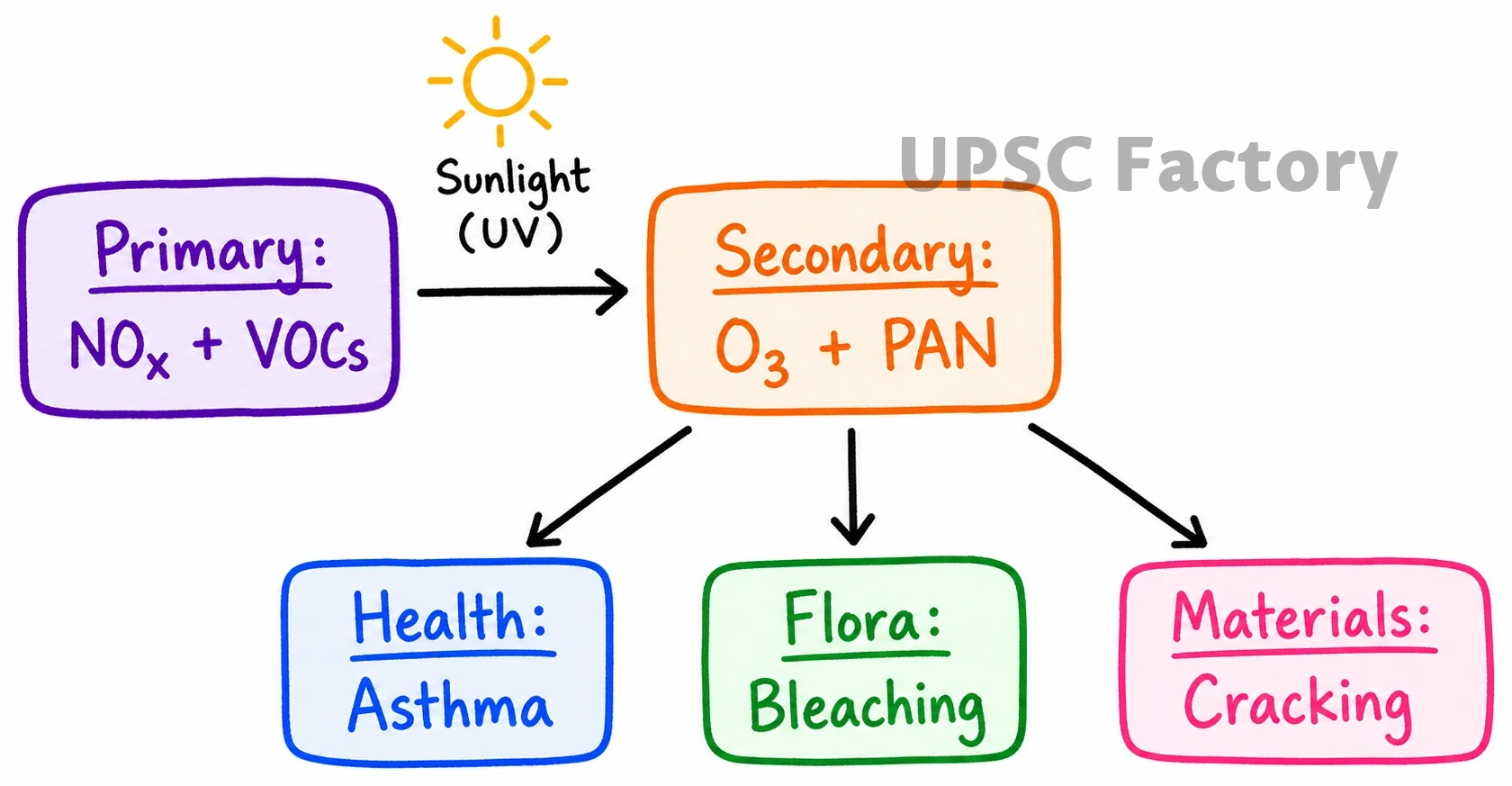
Photochemical smog (summer smog) is a secondary pollutant mixture formed when solar ultraviolet light reacts with nitrogen oxides (NOx) and volatile organic compounds (VOCs).
1. Photochemical Smog: Formation, Effects, and Mitigation
- Formation: Sunlight drives photochemical reactions between vehicular/industrial emissions (NOx and VOCs), generating toxic secondary pollutants like ground-level Ozone (O3) and Peroxyacetyl nitrate (PAN).
- Effects: Triggers severe respiratory distress (asthma), causes eye irritation, inhibits plant photosynthesis (foliage bleaching), and accelerates material degradation (cracking of rubber).
- Mitigation: Mandating BS-VI emission standards (curbs NOx), deploying 3-way catalytic converters, installing Vapor Recovery Systems at fuel stations, and executing the National Clean Air Programme (NCAP).
2. 1999 Gothenburg Protocol
- Core Mandate: A multi-effect protocol under the UNECE LRTAP Convention aiming to abate acidification, eutrophication, and ground-level ozone globally.
- Binding Targets: Establishes legally binding national emission ceilings for four major pollutants: Sulphur dioxide (SO2), NOx, VOCs, and ammonia.
- 2012 Amendment: Expanded the protocol’s scope to include mandatory emission reduction commitments for fine particulate matter (PM2.5) and Black Carbon.
Combating the rising menace of photochemical smog requires synergizing international frameworks like the Gothenburg Protocol with robust, localized emission reduction strategies for sustainable urban air quality.