Model Answer:
The 101st Constitutional Amendment Act (CAA), 2016, overhauled India’s indirect taxation by introducing the Goods and Services Tax (GST), marking a paradigm shift in fiscal federalism.
Significance of the 101st CAA
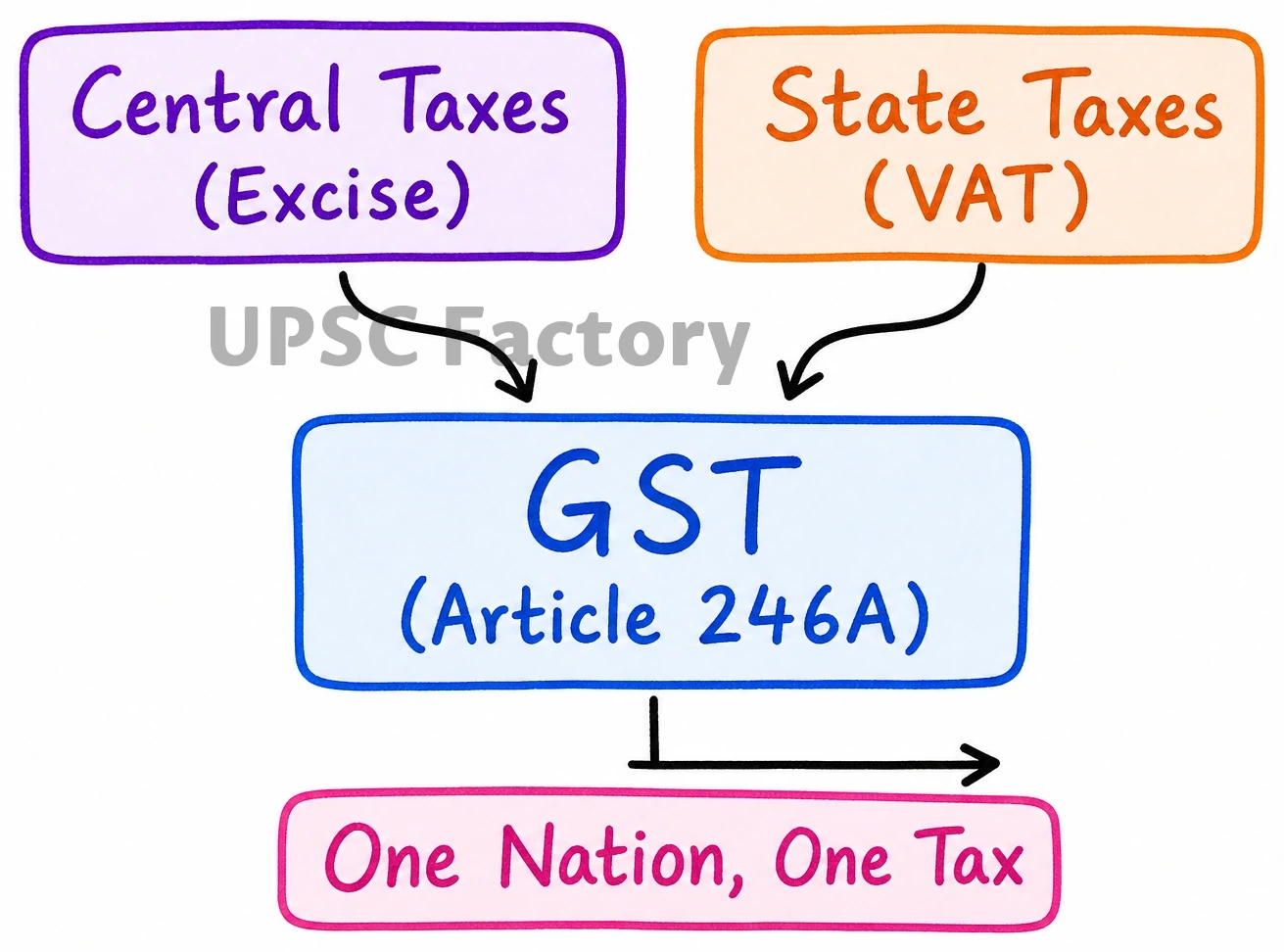
- Concurrent Tax Powers: Inserted Article 246A, granting simultaneous power to both Centre and States to levy GST.
- Institutional Innovation: Created the GST Council (Article 279A), India’s first truly federal constitutional body governing tax policy.
- Economic Integration: Realized a unified national market (“One Nation, One Tax”) by eliminating cascading tax barriers.
- Rationalization of Taxes: Subsumed over 17 distinct central and state indirect levies (e.g., VAT, Excise Duty, Octroi).
Accommodative Spirit of Federalism: Achievements and Limitations
Manifestation of Accommodative Federalism
- Pooled Sovereignty: Centre and States voluntarily ceded their exclusive taxation domains to joint decision-making.
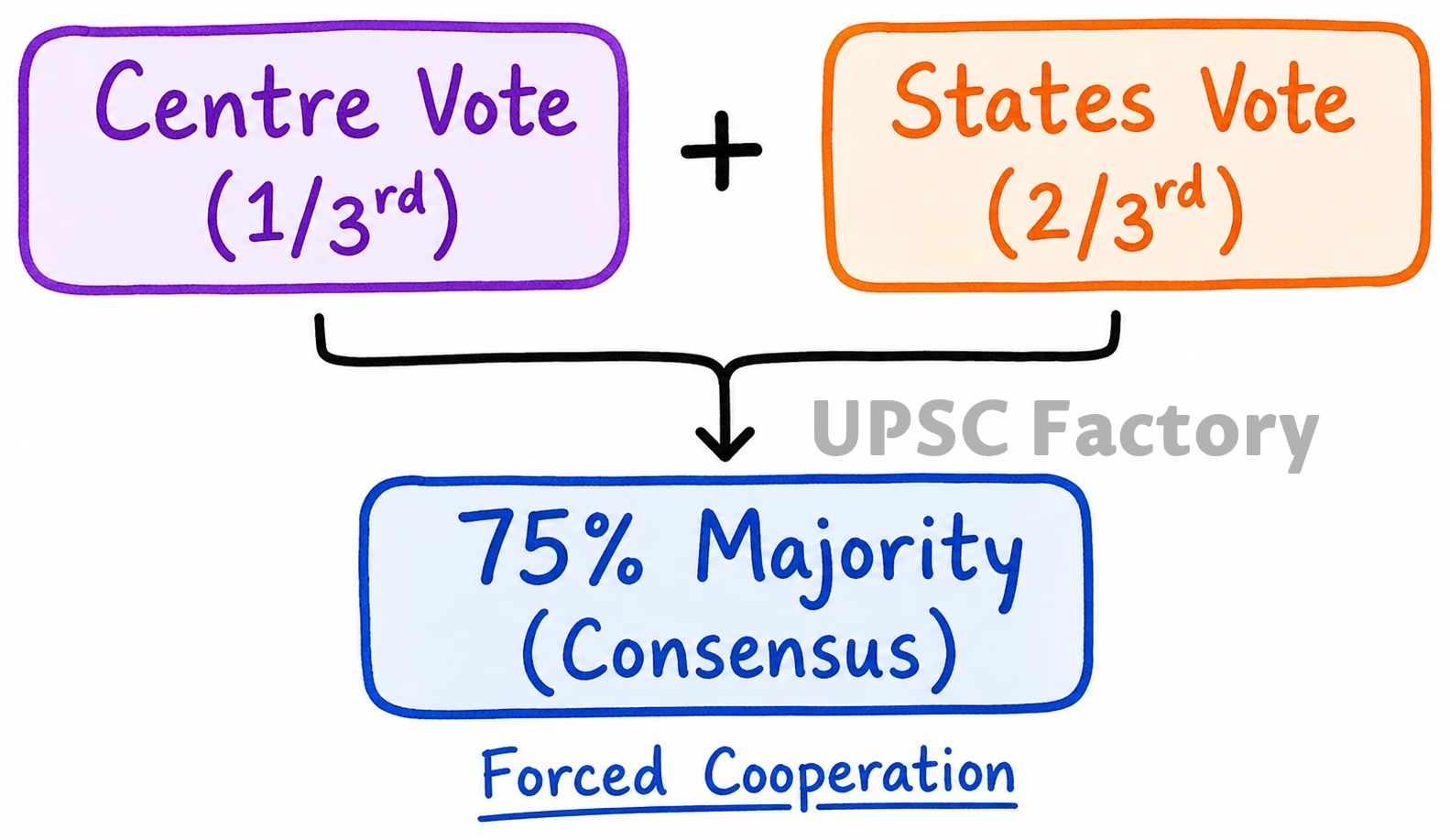
- Democratic Voting Power: GST Council decisions require a 3/4th majority, ensuring equitable voice (States: 2/3rd weight; Centre: 1/3rd).
- Culture of Consensus: Historically, almost all GST Council decisions have been unanimous, reflecting deep institutional cooperation.
- Revenue Protection: Enacted the GST (Compensation to States) Act to guarantee 14% annual revenue growth for five years.
Emerging Frictions (Limitations to Accommodation)
- Erosion of Fiscal Autonomy: States lost their primary lever to unilaterally adjust taxes during localized economic crises.
- Trust Deficits: Severe frictions emerged over delayed GST compensation cess payouts during revenue crunches (e.g., COVID-19 pandemic).
- Central Veto Dynamics: Despite higher state weightage, no decision can pass without the Centre’s 1/3rd vote.
- Fragile Mandate: The Supreme Court ruled GST Council recommendations have only “persuasive value”, not mandatory force (Union of India v. Mohit Minerals, 2022).
The 101st CAA remains a monumental experiment in cooperative federalism. Sustaining this fiscal union requires addressing trust deficits through equitable revenue-sharing and continuous institutional dialogue.