Model Answer:
India aims to raise its manufacturing share to 25% of GDP. MSMEs are vital catalysts for this, currently contributing ~30% to GDP and ~45% to exports.
1. Role in Faster Economic Growth
- Employment Creation: Absorbs surplus agricultural labor through labor-intensive manufacturing (Textiles, Leather).
- Export Diversification: Integrates domestic markets into Global Value Chains (GVCs), mitigating external shocks.
- Inclusive Growth: Promotes decentralized industrialization, fostering regional equity and grassroots entrepreneurship.
2. Present Government Policies: Assessment
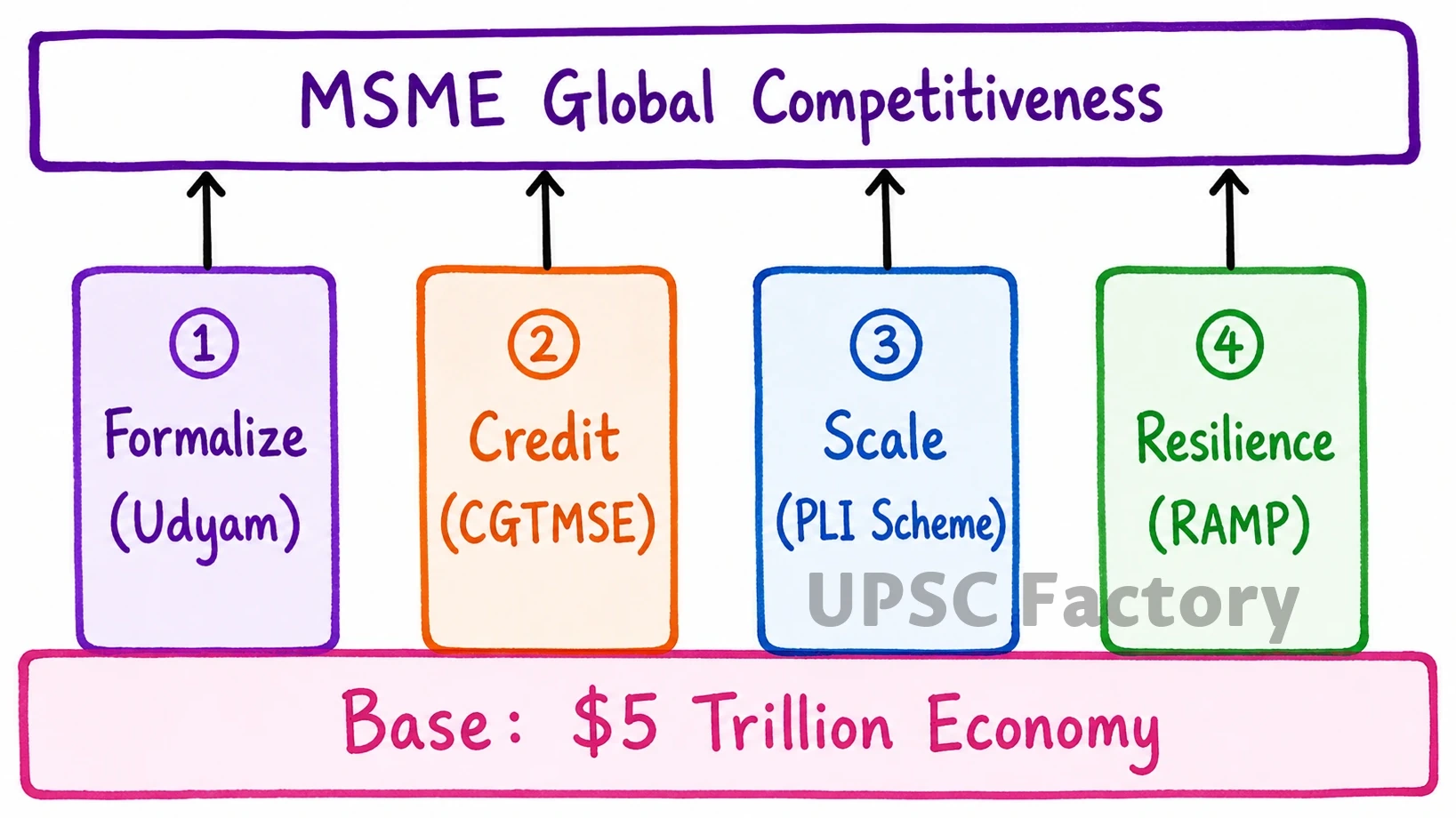
- Formalization & Compliance: The Udyam Registration portal drastically simplified onboarding, formally registering over 2 crore MSMEs.
- Credit Accessibility: The revamped CGTMSE (collateral-free loans) and TReDS platform effectively address chronic working capital deficits.
- Scaling & Competitiveness: The Production Linked Incentive (PLI) scheme spurs large-scale manufacturing, generating massive ancillary demand for MSMEs.
- Resilience Building: Initiatives like RAMP and PM Vishwakarma upgrade technological and skill capacities for global competitiveness.
- Lingering Gaps: Despite proactive policies, structural bottlenecks like delayed payments, high logistics costs, and low Industry 4.0 adoption persist.
Streamlining regulatory frameworks (Jan Vishwas Act) and accelerating digital integration are crucial to transforming Indian MSMEs into globally competitive engines for a $5 trillion economy.