Model Answer:
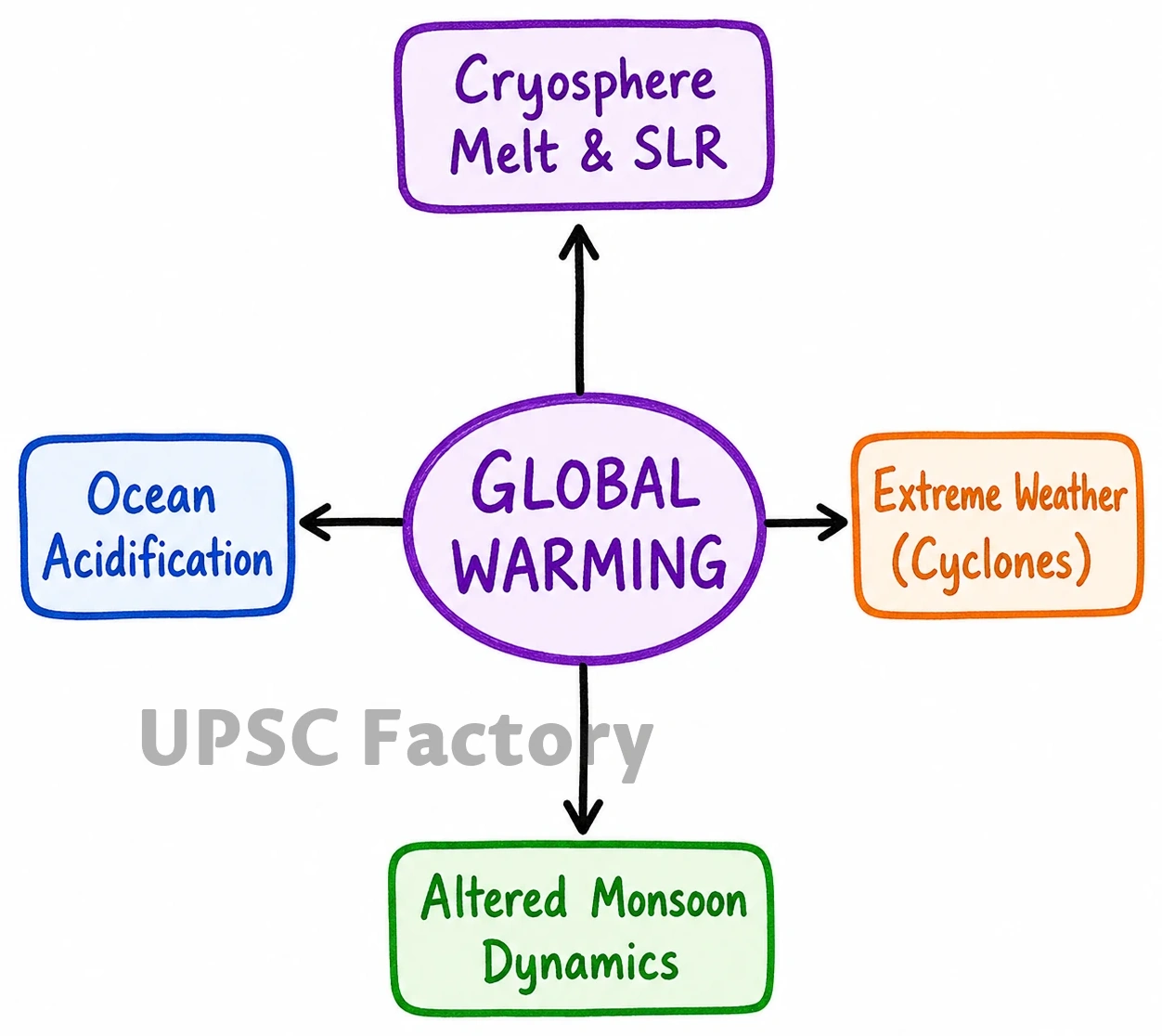
Global warming refers to the unprecedented, long-term rise in Earth’s average surface temperature, primarily driven by anthropogenic greenhouse gas (GHG) emissions.
1. Effects of Global Warming on Global Climate
- Extreme Weather Events: Increased frequency, duration, and intensity of cyclones, heatwaves, and droughts globally (IPCC AR6).
- Cryosphere Depletion: Rapid melting of polar ice caps and high-altitude glaciers (Himalayan Third Pole), accelerating global sea-level rise.
- Altered Precipitation: Disrupted atmospheric circulation and monsoon dynamics, leading to erratic rainfall, flash floods, and prolonged dry spells.
- Ocean Dynamics: Rising sea surface temperatures trigger marine heatwaves and severe ocean acidification, destroying fragile marine ecosystems (Mass coral bleaching).
2. GHG Control Measures: Kyoto Protocol Mechanisms (1997)
Operationalizing the UNFCCC principle of Common but Differentiated Responsibilities (CBDR), the Protocol introduced flexible, market-based mechanisms to curb six core GHGs:
- Legally Binding Targets: Compelled industrialized nations (Annex-I countries) to reduce GHG emissions by an average of 5.2% below 1990 levels.
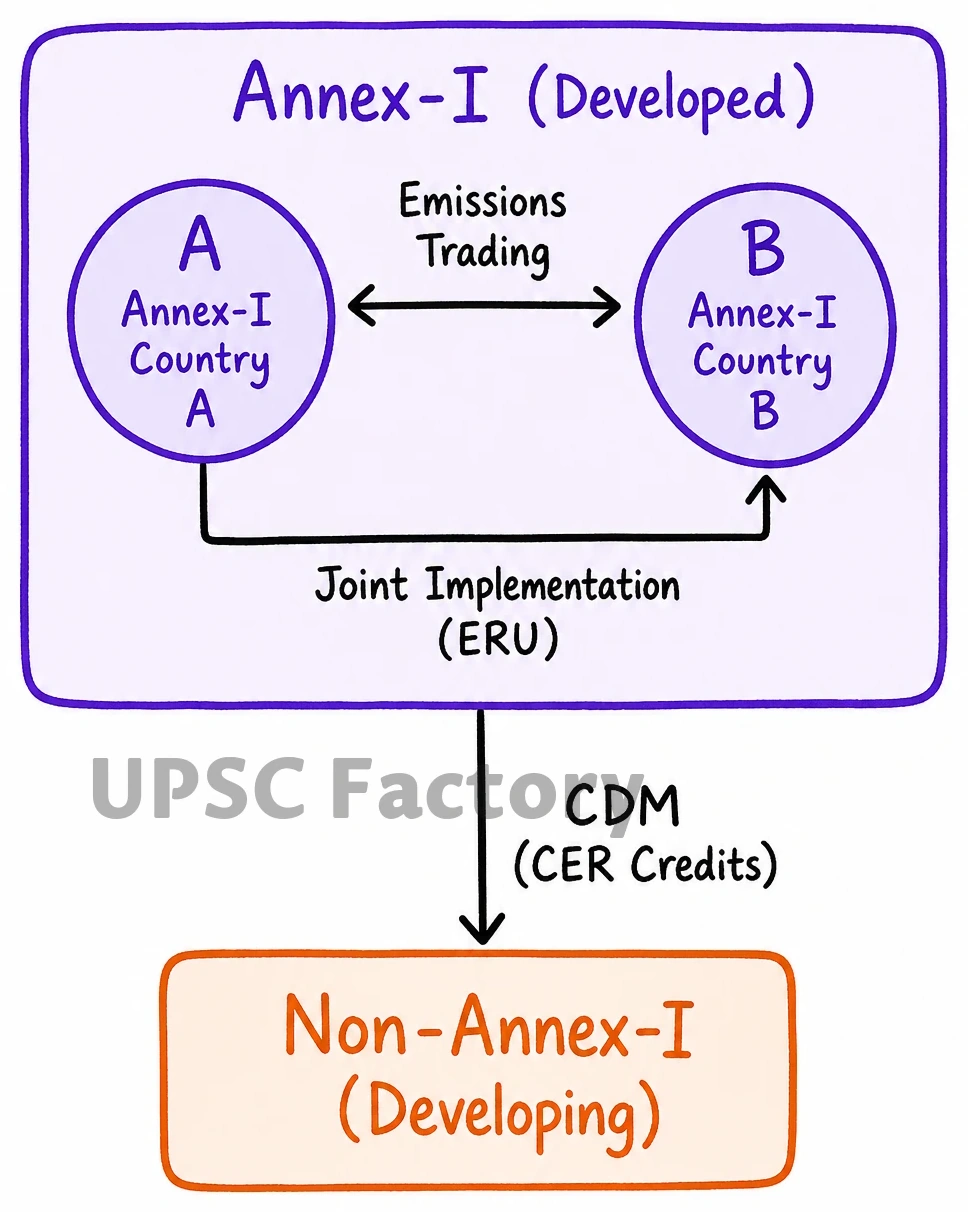
- Clean Development Mechanism (CDM): Enabled developed countries to fund green, emission-reduction projects in developing nations to earn tradable Certified Emission Reductions (CERs).
- Joint Implementation (JI): Allowed Annex-I countries to earn Emission Reduction Units (ERUs) by directly investing in emission-reduction projects within other Annex-I nations.
- International Emissions Trading: Pioneered the global carbon market, allowing countries that kept emissions below their assigned targets to sell excess capacity (Carbon Credits).
- Targeted Scope: Specifically restricted major warming agents, including Carbon Dioxide, Methane, Nitrous Oxide, and industrial Fluorinated gases.
While the Kyoto Protocol pioneered global carbon accounting and markets, its legacy now transitions into the Paris Agreement, demanding aggressive net-zero commitments and enhanced climate finance to stabilize planetary temperatures.