Model Answer:
Max Weber distinguishes power (Macht) as the ability to impose one’s will even against resistance, from authority (Herrschaft), which is power validated by legitimacy (voluntary compliance based on a belief in the ruler’s right to rule).
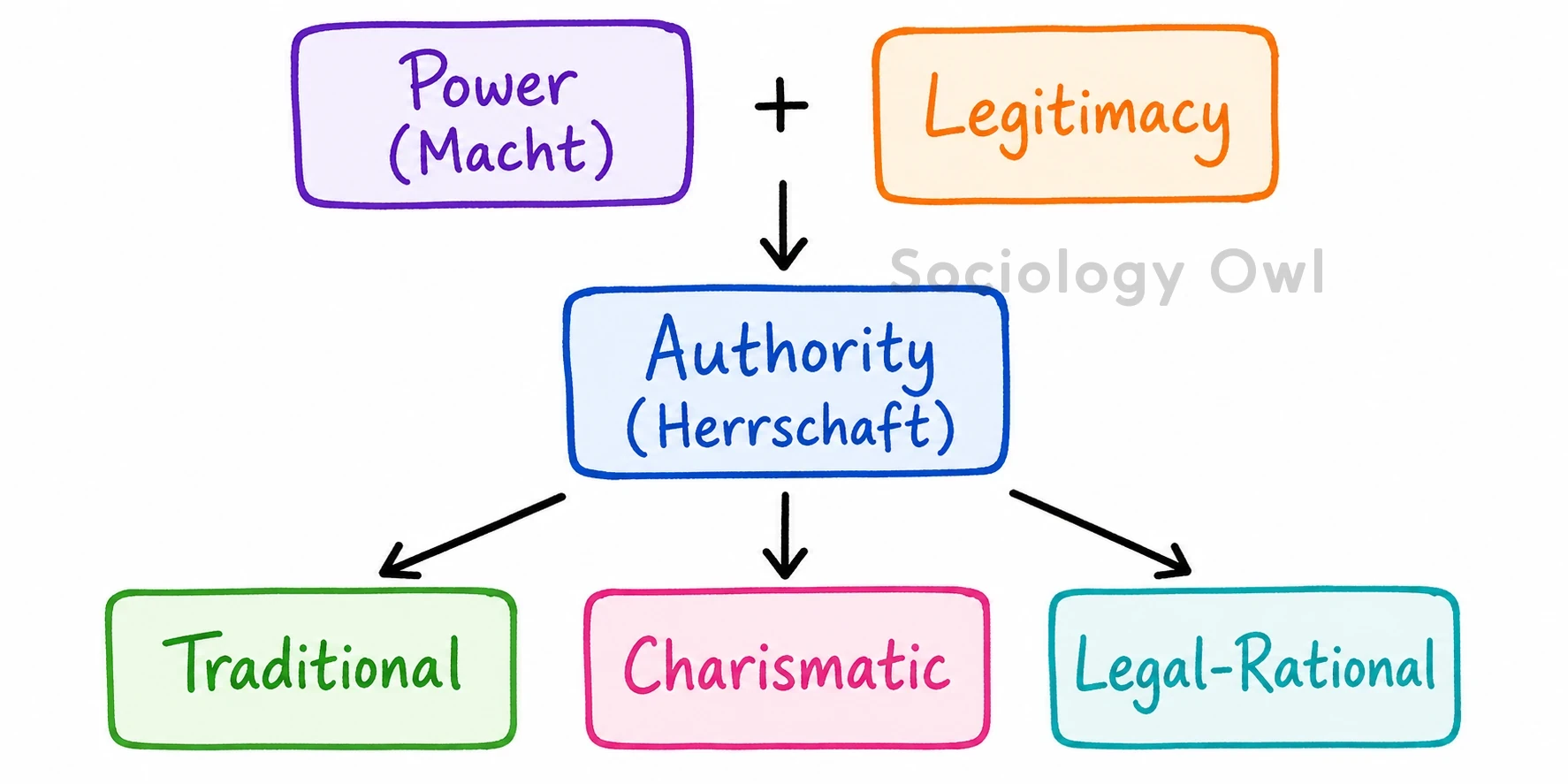
Types of Authority
Weber conceptualized three Ideal Types of authority, corresponding to his typology of social action:
- Traditional Authority: Rooted in long-standing customs and habit (Traditional action).
- Charismatic Authority: Based on devotion to a leader’s exceptional personal qualities (Affective action). Upon the leader’s absence, it inevitably undergoes the Routinization of Charisma.
- Legal-Rational Authority: Grounded in formal, codified rules and laws (Zweckrational action).
Critique
- Michel Foucault countered Weber by arguing that power is not a possession held by leaders, but is “capillary” and omnipresent.
- Robert Michels argued that even democratic legal-rational structures inevitably succumb to the Iron Law of Oligarchy.
Modern populist politics often demonstrate an overlap of types, where leaders utilize Legal-Rational Authority (elected via constitutions) but govern leveraging Charismatic Authority (building personality cults via social media).
Conclusion
Despite Marxist critiques that legal authority merely masks capitalist control, Weber’s typology remains a seminal framework in political sociology for analyzing the shift from pre-modern to modern statecraft.