Model Answer:
Despite India’s civilizational ethos of equality and rising female representation, women in public service continue to face entrenched systemic and ethical hurdles.
1. Gender-Specific Challenges in Public Service
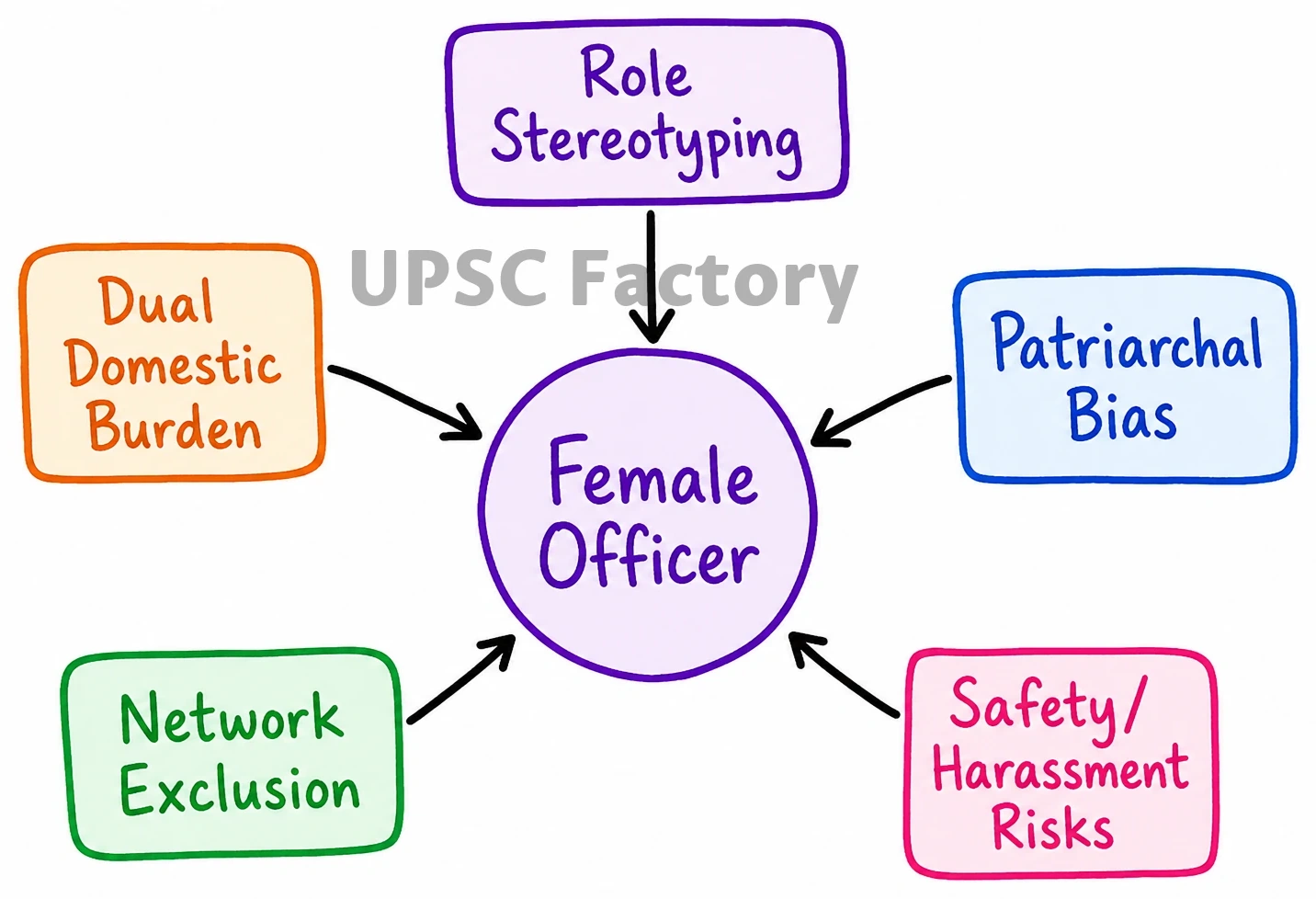
- Patriarchal Resistance: Subordinates and political executives often resist female leadership authority, manifesting as insubordination.
- Role Stereotyping: Institutional biases relegate women to ‘soft’ departments (e.g., Women & Child) over core administration/policing.
- Dual Burden: Societal pressure to balance intense administrative duties with disproportionate domestic responsibilities.
- Safety and Harassment: Vulnerability to character assassination, hostile work environments, and targeted punitive transfers.
- Networking Exclusion: Isolation from informal, male-dominated professional networks (Old Boys’ Club) crucial for administrative maneuvering.
2. Measures to Enhance Efficiency and Probity
- Institutional Support: Ensure robust childcare infrastructure and strict, anonymous grievance redressal mechanisms (PoSH Act 2013).
- Equitable Postings: Guarantee merit-based allocation of challenging ‘hard’ postings to build dynamic leadership capacity.
- Structured Mentorship: Create dedicated mentorship pipelines pairing junior female officers with experienced veterans (e.g., Kiran Bedi’s reform models).
- Gender Sensitization: Mandate continuous behavioral training for all staff to dismantle patriarchal biases (2nd ARC recommendations).
- Transparent Appraisals: Implement objective, technology-driven performance metrics to shield and promote officers upholding high probity (e.g., D. Roopa).
Empowering female civil servants through an equitable, supportive ecosystem is vital for achieving ethical administration, inclusive governance, and fulfilling SDG 5.