Model Answer:
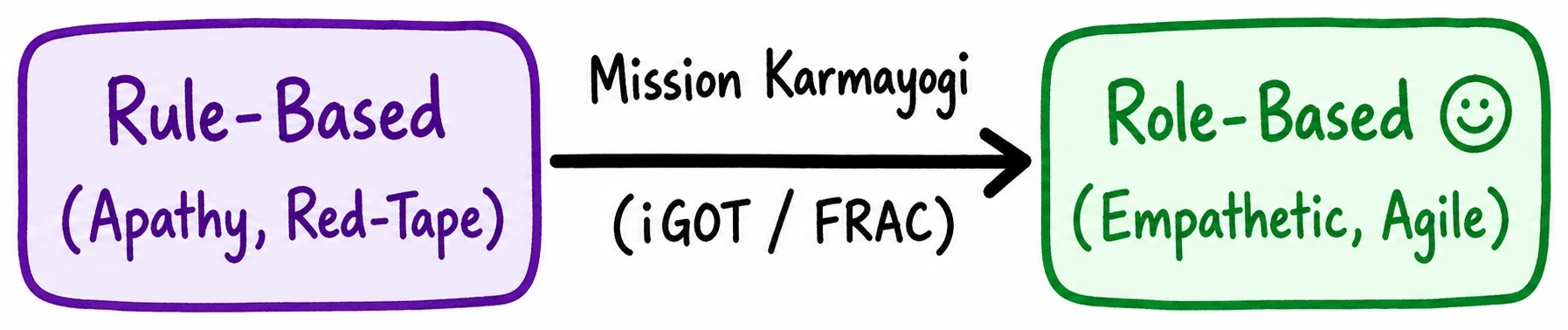
Mission Karmayogi (NPCSCB) shifts the bureaucracy from a “rule-based” to a “role-based” ecosystem, fostering behavioral, functional, and domain competencies for citizen-centric governance.
1. Empowering Civil Servants: Conduct & Competency
- Role Alignment: Maps exact skills to job requirements using FRAC (Framework of Roles, Activities, and Competencies).
- Continuous Learning: Democratizes capacity building via the iGOT-Karmayogi platform, allowing self-paced, continuous upskilling.
- Behavioral Shift: Transitions officials from bureaucratic apathy to empathetic, ethical, and proactive public conduct.
- Self-Actualization: Fosters personal growth and moral capacity, sustaining high motivation despite severe administrative pressures.
2. Enhancing Grassroots Efficiency & Service Delivery
- Frontline Upskilling: Directly trains grassroots workers for efficient last-mile delivery (e.g., Gram Dak Sevaks in rural post).
- Contextual Problem-Solving: Equips field functionaries with localized domain skills to tackle specific challenges (e.g., Aspirational Districts).
- Reduced Red-Tape: Enhances functional agility, thereby minimizing delays and improving turnaround times for grievance redressal.
- Empathetic Citizen Interface: Ensures marginalized citizens receive welfare services with dignity, transparency, and utmost probity.
By creating agile, empathetic, and “future-ready” public servants, Mission Karmayogi bridges critical state capacity gaps, ensuring effective, equitable, and compassionate grassroots development.