Model Answer:
This case embodies the classic “Profit vs. Planet” dilemma, testing corporate governance and ESG commitments amidst explosive AI expansion in a developing nation context.
1. (a) Immediate Response & (b) Ethical Issues
Immediate Responses:
- Audit & Transparency: Publicly disclose the 48% emission spike to stakeholders, upholding corporate accountability and trust.
- ESG Task Force: Constitute an urgent cross-functional committee to map specific data-center energy inefficiencies.
- Triage Operations: Temporarily throttle non-critical, high-compute AI training tasks until efficiency metrics improve.
Ethical Issues Involved:
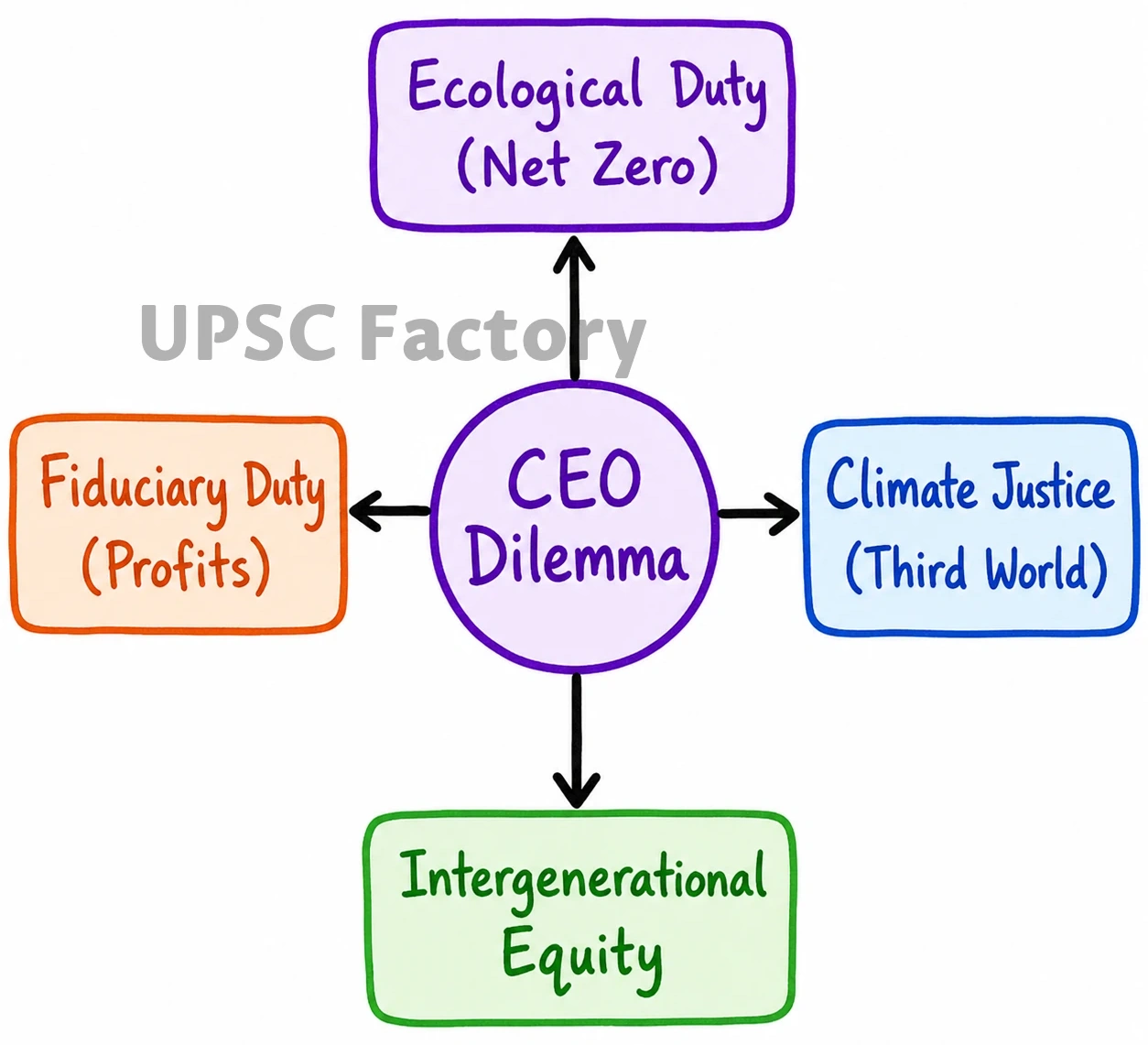
- Intergenerational Equity: Pursuing short-term technological dominance at the cost of long-term planetary survival.
- Fiduciary vs. Ecological Duty: The friction between maximizing shareholder wealth and broader environmental stewardship.
- Integrity Deficit: Contradicting the firm’s professed 2030 net-zero commitment.
- Climate Injustice: AI-driven environmental degradation disproportionately impacts vulnerable Third World populations.
2. (c) Arguments Against Penalties & (d) Balancing Measures
Arguments Against Imposed Penalties:
- CBDR Principle: Third World firms require transitional carbon space; blanket penalties ignore historical emission contexts (Climate Justice).
- Utilitarian Necessity: Indigenous AI innovations offer immense potential for solving critical localized challenges (e.g., healthcare, predictive agriculture).
- Collaborative Ethics: Global tech giants should facilitate technology transfer rather than resorting to punitive, monopolistic gatekeeping.
- Transitional Inevitability: Initial energy spikes are temporary phases preceding hardware and algorithmic efficiency breakthroughs.
Measures to Balance AI and Environment:
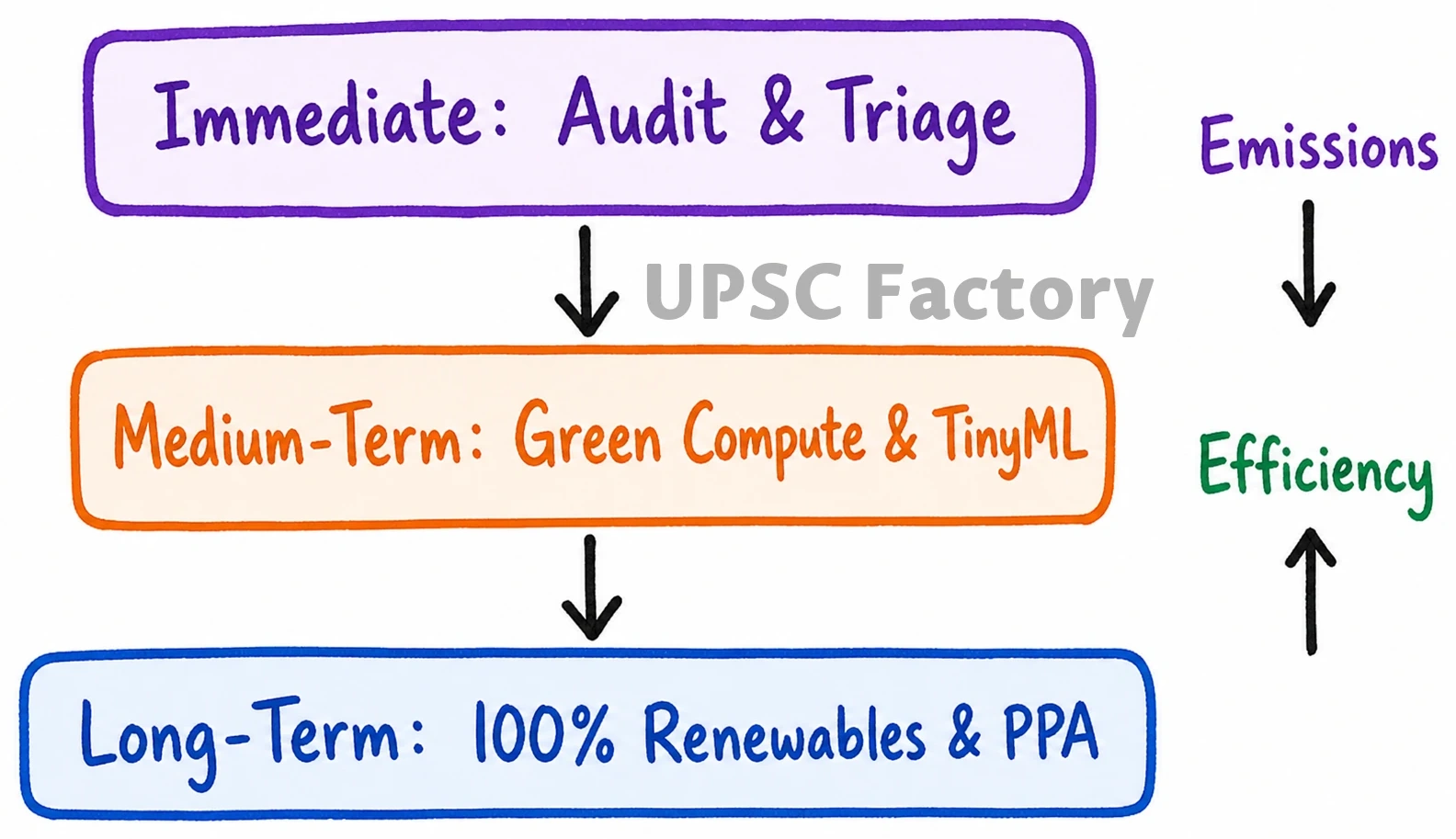
- Green Computing: Deploy energy-efficient processors and advanced Liquid Cooling Technology in existing data centers.
- Renewable Transition: Aggressively secure 100% clean energy via long-term Power Purchase Agreements (PPAs) for solar/wind.
- Algorithmic Frugality: Shift R&D from parameter-heavy models to “TinyML” (smaller, energy-efficient AI models).
- Internal Carbon Pricing: Levy internal taxes on high-compute projects to fund localized carbon offsetting and afforestation.
Aligning technological disruption with the Triple Bottom Line (People, Planet, Profit) ensures that AI evolution serves as a catalyst for sustainable human empowerment rather than ecological collapse.