Model Answer:
Electric Vehicles (EVs) are pivotal to India’s clean mobility transition, directly aligning with the Panchamrit target (Net-Zero emissions by 2070) and the global EV30@30 campaign.
1. Mechanisms of Carbon Emission Reduction
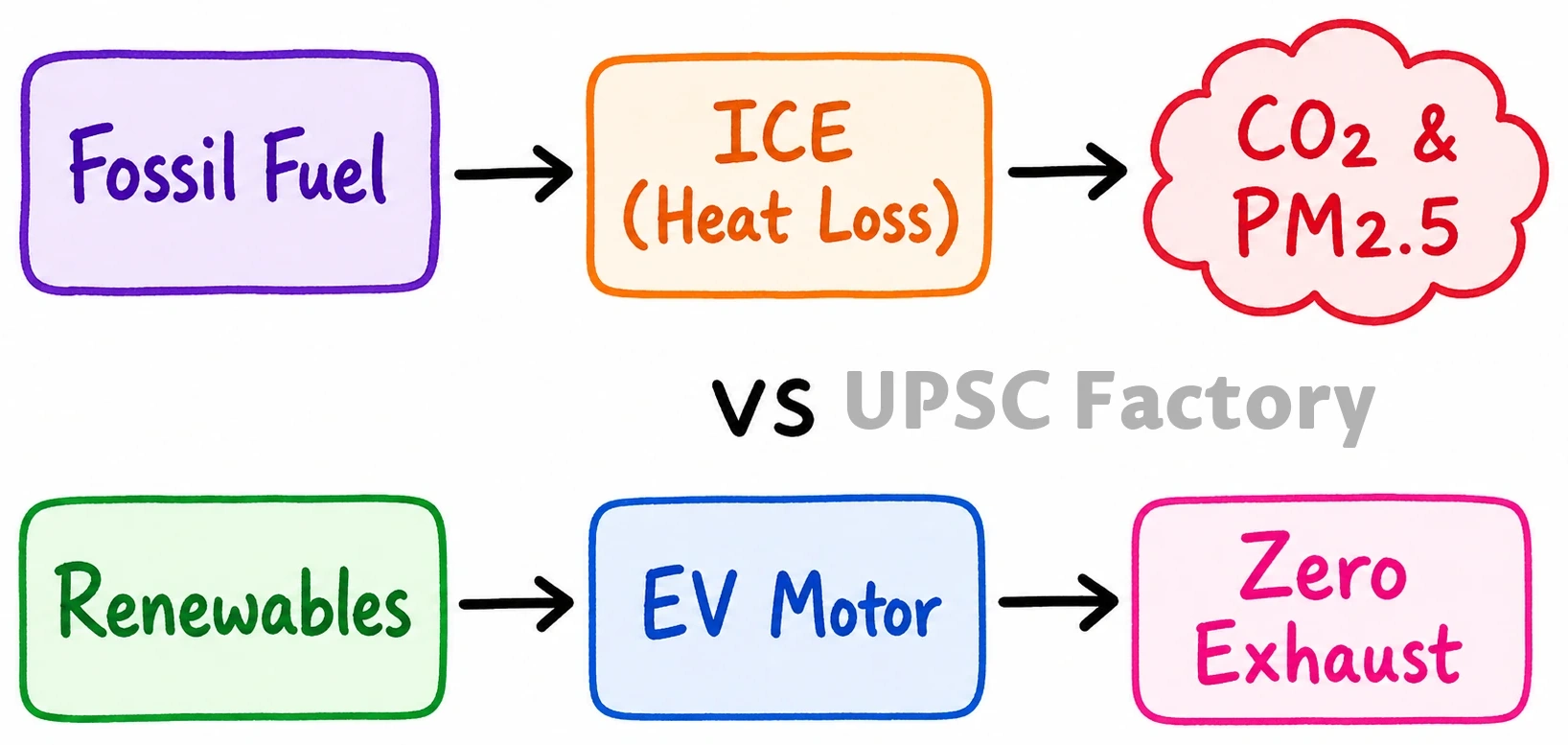
- Zero Tailpipe Output: EVs eliminate direct ‘Tank-to-Wheel’ greenhouse gas exhausts entirely compared to fossil-fueled vehicles.
- Superior Energy Conversion: Electric motors convert ~77% of electrical energy to wheels; ICEs waste ~70-80% as heat.
- Grid Decarbonization Synergy: The ‘Well-to-Wheel’ carbon footprint shrinks progressively as national grids integrate more renewable energy (e.g., solar-powered charging).
- Regenerative Braking: Recovers kinetic energy during deceleration, significantly reducing overall net electricity consumption per trip.
- Circular Economy Gains: Rapid advances in lithium-ion battery recycling mitigate lifecycle manufacturing emissions, steadily lowering overall carbon footprints.
2. Key Benefits Over Traditional ICE Vehicles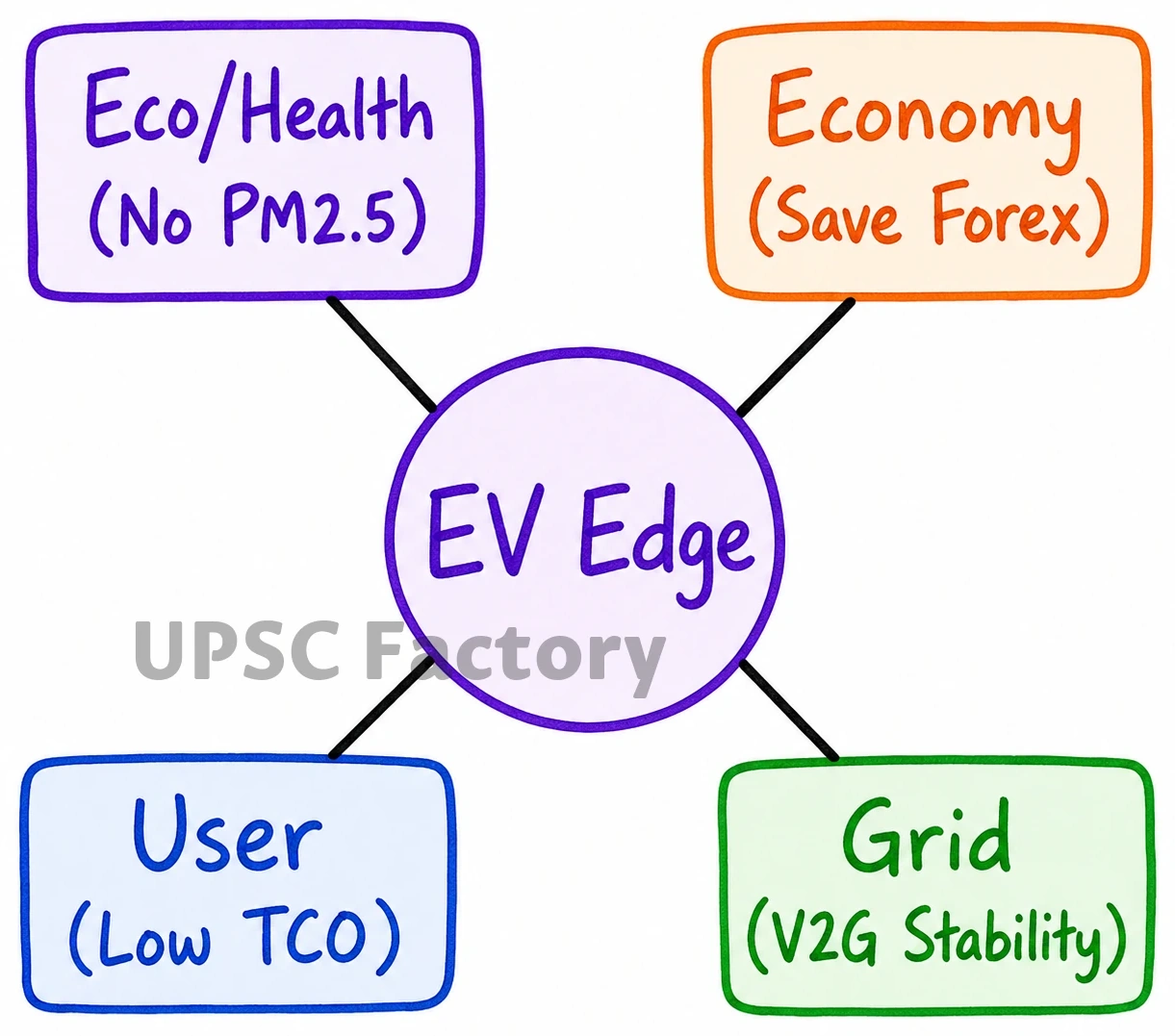
- Local Air Quality: Eradicate toxic tailpipe PM2.5, NOx, and SOx, directly combating urban smog (e.g., Delhi winter pollution).
- Macroeconomic Security: Decrease heavy reliance on imported crude oil, saving critical foreign exchange reserves (India imports ~85% of its oil).
- Cost Efficiency: Offer vastly lower Total Cost of Ownership (TCO) via cheaper running costs (~₹1/km) and minimal maintenance requirements.
- Acoustic Environment: Operate almost silently, drastically reducing pervasive urban noise pollution compared to loud combustion engines.
- Grid Stabilization: Vehicle-to-Grid (V2G) technology transforms EVs into mobile power banks, aiding load balancing during peak energy demand.
Accelerating EV adoption through robust indigenous battery manufacturing, universal charging infrastructure, and targeted policies like the PM E-DRIVE Scheme is critical for a sustainable, climate-resilient future.