Model Answer:
The invention of Blue LEDs in the 1990s provided the missing link in the RGB spectrum, enabling the creation of ultra-efficient, bright white solid-state lighting that revolutionized human life.
1. Significance: The Missing Link for White Light
While red and green LEDs existed for decades, white light was scientifically impossible without blue. This breakthrough single-handedly replaced a century of incandescent lighting technology.

2. Multi-Sectoral Impacts on Everyday Life
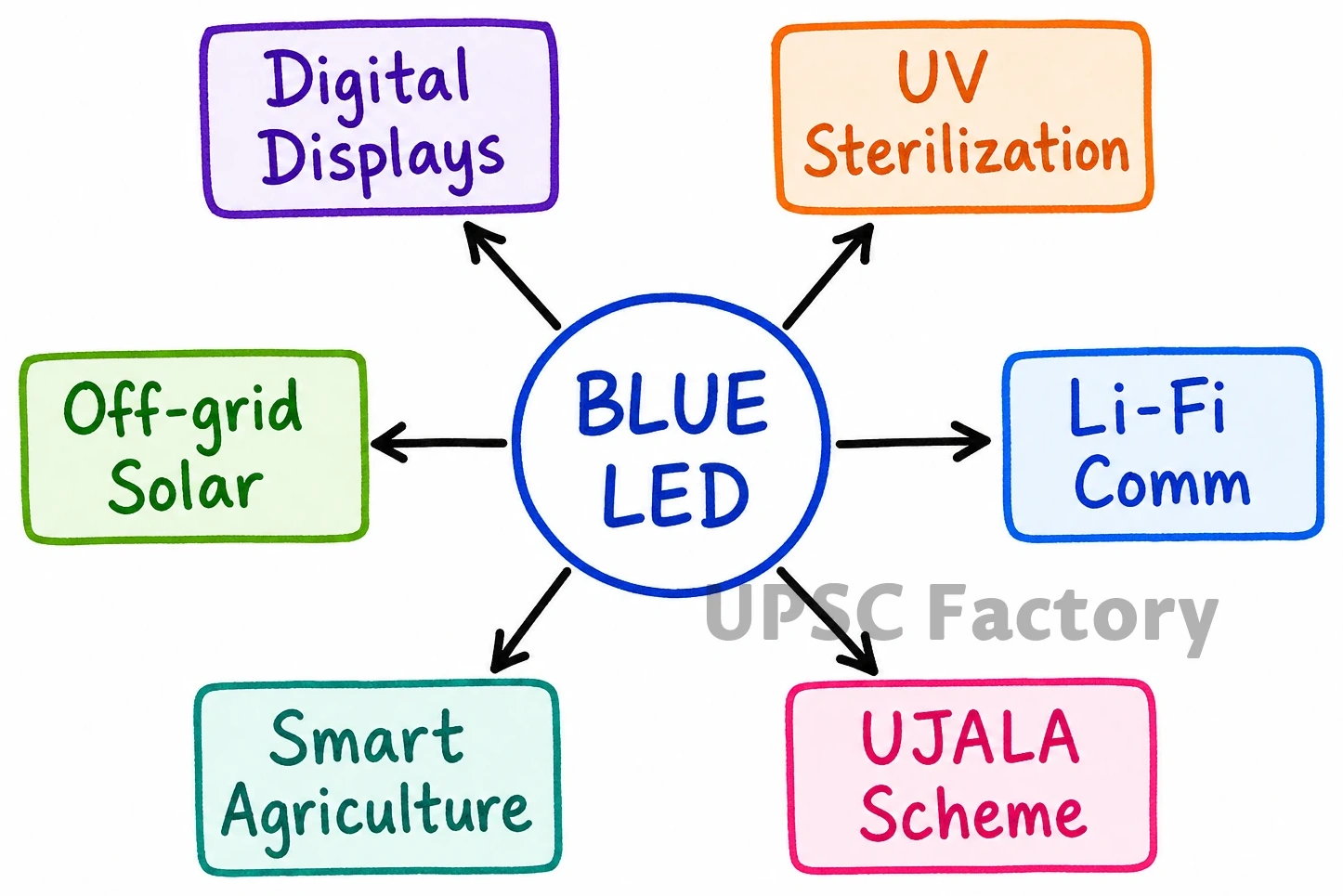
- Energy Efficiency & Economics: LEDs consume 90% less energy and last 100x longer than incandescent bulbs, drastically reducing electricity bills (India’s UJALA Scheme).
- Digital Electronics Revolution: Enabled thin, energy-efficient backlighting for modern smartphones, tablets, and TVs (LCD, LED, and OLED displays).
- Rural & Off-Grid Electrification: Ultra-low power requirements made solar-powered portable LED lamps viable, replacing hazardous kerosene in remote villages.
- Health & Sanitation: Deep-UV LEDs are widely deployed for cheap, rapid sterilization of drinking water, air, and medical equipment in off-grid areas.
- Precision Agriculture: Tunable LED wavelengths optimize photosynthesis in vertical farming and greenhouses, ensuring year-round crop yields independent of sunlight.
- Environmental Safety: Completely eliminated the need for toxic mercury, which was a major ecological hazard in traditional Compact Fluorescent Lamps (CFLs).
- Climate Change Mitigation: Massive global reduction in lighting-based electricity demand significantly curbs greenhouse gas emissions (driving SDG 7 and SDG 13).
- Advanced Communication: Forms the foundational hardware infrastructure for emerging high-speed, light-based optical wireless data transmission (Li-Fi technology).
By fundamentally altering global energy consumption and driving the digital display revolution, the Blue LED stands as a quintessential example of pure science directly advancing global sustainable development.