Model Answer:
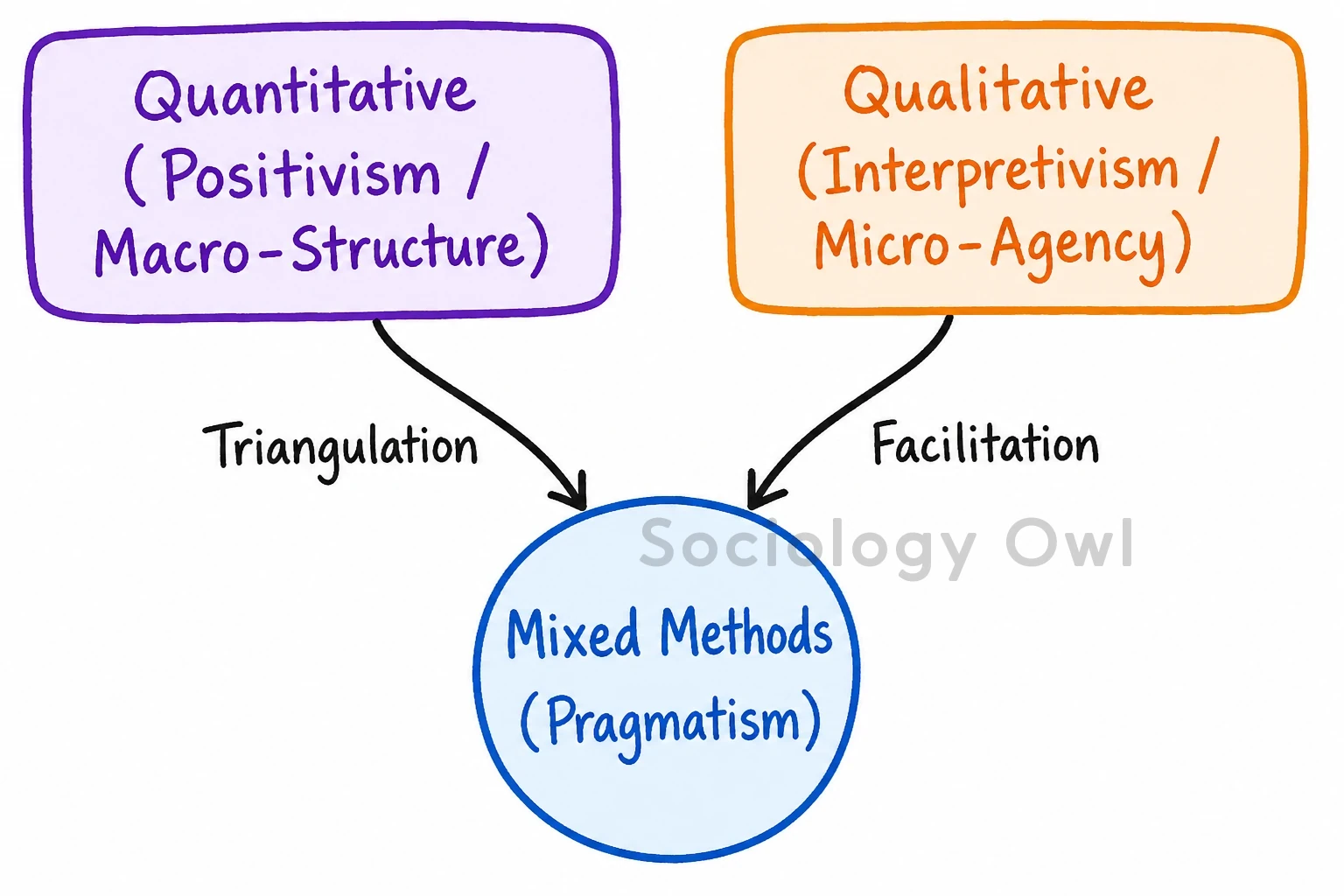
The “Mixed Method”, termed the “Third Methodological Movement” by John W. Creswell, integrates quantitative and qualitative techniques within a single study. It emerged to resolve the historical “paradigm wars” between Positivism (macro/objective) and Interpretivism (micro/subjective). Rooted in the philosophy of Pragmatism (Tashakkori and Teddlie), it argues that the research question dictates methodology, overriding dogmatic adherence to a single paradigm.
Strengths of Mixed Methods
- Methodological Triangulation: Norman Denzin argues that deploying multiple methods on a single research object enhances validity by cross-verifying structural data with lived experiences.
- Macro-Micro Linkage: It bridges the Structure-Agency divide. Alan Bryman highlights that quantitative methods establish structural regularities, while qualitative methods explain the subjective mechanisms driving them.
- Facilitation: One method sequentially aids another. For instance, qualitative focus groups often inform the design of a robust quantitative survey.
- Classical Precedents: Informally, classical thinkers utilized this. Max Weber masterfully combined statistical historical data with Verstehen (empathetic understanding) in The Protestant Ethic and the Spirit of Capitalism.
Limitations of Mixed Methods
- Incommensurability Thesis: Radical methodologists argue Positivism and Interpretivism possess fundamentally incompatible Ontologies (nature of reality) and Epistemologies (knowledge gathering). A socially constructed reality cannot seamlessly “mix” with an objective, observable one.
- Epistemological Dilution: Critics warn of superficial application, where qualitative research is stripped of its deep interpretive essence merely to align with statistical metrics.
- Resource Intensity: Executing dual paradigms requires specialized epistemological expertise, significantly increasing time and funding constraints.
Matthew Desmond’s Pulitzer-winning study Evicted exemplifies mixed methodology. He synthesized massive quantitative datasets (court eviction records) to map the macro-scale housing crisis, alongside immersive ethnographic interviews to capture the micro-level trauma of poverty.
Conclusion
In complex, postmodern societies, no single methodological lens sufficiently captures dynamic social realities. Aligning with Geoff Payne’s advocacy for Methodological Pluralism, mixed methods signify the maturing of sociological research, enabling scholars to synthesize structural constraints with individual agency for truly holistic insights.