Model Answer:
The establishment of the Delhi Sultanate in the 13th century integrated India into broader Central Asian networks, catalyzing a medieval technological revolution that profoundly transformed India’s socio-economic landscape.
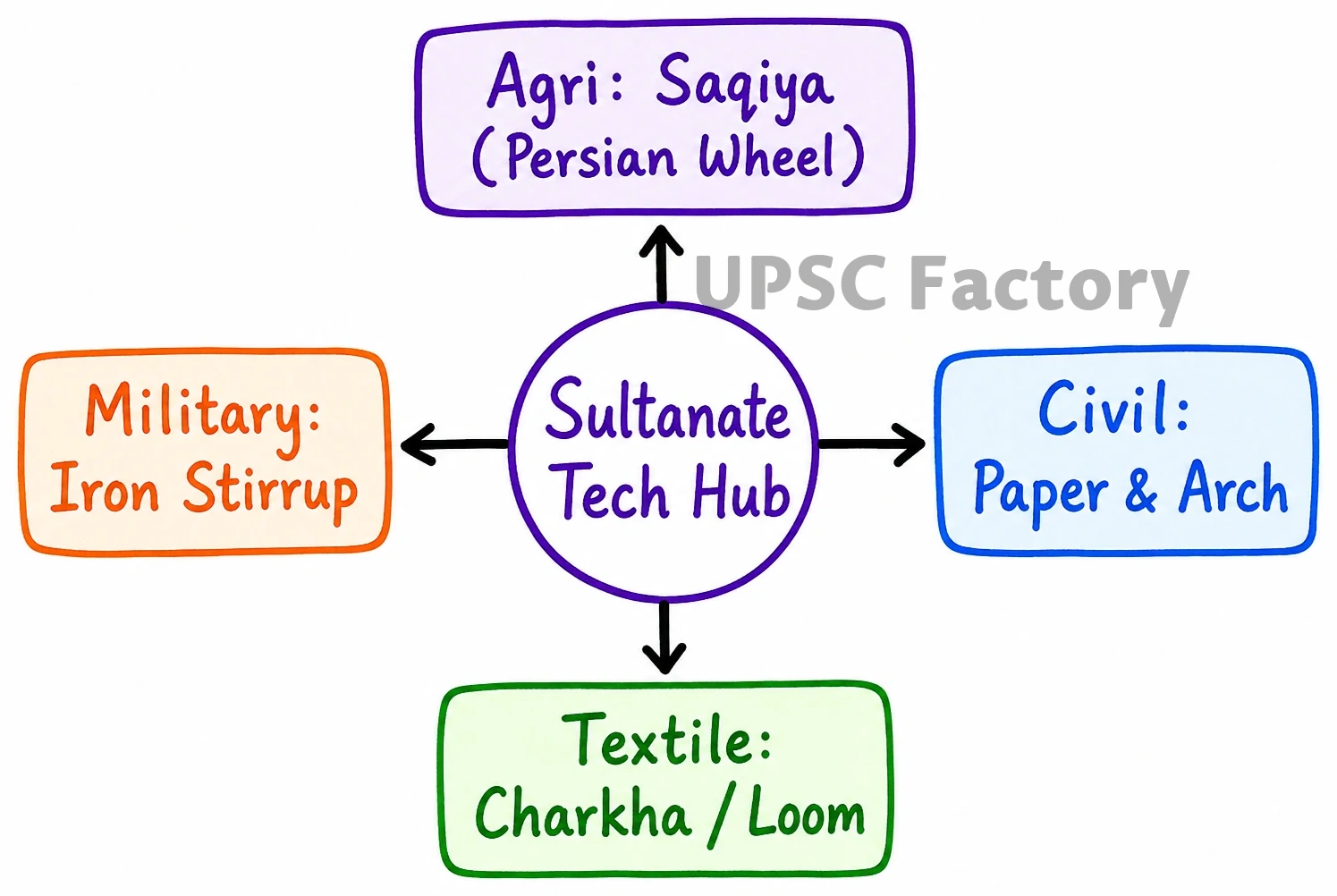
1. Major Technological Changes Introduced
- Irrigation & Agriculture: Introduction of the gear-driven Persian Wheel (Saqiya), enhancing the simpler indigenous water-lifting devices (Araghatta).
- Textile Mechanics: Arrival of the spinning wheel (Charkha), the cotton carder’s bow (Dhuniya), and the treadle loom.
- Arcuate Architecture: Widespread use of the True Arch, True Dome, and cementing lime mortar (e.g., Balban’s Tomb, Alai Darwaza).
- Manufacturing: Large-scale paper-making technology, substituting traditional palm leaves and birch bark.
- Military Cavalry: Introduction of iron stirrups and nailed horseshoes, revolutionizing equestrian warfare.
- Sericulture: Introduction of mulberry silk cultivation and advanced distillation techniques for perfumery.
2. Influence on Indian Society (Socio-Economic Impact)
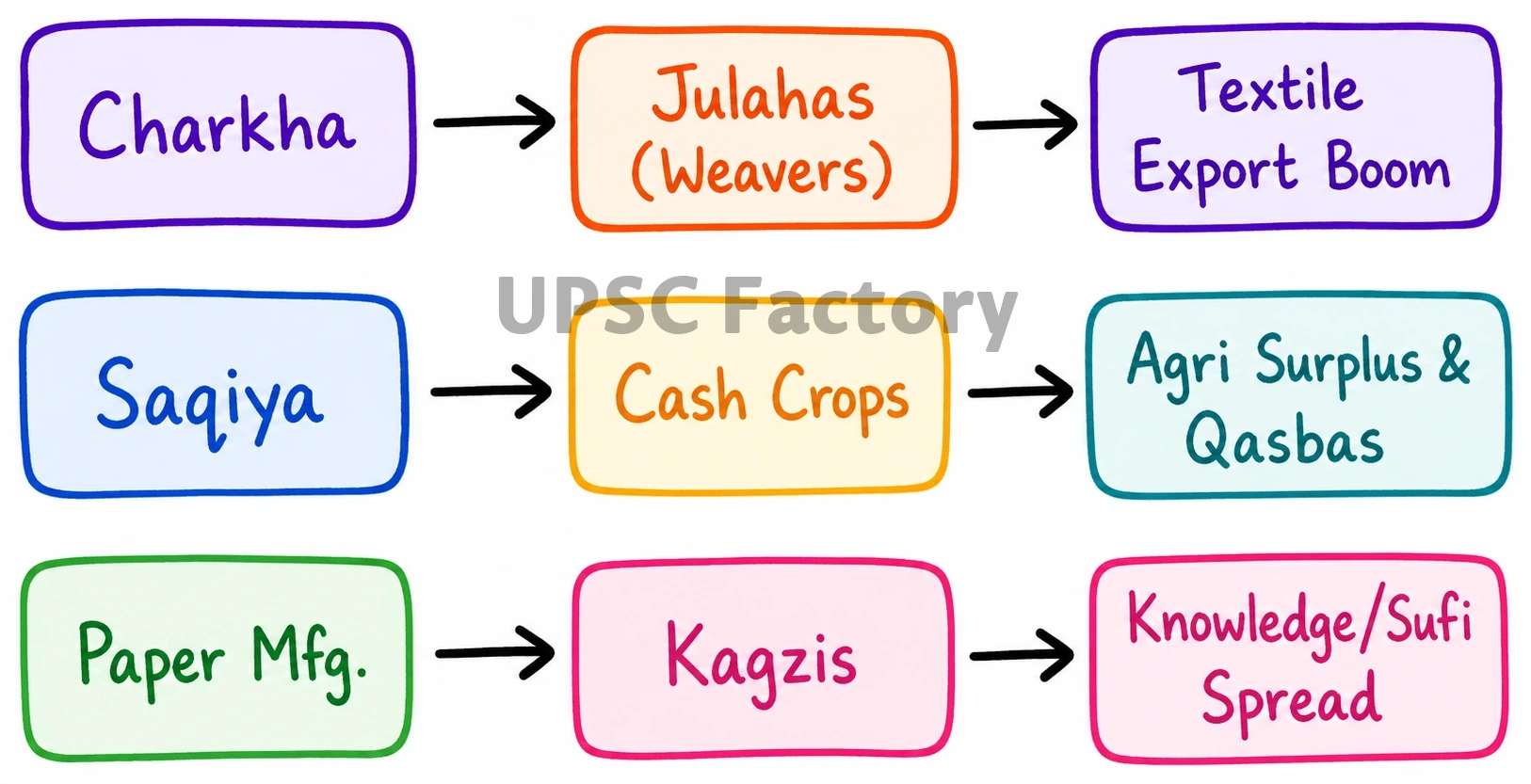
- Agricultural Surplus: The Saqiya expanded deep-well irrigation in arid regions (Punjab/Rajputana), driving the mass cultivation of cash crops (cotton, indigo, sugarcane).
- Textile Boom & Urbanization: The Charkha increased yarn production sixfold, sparking a global textile export boom and the rapid growth of urban market towns (Qasbas).
- Emergence of New Castes: New technologies fostered distinct, specialized artisan communities seeking upward social mobility, such as weavers (Julahas) and paper-makers (Kagzis).
- Intellectual & Cultural Shift: Cheaper, abundant paper democratized knowledge, facilitating state record-keeping, miniature painting, and the widespread dissemination of Bhakti and Sufi literature.
- Public Infrastructure: Lime mortar and arcuate engineering enabled the construction of expansive public works, including large mosques, bridges, and caravanserais, aiding trade.
- Military Centralization: The iron stirrup enabled devastating heavy cavalry charges, consolidating state power and structuring the Iqta (land-grant) based feudal society.
These vital technological infusions shifted India from a stagnant, localized agrarian system to a highly commercialized, pre-modern manufacturing economy, laying the definitive socio-economic foundations for subsequent Mughal prosperity.