Model Answer:
The Vedic period (1500–600 BCE), documented through the Shruti texts, laid the foundational socio-cultural and philosophical bedrock of the Indian subcontinent.
1. Main Features of Vedic Society and Religion
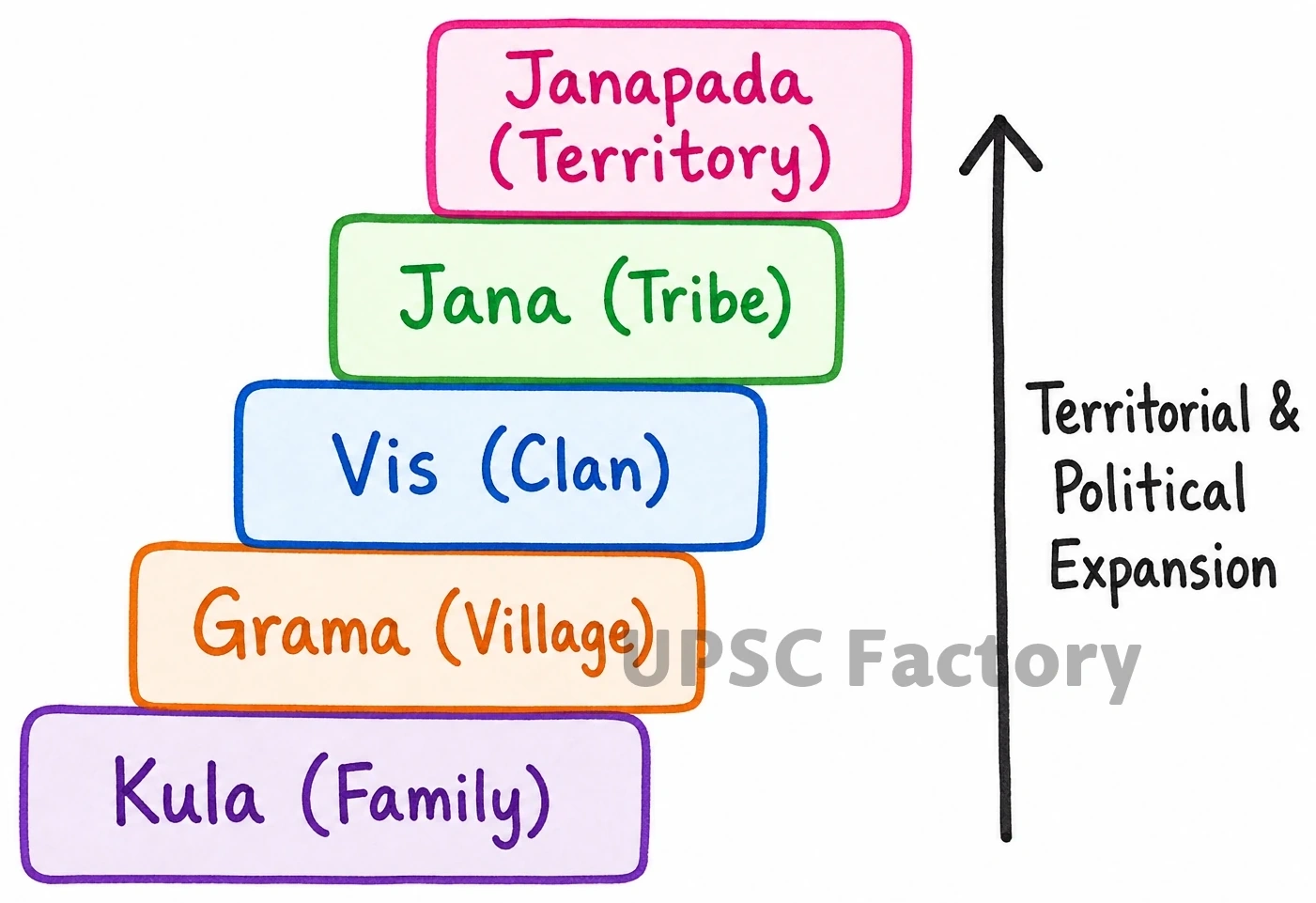
- Patriarchal Structure: Society was organized into Kulas (families) headed by a male Kulapa, gradually expanding into larger territorial Janapadas.
- Varna System: Early Vedic society was egalitarian and occupation-based, which rigidified into a strict, hereditary four-tier hierarchy during the Later Vedic period.
- Ashramas & Purusharthas: Human life was structured into four stages (Brahmacharya, Grihastha, Vanaprastha, Sanyasa) to achieve four supreme goals (Dharma, Artha, Kama, Moksha).
- Status of Women: Women enjoyed high status initially (participating in assemblies like Vidatha and composing hymns like Apala, Gargi) but faced subjugation later.
- Nature Worship & Rituals: Natural forces were personified and worshipped (Indra, Agni, Varuna) through elaborate Yajnas (fire sacrifices) rather than idol worship.
- Philosophical Evolution: The period culminated in profound metaphysical inquiries via the Upanishads, focusing on monism, Atman, and Brahman.
2. Continuity in Contemporary Indian Society
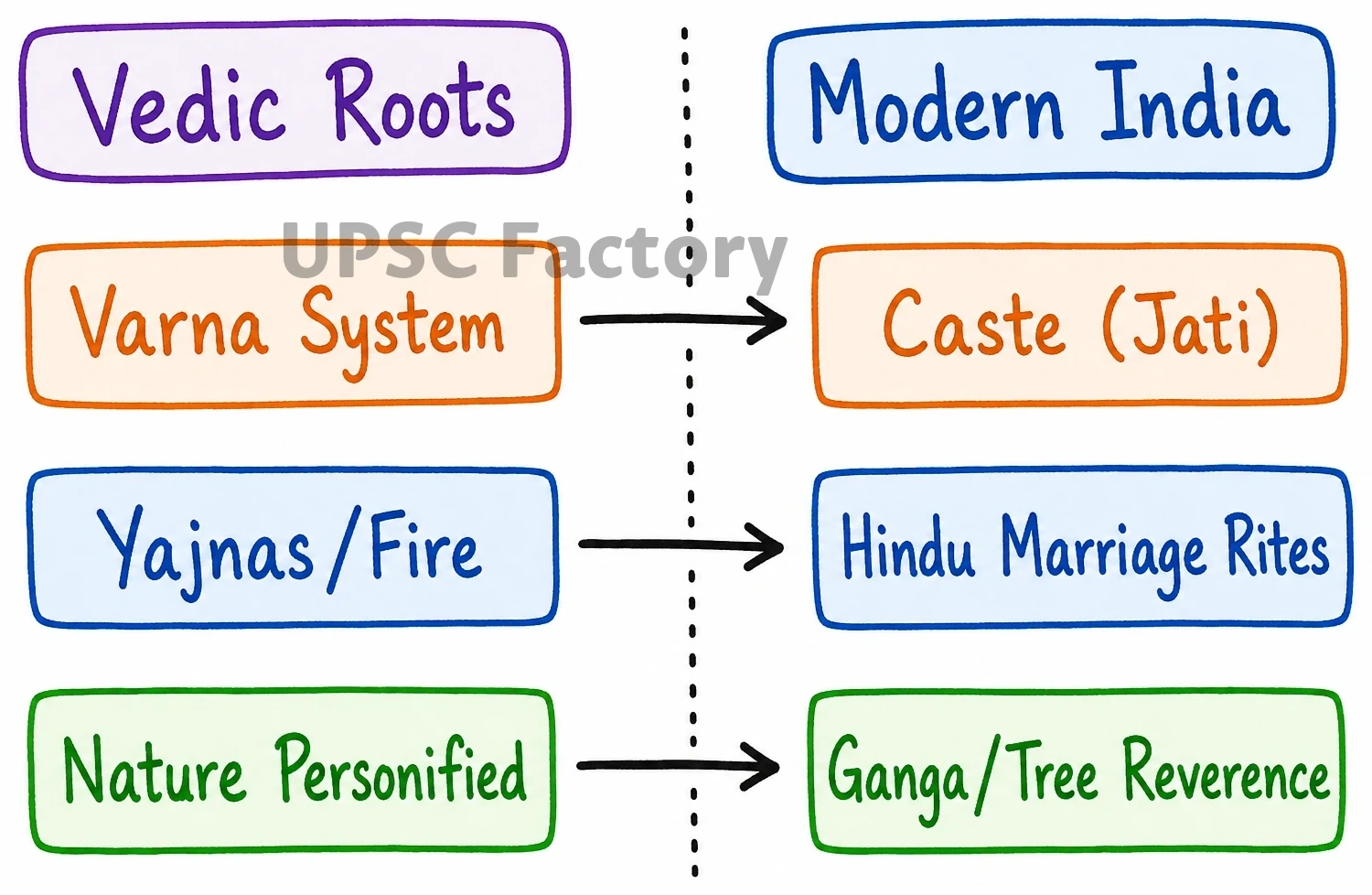
- Caste Dynamics: The hereditary Later Vedic Varna system evolved into the contemporary caste system (Jati), continuing to influence social identity, marriages, and politics.
- Ritualistic Continuities: Agni (fire) remains the eternal witness; Yajnas and Homas are central to Hindu rites of passage (e.g., Saptapadi in marriages).
- Spiritual Traditions: The daily recitation of Vedic hymns (Gayatri Mantra) and the use of Sanskrit in religious liturgy remain ubiquitous.
- Philosophical Bedrock: Upanishadic doctrines of Karma (action and consequence) and Samsara (cycle of rebirth) inherently shape the modern Hindu worldview.
- Patriarchy & Family: The traditional patriarchal framework and preference for a joint-family structure (Karta system) still dominate Indian social norms.
- Reverence for Nature: Vedic eco-theology persists through the continued worship of rivers (Ganga), trees (Peepal), and animals (Cow).
Despite millennia of historical churn and modern constitutionalism, India’s socio-religious fabric retains the indelible imprint of Vedic traditions, seamlessly blending ancient heritage with contemporary life.