Model Answer:
Regional disparity refers to the unequal socio-economic development, resource distribution, and infrastructure growth across different geographical regions, creating structural imbalances within a nation.
Regional Disparity vs. Diversity
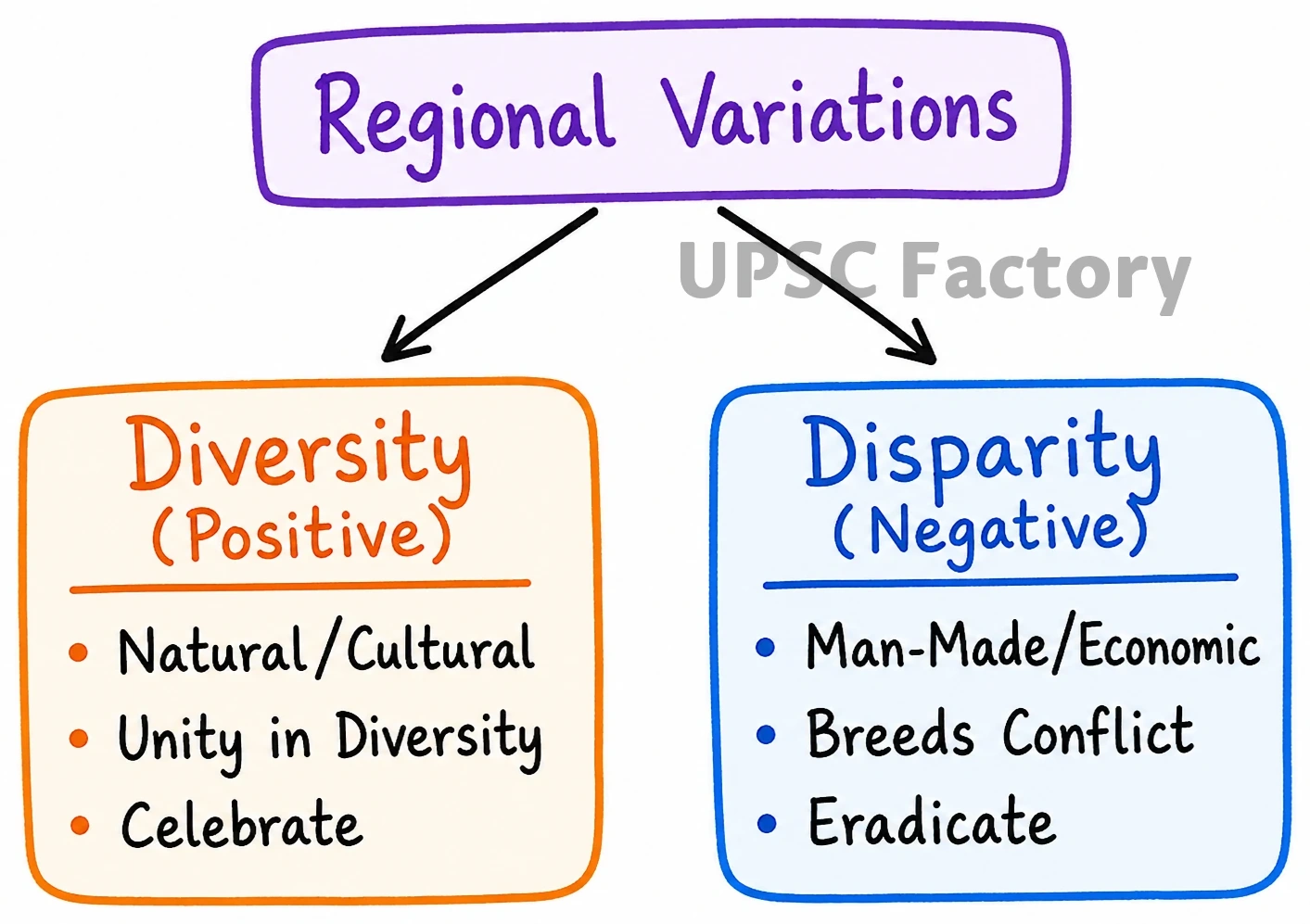
While often geographically co-located, disparity and diversity represent fundamentally different societal dimensions:
- Fundamental Nature: Disparity represents unequal socio-economic outcomes (negative); diversity represents cultural, linguistic, and geographical plurality (positive).
- Origin: Disparity is primarily human-made, stemming from historical neglect or skewed policies; diversity is natural and historically evolved.
- Societal Impact: Disparity breeds marginalization, resentment, and conflict; diversity fosters a rich, composite cultural heritage.
- Policy Imperative: Disparity must be eradicated (e.g., Article 371 special provisions); diversity must be celebrated and preserved (e.g., Ek Bharat Shreshtha Bharat).
Severity of Regional Disparity in India
Regional disparity is a critical, multi-dimensional challenge threatening India’s inclusive growth:
- Stark Economic Divide: Massive per-capita income gaps persist between Southern/Western and Eastern states (e.g., Bihar’s income is a fraction of Goa’s).
- Asymmetric Investment: Over 70% of FDI concentrates in Maharashtra, Gujarat, Karnataka, and Delhi, leaving Eastern and Northeastern regions capital-starved.
- Social Indicator Gaps: NITI Aayog’s National Multidimensional Poverty Index (MPI) highlights severe divides (e.g., Kerala near 0% poverty vs. Bihar >30%).
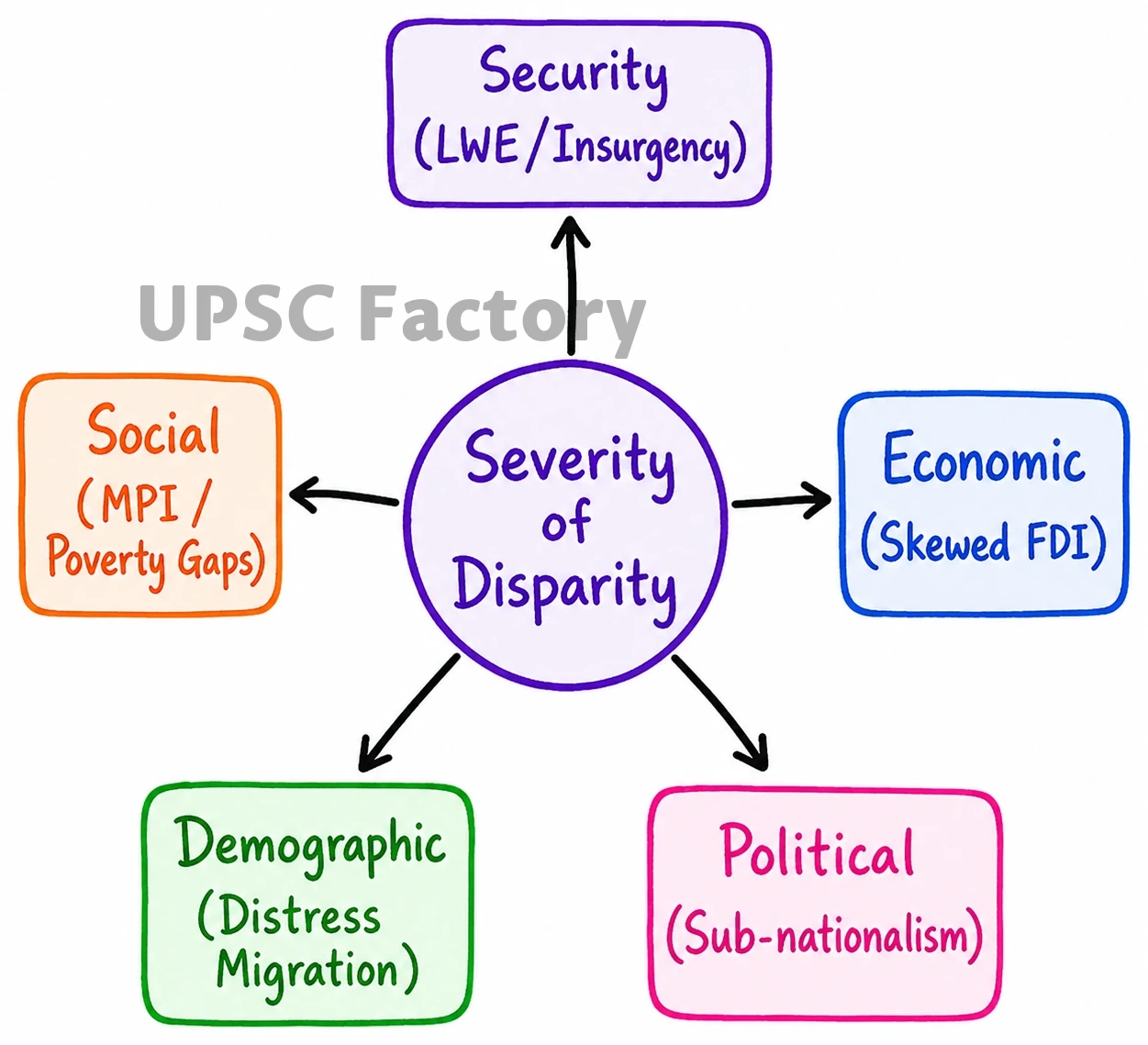
- Internal Security Threats: Chronic underdevelopment and resource exploitation fuel Left-Wing Extremism (LWE) and insurgency (e.g., Bastar region, Dandakaranya).
- Political Fragmentation: Perceived economic neglect drives sub-nationalism and agitations for separate statehood (e.g., Vidarbha, Gorkhaland).
- Distress Migration: Lack of local opportunities forces massive out-migration, burdening metropolitan infrastructure and creating urban slums (e.g., UP/Bihar to Mumbai).
Mitigating regional disparity requires strengthening cooperative federalism and prioritizing hyper-local, targeted interventions like the Aspirational Districts Programme to ensure truly equitable and balanced national development.