Model Answer:
Pre-colonial famines were localized. Post-1757, British policies transformed occasional droughts into frequent, structural, and catastrophic man-made disasters (Bengal Famine, 1770).
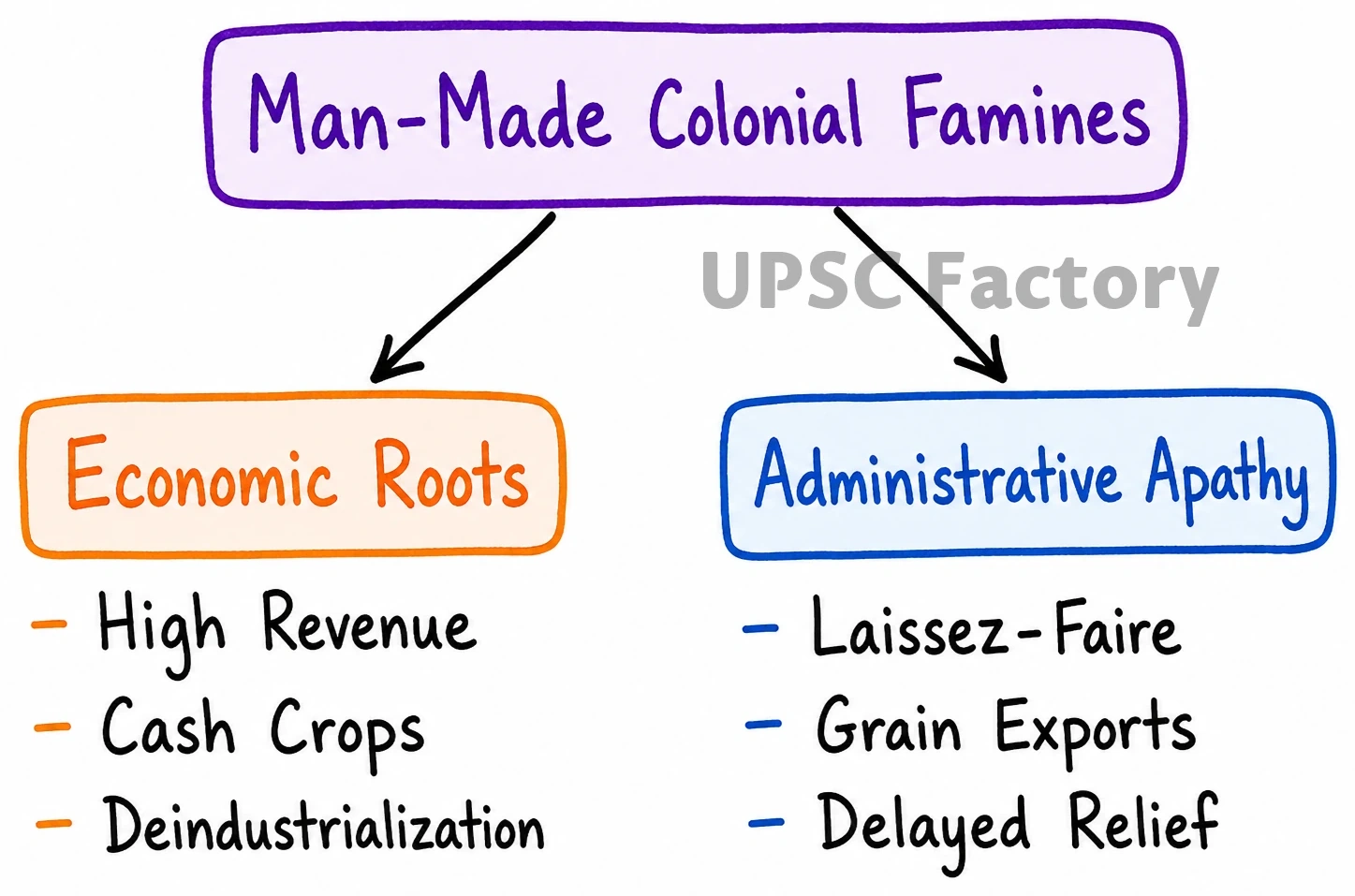
1. Colonial Economic Policies
- High Land Revenue: Rigid, exorbitant extraction systems (Zamindari, Ryotwari) impoverished peasants, leaving zero surplus for drought years.
- Forced Commercialization: Coercive shift from staple food crops to cash crops (Indigo, Opium) destroyed local food security.
- Deindustrialization: Destruction of native handicrafts pushed unemployed artisans into agriculture, drastically increasing land-to-population pressure.
- Drain of Wealth: Systematic capital extraction prevented domestic reinvestment in critical irrigation or agrarian modernization.
2. Administrative Apathy & State Failures
- Laissez-Faire Dogma: British refusal to regulate markets encouraged aggressive food hoarding and extreme price manipulation during scarcities.
- Ruthless Grain Exports: Massive food exports to Britain continued uninterrupted even during severe domestic starvation (Great Famine, 1876–78).
- Punitive Relief Neglect: Early relief was harsh and delayed; systematic response emerged only post-Strachey Commission (Famine Code, 1883).
Consequently, colonial famines were primarily structural and economic failures, exposing an exploitative imperial system that systematically shattered India’s traditional agrarian resilience.