Model Answer:
The classical elite theories of Vilfredo Pareto, Gaetano Mosca, and Robert Michels—the “Machiavellian School”—emerged as critiques of Marxist classlessness and mass democracy. They assert every society is ruled by an organized minority holding disproportionate power.
Core Similarities and Differences
Core Similarities
- Inevitability of Minority Rule: Power is a zero-sum game. They shared an elitist epistemology, viewing masses as apathetic and incapable of self-rule.
- Critique of Democracy and Marxism: Popular sovereignty is deemed a myth masking elite domination. They argued Marxist revolutions merely replace old rulers with a new bureaucratic elite.
Key Differences in Analysis
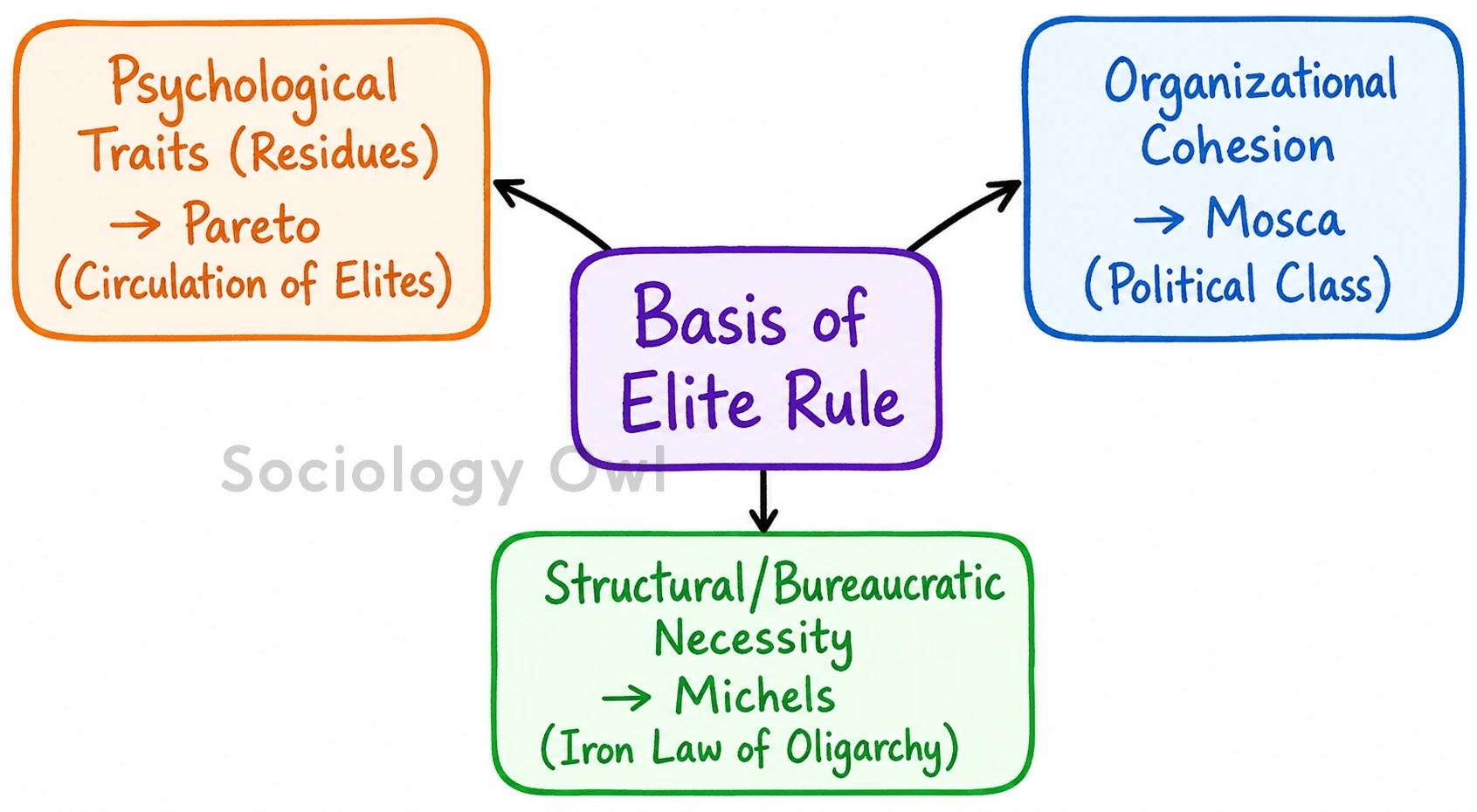
- Vilfredo Pareto (Psychological): Emphasized innate psychological “residues”. History is a “graveyard of aristocracies” marked by the circulation of elites—occurring when “Lions” (using force) lack the cunning of “Foxes” (using manipulation) to manage crises.
- Gaetano Mosca (Organizational): Focused on a “political class” dominating an unorganized majority, legitimized by a “political formula” (e.g., popular will). Unlike Pareto, Mosca argued this class is relatively open and can assimilate the masses.
- Robert Michels (Structural): Formulated the “Iron Law of Oligarchy.” Analyzing socialist parties, he demonstrated that bureaucratic necessities in complex institutions inevitably create detached, self-serving oligarchies.
Crucial Issues and Criticisms
These theorists highlighted the “Problem of Democracy” and “Bureaucratic Scale,” but faced significant scholarly critique:
- Pluralism: Robert Dahl (Who Governs?) argued power is dispersed among competing pressure groups, not monopolized by a single elite.
- Institutional Shift: C. Wright Mills (The Power Elite) argued modern elite power stems from institutional positions (corporate, military, political), not innate psychological traits.
- Specialization: Suzanne Keller proposed “Strategic Elites,” replacing monolithic models with multiple, specialized elites.
Michels’ Iron Law of Oligarchy persists in highly centralized political party high-commands today. Moreover, entities like the World Economic Forum or Big Tech Oligarchs resemble a modern political class, using globalization as their legitimizing political formula.
Conclusion
Despite deterministic biases, classical elite theories remain indispensable. Alongside modern adaptations like “Democratic Elitism,” they provide a vital sociological reality check against the utopian claims of modern representative democracies.