Model Answer:
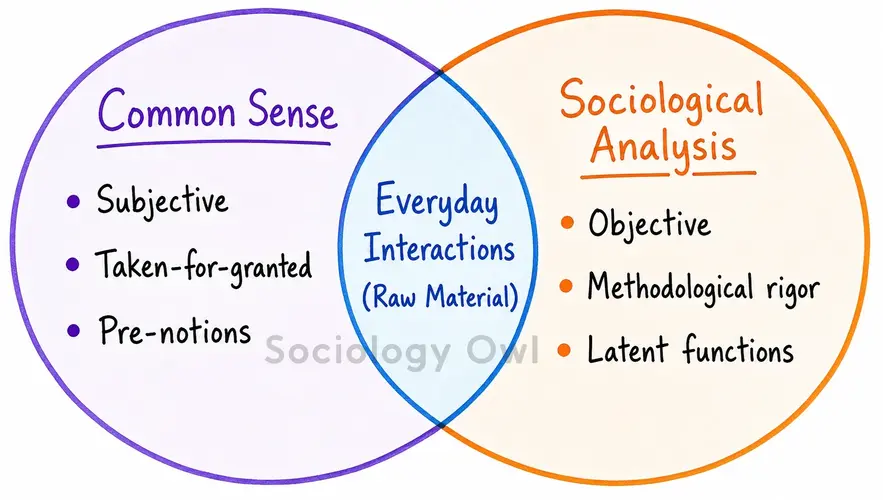
Common sense is the routine, “taken-for-granted reality” navigating daily life. Antonio Gramsci viewed it as fragmented wisdom often reflecting ruling-class ideological hegemony.
Sociology Transcending Common Sense
Positivist and critical traditions argue sociology systematically debunks uncritical everyday knowledge:
- Emile Durkheim challenged individualistic common-sense views in Suicide, proving its structural, social roots.
- C. Wright Mills utilized the Sociological Imagination to elevate isolated “personal troubles” into structural “public issues.”
Sociology Relying on Common Sense
Interpretivists treat everyday knowledge not as an error, but as essential subject matter:
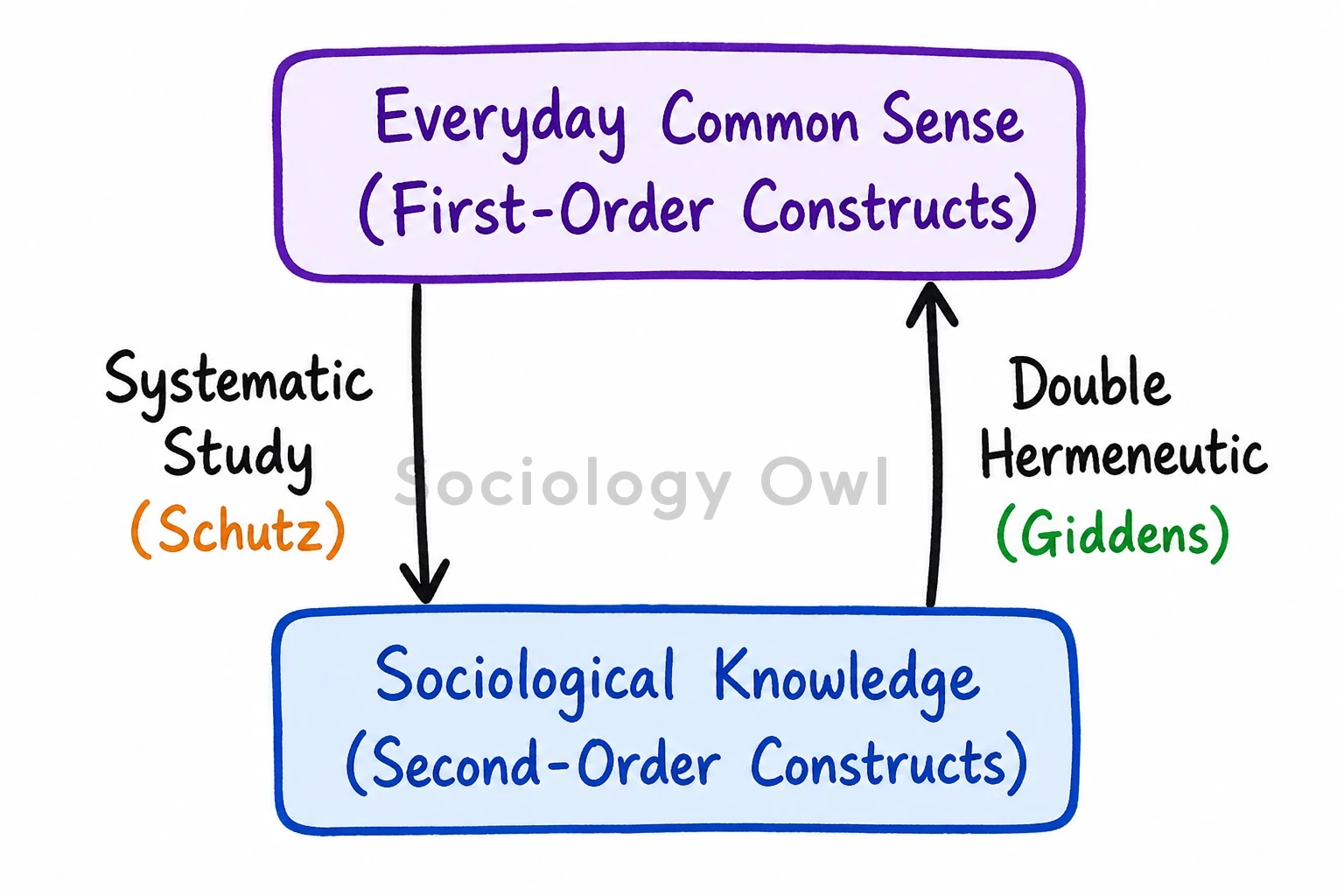
- Alfred Schutz argued individuals use “first-order constructs” (common sense), which sociologists systematically organize into “second-order constructs.”
- Harold Garfinkel‘s Ethnomethodology studies the practical methods people use to actively construct and maintain everyday common sense.
While common sense often labels gig-economy drivers as “flexible independent freelancers,” sociological analysis reveals hidden structures of algorithmic control and economic precarity.
Conclusion
The relationship is dialectical. Through Anthony Giddens‘ concept of the Double Hermeneutic, sociological discoveries (e.g., “patriarchy” or “introversion”) continuously filter back into society, evolving into tomorrow’s common sense.