Model Answer:
Mineral oil distribution is highly skewed, with the Middle East and the Americas holding over 80% of global reserves, creating critical vulnerabilities globally.
Spatial Skewness of Global Reserves
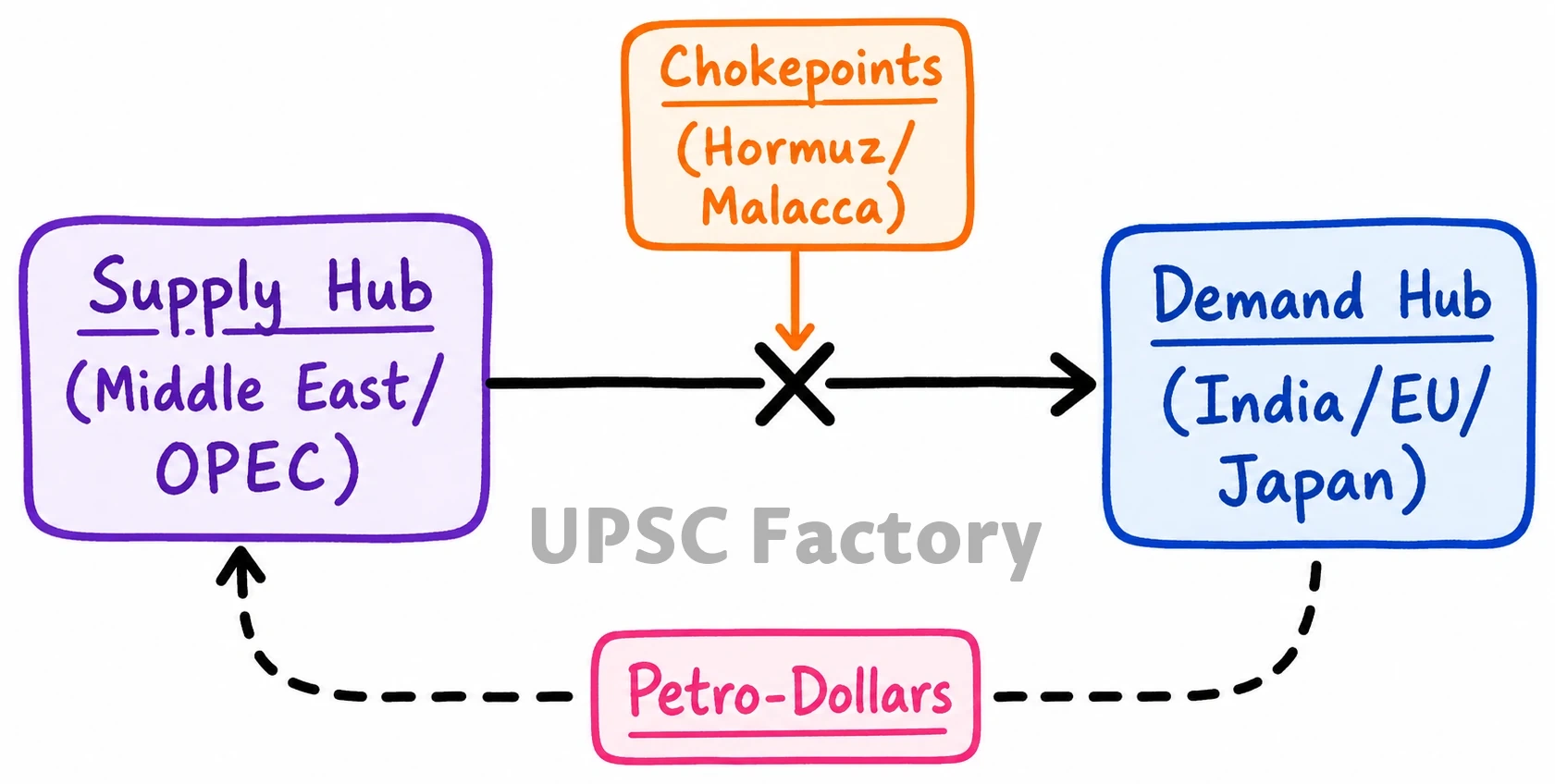
- Oligopolistic Concentration: Over 50% of proven reserves lie in the Middle East, while major consumers are heavily import-dependent (India, EU, Japan).
- Geographical Mismatch: Massive disparities exist between production hubs and high-demand industrial centers, necessitating complex global supply chains.
Geopolitical and Economic Implications
- OPEC+ Cartelization: Monopolistic price manipulation by dominant blocs threatens global energy security (OPEC+ production cuts).
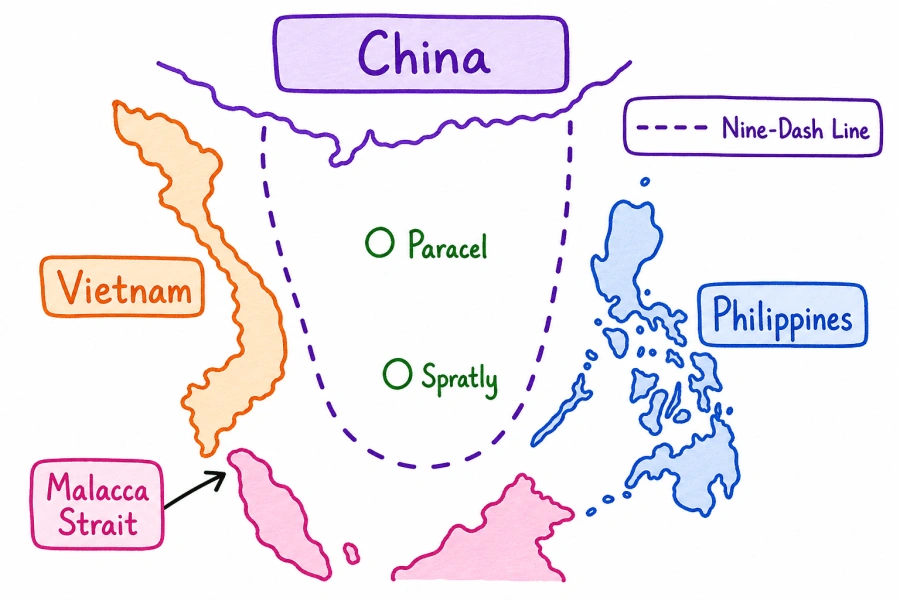
- Chokepoint Vulnerabilities: Extreme reliance on narrow maritime transit routes heightens risks of supply disruptions (Strait of Hormuz, Malacca).
- Resource Conflicts: Oil wealth and transit routing often fuel regional instability, militarization, and proxy wars (South China Sea, Middle East).
- Macroeconomic Stress: Importers suffer chronic current account deficits, currency depreciation, and imported inflation (India’s soaring energy import bill).
- Petro-Dollar Hegemony: Global oil pricing in USD solidifies American economic dominance and unilateral financial leverage.
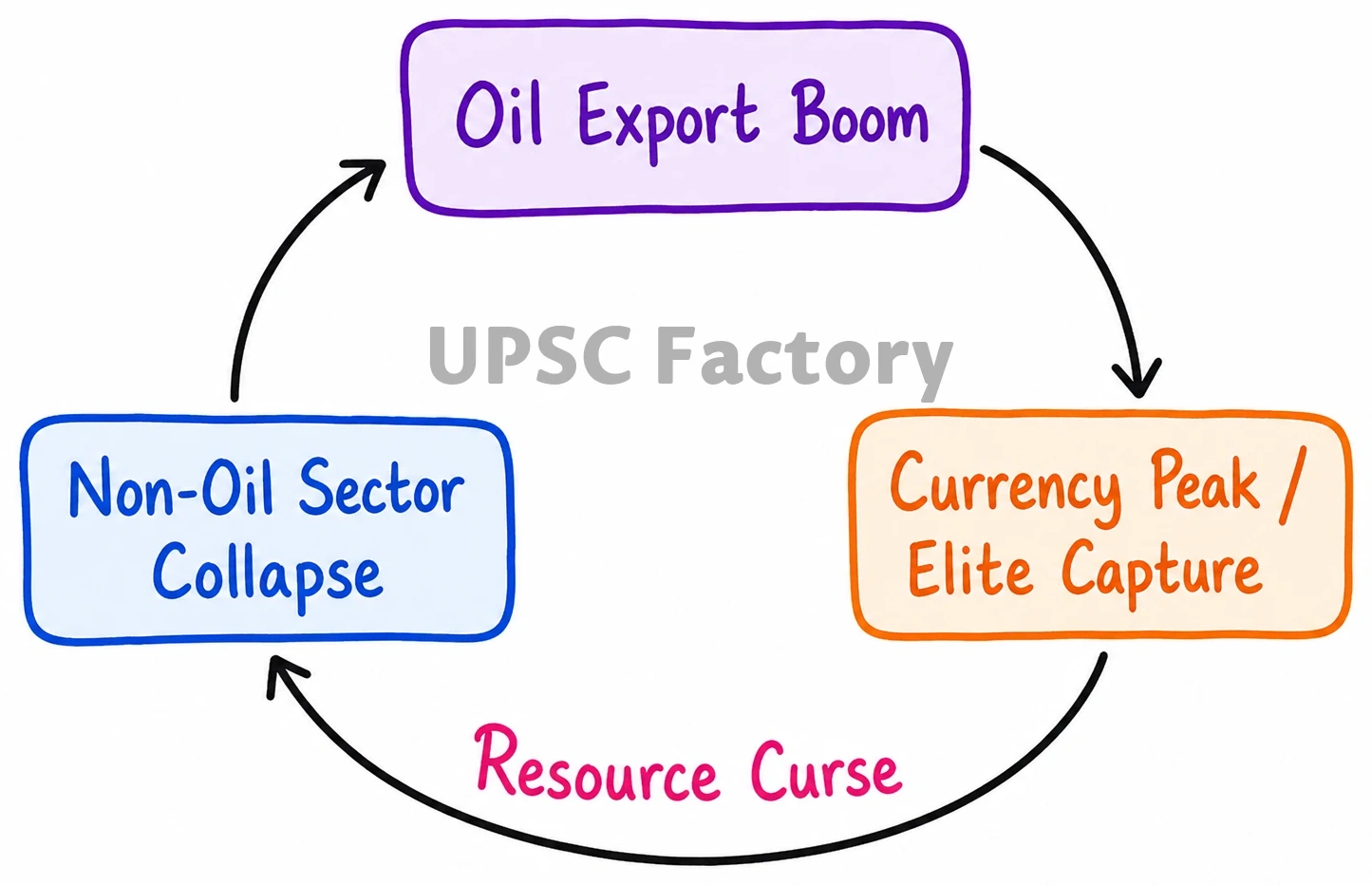
- Dutch Disease: Over-reliance on lucrative oil exports paradoxically stifles other domestic manufacturing and agricultural sectors (Venezuela, Nigeria).
Socio-Environmental Implications
- The Resource Curse: The “paradox of plenty” frequently entrenches high economic inequality, corruption, and authoritarianism in petro-states (Equatorial Guinea).
- Demographic Shifts: Spatial skewness triggers massive, asymmetric labour migration to oil-rich economic hubs (South Asian diaspora in the Gulf).
- Ecological Degradation: Desperate extraction in fragile geographies causes severe, irreversible ecological damage (Niger Delta oil spills, Arctic drilling).
- Delayed Green Transition: Vested petro-state interests actively lobby to dilute and slow down global climate action agreements (COP negotiations).
Mitigating these asymmetric vulnerabilities necessitates accelerating the global transition to decentralized renewable energy (International Solar Alliance) and diversifying strategic petroleum reserves.