Model Answer:
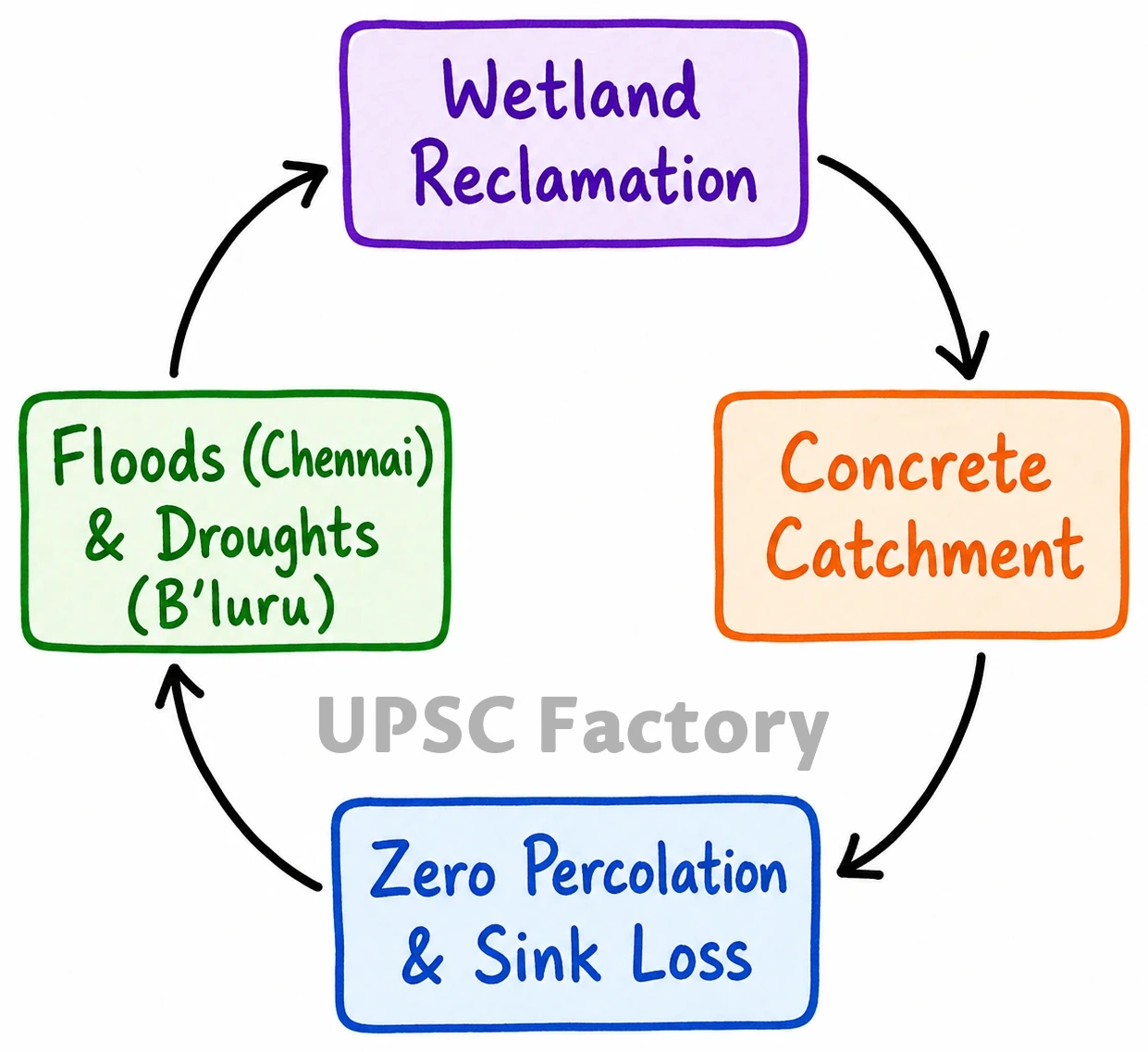
Unplanned urbanization often reclaims wetlands and lakes for infrastructure development, severely disrupting natural ecological balances and creating extreme urban vulnerabilities.
Hydrological Impacts & Disaster Vulnerability
- Loss of flood sinks: Destruction of natural drainage causes severe urban inundation (e.g., 2015 Chennai floods due to Pallikaranai marsh encroachment).
- Groundwater depletion: Cemented catchments prevent percolation, exacerbating acute urban water crises (e.g., rapid drying of borewells in Bengaluru).
- Water contamination: Reduced water volumes drastically increase pollutant concentration and toxicity (e.g., toxic foam and fires in Bellandur Lake).
Ecological Degradation & Micro-climate Alteration
- Biodiversity collapse: Habitat destruction decimates local aquatic flora and migratory bird populations (e.g., flamingo decline in Mumbai’s reclaimed Uran wetlands).
- Micro-climate alteration: The disappearance of natural cooling water bodies significantly intensifies the Urban Heat Island (UHI) effect.
- Loss of carbon sinks: Reclaiming wetlands releases stored greenhouse gases, accelerating localized climate change impacts.
Mitigating these impacts requires integrating “Sponge City” concepts into urban planning and strictly enforcing the Wetlands (Conservation & Management) Rules, 2017.