Model Answer:
Indian agriculture is rapidly transitioning from a supply-driven, cereal-centric model to a demand-driven diversified system, fundamentally reshaped by evolving consumer dietary preferences and modernized market architectures.
1. Shifts in Consumption Patterns Altering Cropping
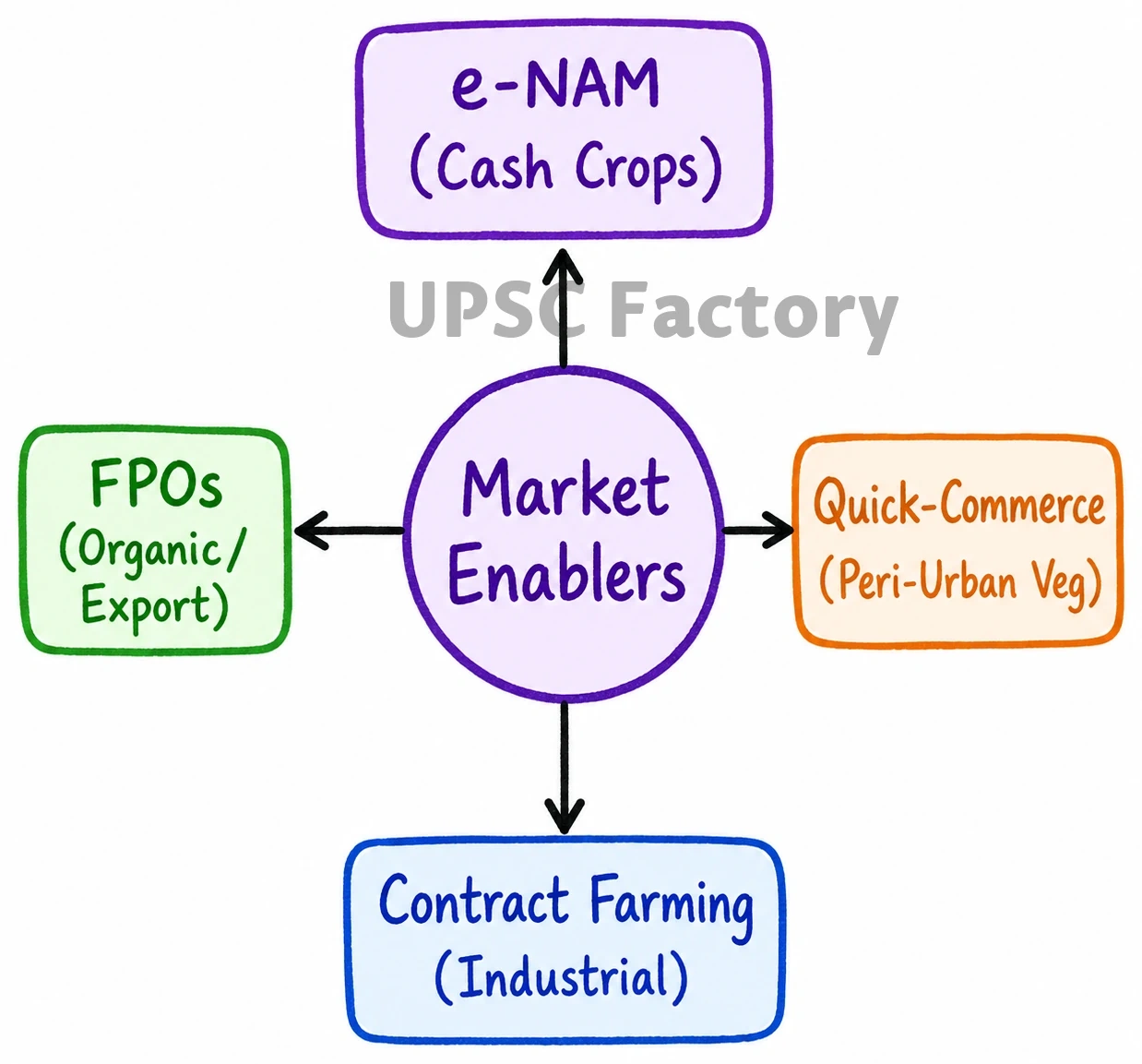
- Horticulture Dominance: Rising incomes and diet diversification have shifted acreage toward fruits and vegetables, with horticulture production (>350 MT) now consistently surpassing foodgrains (NSSO HCES Data).
- Nutritional Realignment (Millets): Growing urban health consciousness has catalyzed the revival of climate-resilient ‘Shree Anna’ and nutri-cereals (Ragi, Jowar, Bajra).
- Protein-Rich Diets: Surging consumption of dairy, meat, and eggs has proportionally increased the cultivation of pulses, oilseeds (Soybean), and fodder crops (Maize).
- Processed Food Surge: Urban fast-food culture and changing lifestyles have spurred the cultivation of industry-specific crop varieties (Chipsona potatoes, hybrid tomatoes).
2. Changing Marketing Conditions Driving Cropping Patterns
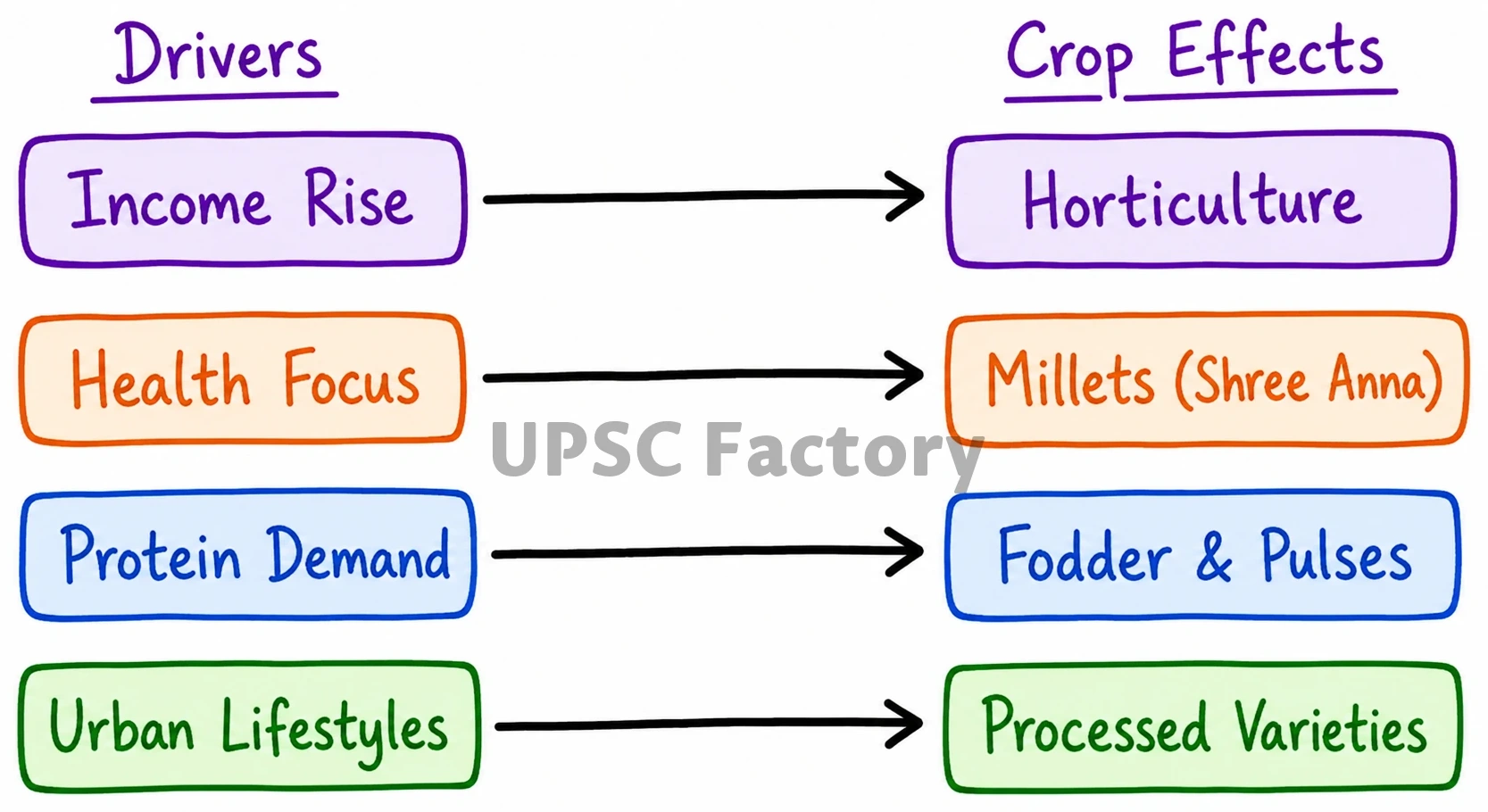
- Digital Price Discovery: Platforms like e-NAM eliminate local market monopolies, nudging farmers to shift from MSP-reliant cereals to lucrative cash crops (Spices, commercial cotton).
- Contract Farming Integration: Assured buyback models (Model Contract Farming Act 2018) incentivize farmers to grow specialized, high-risk industrial crops (Brewing barley, gherkins).
- Peri-Urban Agriculture: The explosion of quick-commerce and B2B agritech supply chains (Ninjacart, Zomato Hyperpure) has established intensive, daily-harvest vegetable and floriculture belts around major metropolises.
- FPO-Led Commercialization: Farmer Producer Organizations enable smallholders to bypass traditional mandis, aggregate produce, and sustainably pivot to high-value organic farming.
- Export-Driven Cultivation: Improved global market linkages and APEDA interventions have expanded the acreage of export-centric and GI-tagged crops (Basmati rice, medicinal plants).
Further aligning these demand-driven cropping patterns with agro-climatic suitability through robust cold-chain logistics and MSP-diversification will ensure long-term ecological sustainability and doubled farmer incomes.