Model Answer:
Oil pollution is the release of liquid petroleum hydrocarbons into the environment, primarily marine areas, via tanker spills, offshore drilling, or coastal runoff.
1. Impacts on Marine Ecosystem
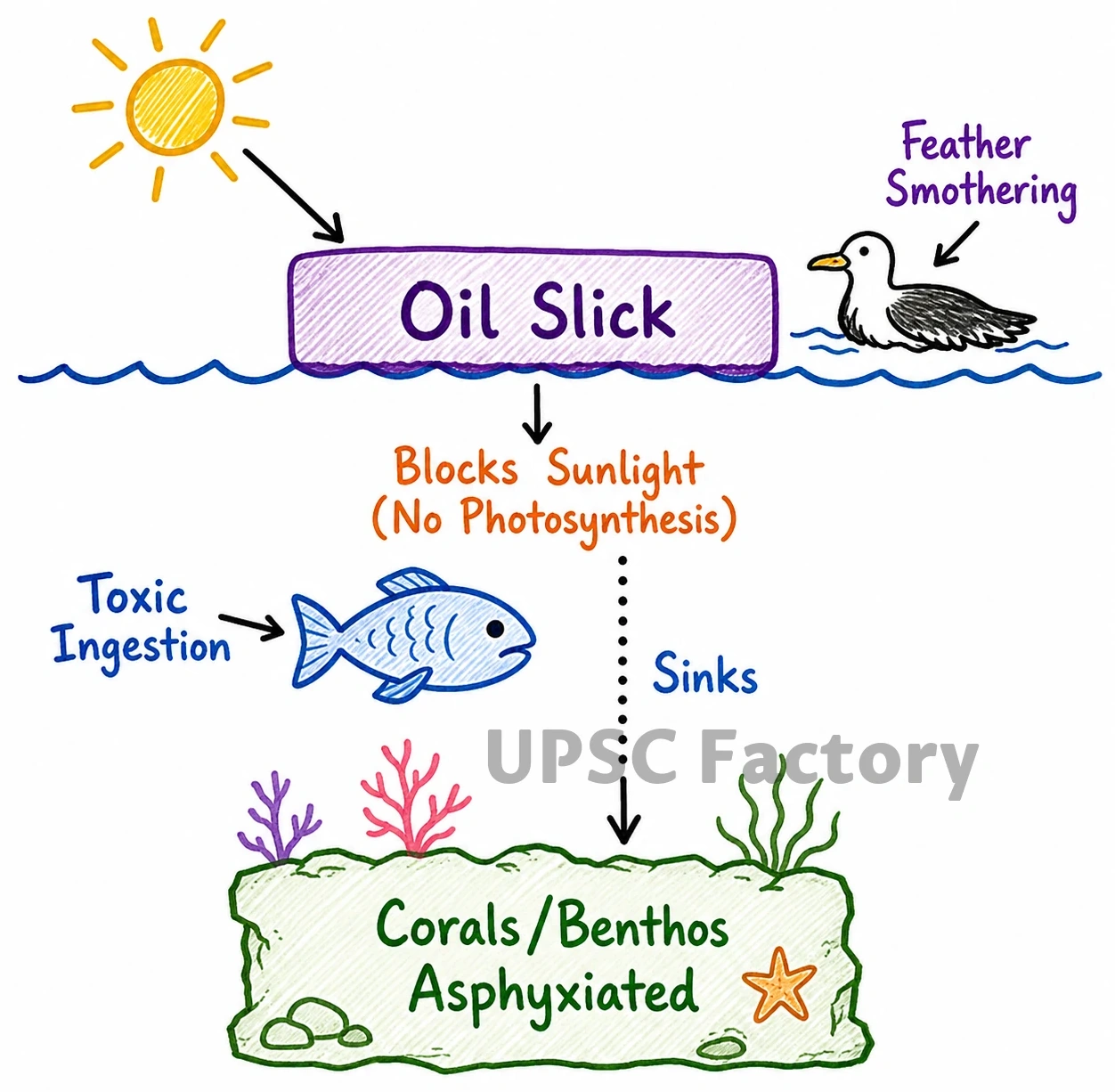
- Physical Smothering: Coats marine birds and mammals, destroying the insulation of fur and the water-repellency of feathers.
- Sunlight Deprivation: Surface slicks block sunlight, halting phytoplankton photosynthesis and collapsing the foundational marine food web.
- Chemical Toxicity: Ingestion of toxic compounds like polycyclic aromatic hydrocarbons (PAHs) causes mutations and reproductive failure in marine fauna.
- Benthic Destruction: Heavy crude aggregates sink, asphyxiating deep-sea benthic communities and coral reefs.
2. Specific Vulnerability of India
- High Import Traffic: Importing ~85% of its crude oil necessitates immense maritime tanker traffic, drastically elevating collision and spill risks (e.g., Ennore Port spill, 2017).
- Blue Economy Threats: Coastal spills threaten the daily sustenance and livelihoods of ~4 million fisherfolk along India’s 7,516 km coastline.
- Biodiversity Risks: Spills severely jeopardize fragile, ecologically vital ecosystems like the Gulf of Mannar coral reefs and Sundarbans mangroves.
Effective mitigation demands stringent enforcement of the MARPOL Convention, strengthening the National Oil Spill Disaster Contingency Plan (NOS-DCP), and upscaling indigenous bioremediation technologies like Oilzapper.