Model Answer:
Before colonial rule, Indian tribes enjoyed relative socio-economic autonomy. British administrative and economic policies systematically dismantled this egalitarian structure, triggering widespread historical unrest.
Impact of Colonial Rule on Tribals
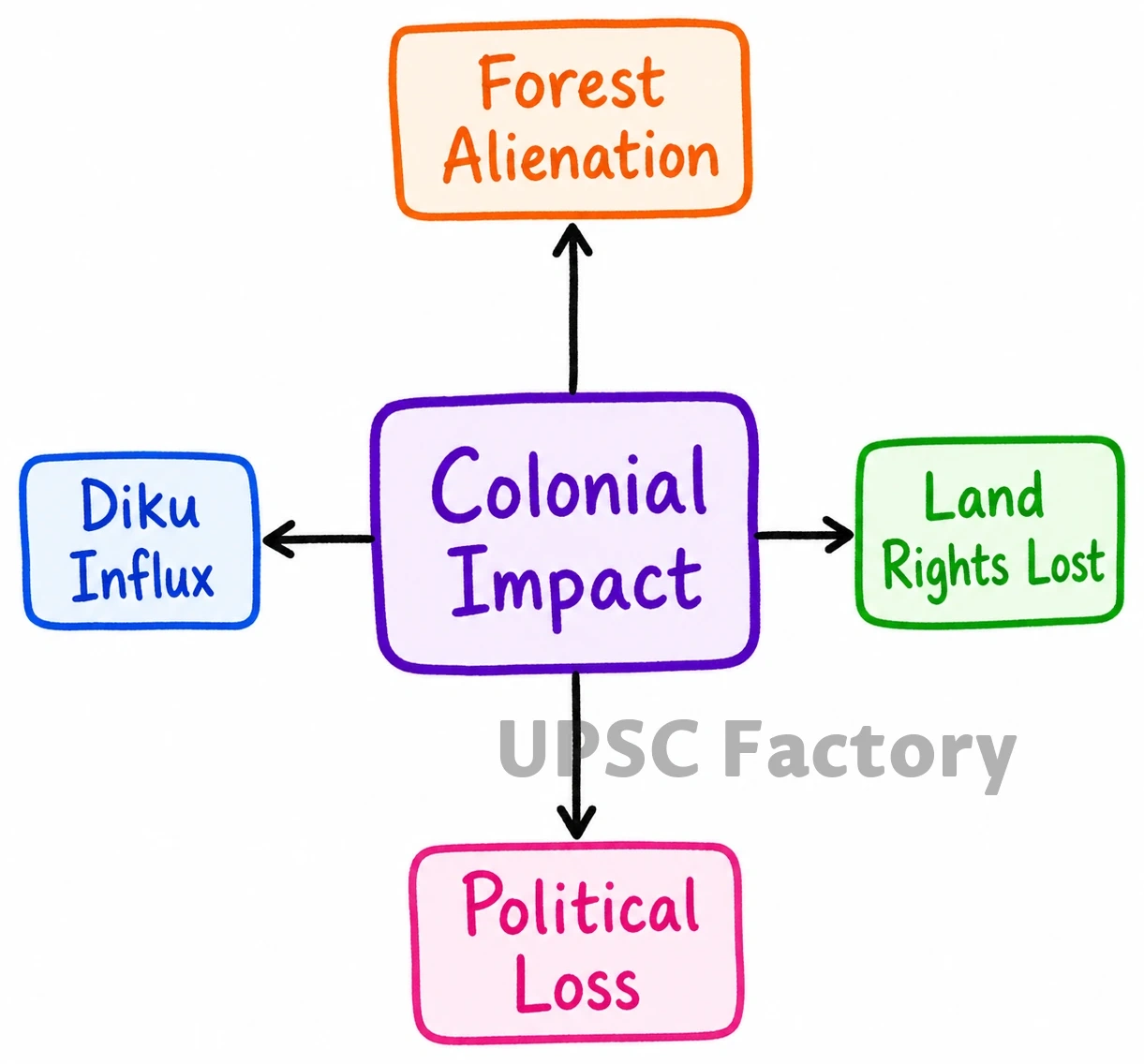
- Erosion of Land Rights: Traditional joint land-ownership structures (Khuntkatti system) were replaced by private property and extractive Zamindari setups.
- Forest Alienation: The Indian Forest Acts (1865, 1878) established state monopoly, criminalizing traditional shifting cultivation (Jhum/Podu) and restricting forest produce access.
- Influx of Intermediaries: Cash-based revenue demands introduced a nexus of moneylenders, traders, and contractors (Dikus) who ruthlessly exploited tribal indebtedness.
- Loss of Political Autonomy: Traditional tribal chieftainships and justice mechanisms were subordinated to alien British police, revenue administration, and complex courts.
- Socio-Cultural Disruption: The aggressive entry of Christian missionaries and mainland settlers threatened indigenous tribal culture, identity, and animistic traditions.
Tribal Response to Colonial Oppression
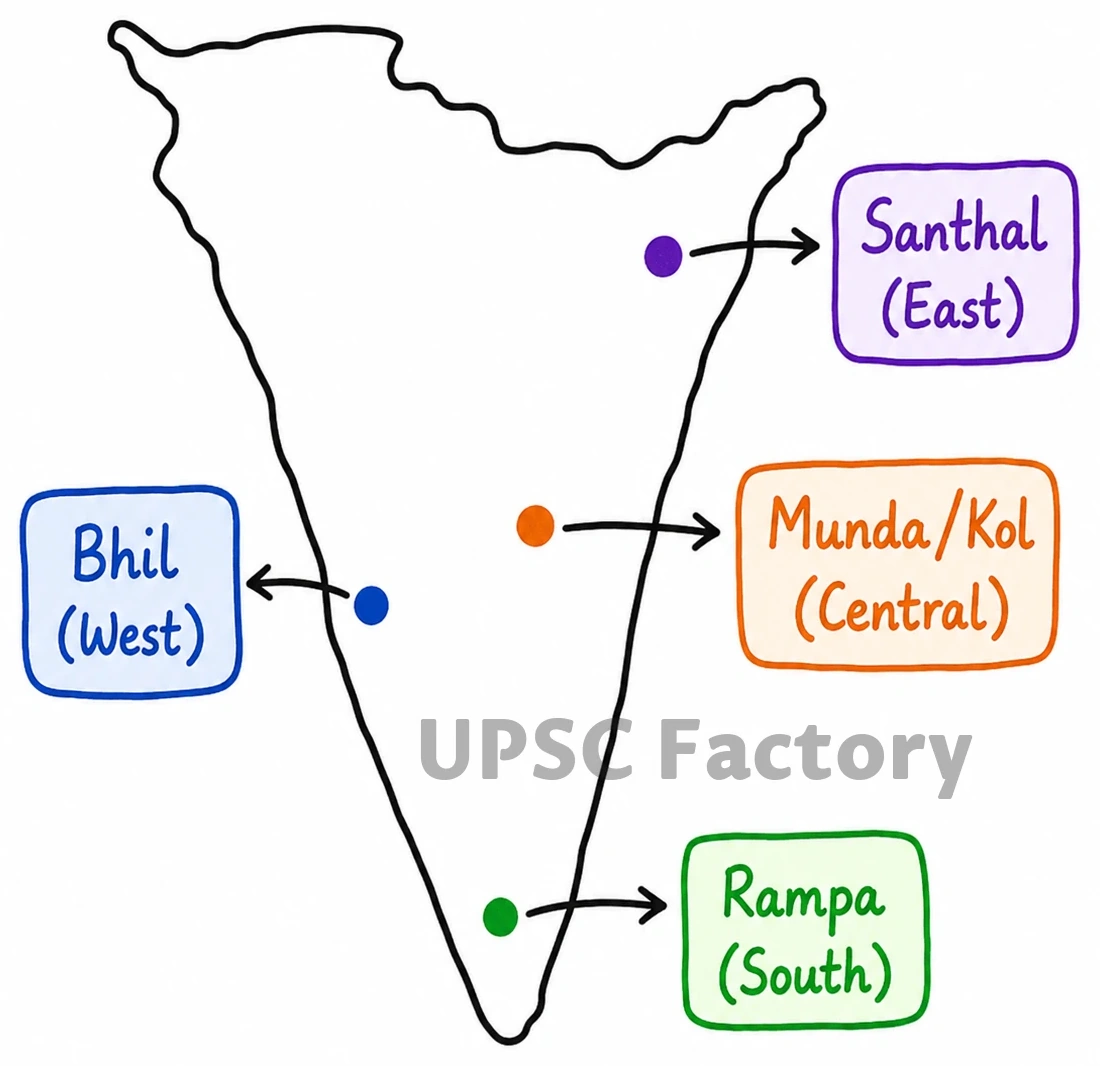
- Armed Rebellions: Tribals launched fierce, spontaneous, and violently localized uprisings against the colonial state (Santhal Hul 1855, Kol Mutiny 1831).
- Messianic Leadership: Resistance was frequently mobilized by charismatic figures claiming divine sanction to inspire the masses (Birsa Munda’s Ulgulan 1899-1900).
- Dual Targeting: Retaliatory violence was directed simultaneously at the British administration and native exploiters like moneylenders and Dikus.
- Restorative Objectives: Revolts aimed to violently overthrow the colonial agrarian setup to restore their pre-colonial ‘golden age’ (goal of Santhal Raj).
- Asymmetrical Warfare: Despite massive numerical strength, tribals relied on obsolete traditional weaponry (bows, arrows, axes) against modern British artillery.
- Transition to Reform: Later responses evolved into peaceful, socio-religious reform and Sanskritization movements emphasizing temperance and non-violence (Tana Bhagat Movement 1914).
Although brutally suppressed militarily, these heroic uprisings forced the British to recognize tribal rights, culminating in landmark protective legislations (Chotanagpur Tenancy Act, 1908) and inspiring India’s broader subaltern nationalism.