Model Answer:
Despite managing the world’s largest groundwater irrigation network, approximately 51% of India’s net sown area remains rainfed, facing dual threats of acute water stress and climate variability.
1. Major Challenges in the Indian Irrigation System
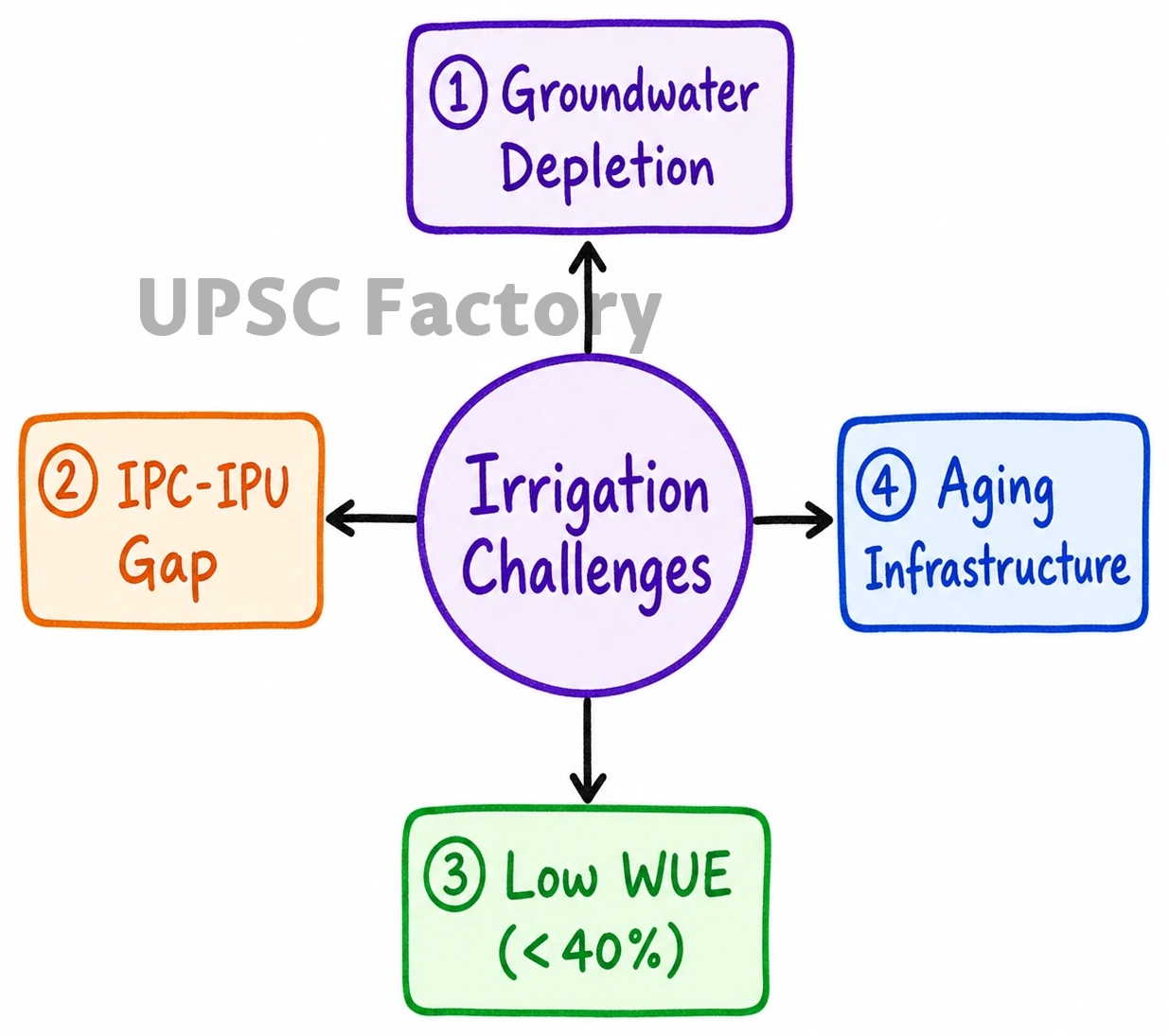
- Widening IPC-IPU Gap: Significant mismatch between Irrigation Potential Created (IPC) and Utilized (IPU) due to delayed command area development.
- Severe Groundwater Depletion: Unregulated over-extraction fueled by power subsidies and water-intensive crop MSPs (e.g., paddy in Punjab/Haryana).
- Low Water Use Efficiency (WUE): Dominance of unscientific flood irrigation keeps India’s agricultural WUE at 30-40%, far below the global average (60%).
- Climate Change & Monsoonal Shifts: Erratic rainfall patterns and prolonged dry spells accelerate reservoir depletion and disrupt seasonal crop cycles.
- Aging Infrastructure: Heavy siltation in major dams reduces storage capacity, while unlined canal networks cause massive seepage losses.
2. Government Measures for Efficient Irrigation Management
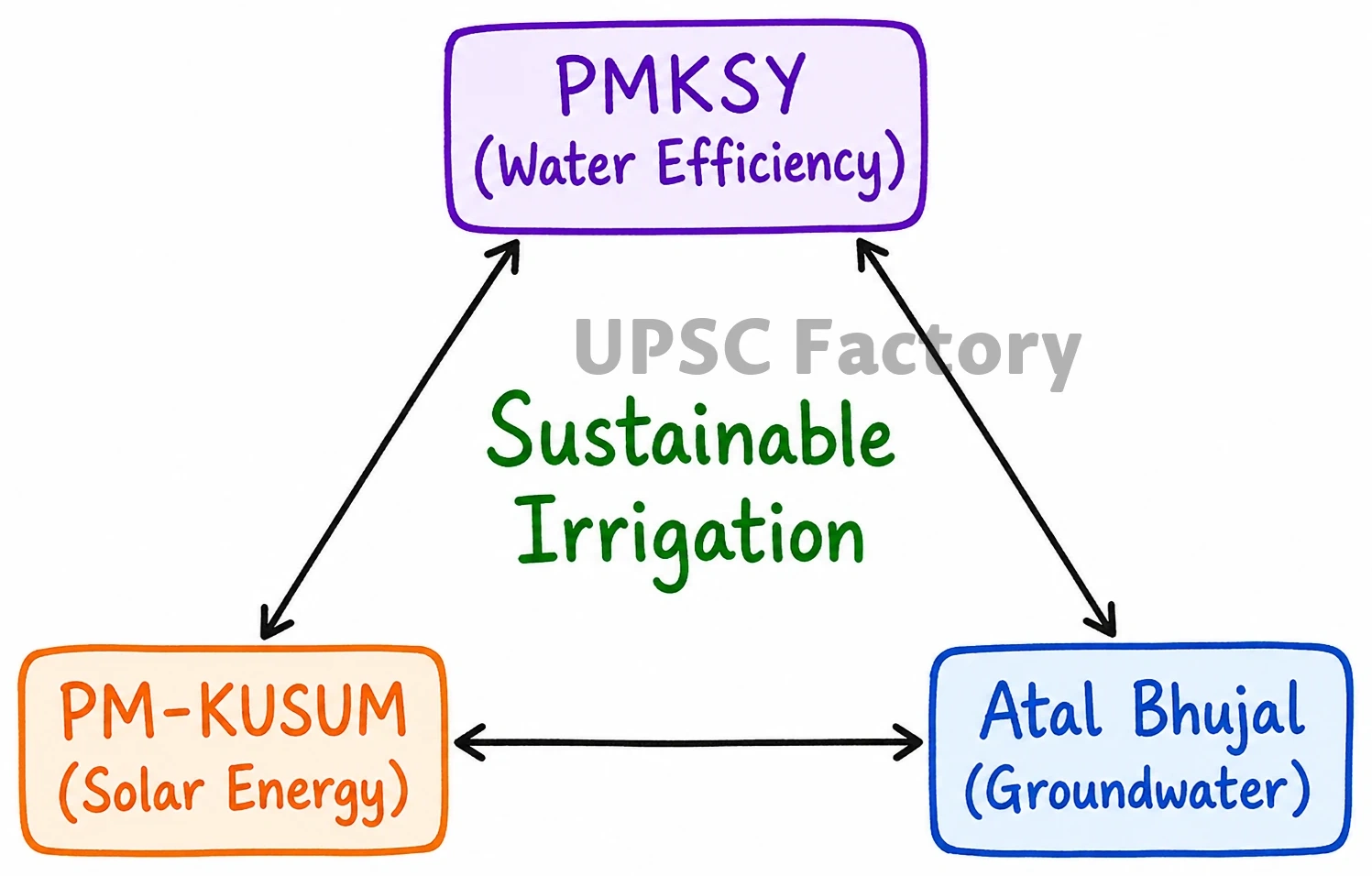
- Pradhan Mantri Krishi Sinchayee Yojana (PMKSY): Expands micro-irrigation via the ‘Per Drop More Crop’ component and expedites stalled medium/major irrigation projects.
- Atal Bhujal Yojana: Implements community-led participatory groundwater management in highly over-exploited, water-stressed blocks across seven states.
- PM-KUSUM Scheme: Subsidizes solar-powered agricultural pumps, reducing reliance on grid power and disincentivizing rampant, free-electricity-driven water pumping.
- Command Area Development (CADWM): Focuses on micro-level infrastructure like lined field channels to bridge the historical IPC-IPU gap.
- Sahi Fasal Campaign: Nudges farmers in water-stressed zones to adopt less water-intensive, high-value crops (e.g., Millets/Shree Anna promotion).
Transitioning from supply-side augmentation to demand-side management, integrated with IoT-based smart irrigation and systematic crop diversification, is critical for long-term agricultural resilience.