Model Answer:
The UN’s structural inertia, particularly regarding UNSC expansion, is fundamentally paralyzed by the geopolitical deadlock between the US-led West and the Russo-Chinese axis, stalling multipolar representation.
1. East-West Confrontations Paralyzing UN Reforms
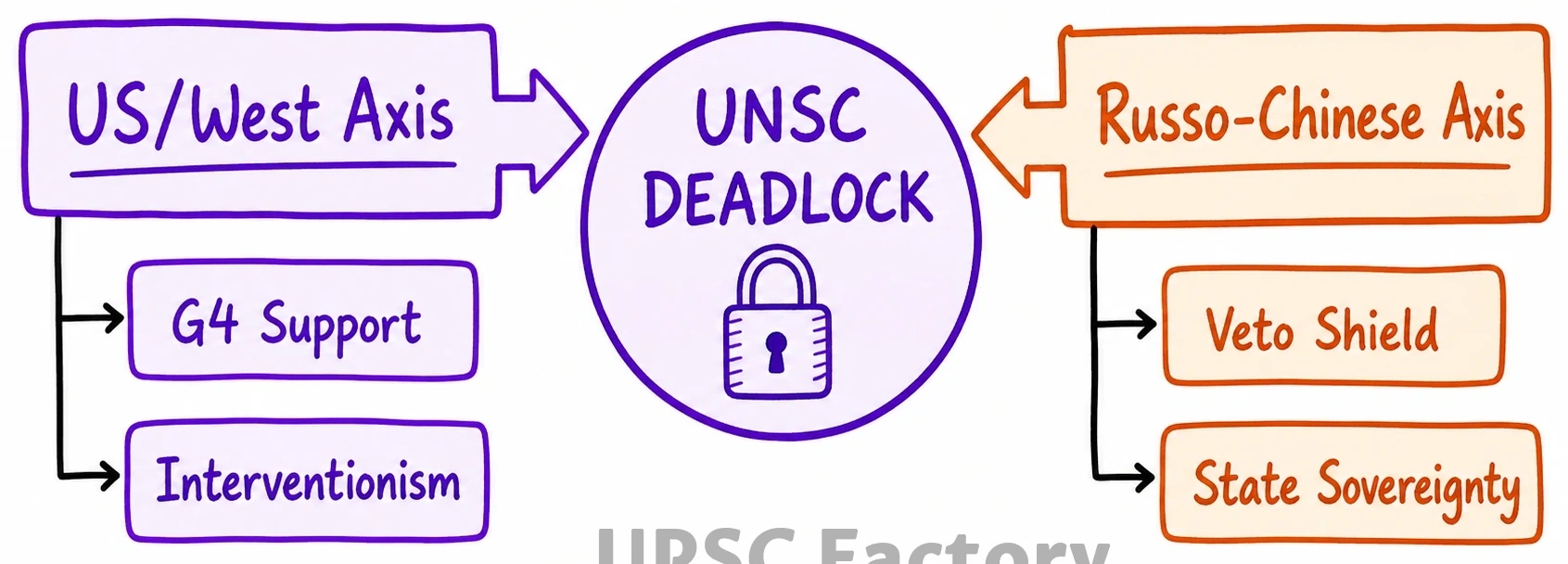
- Zero-Sum Veto Politics: Intense geopolitical rivalry reduces the UNSC to a theater of great-power confrontation, blocking systemic consensus (e.g., Ukraine, Gaza resolutions).
- Proxy Candidate Vetoes: Western backing of G4 nations (India, Japan, Germany, Brazil) faces targeted opposition from the Russo-Chinese alliance, notably China’s block on Japan and India.
- Ideological Entanglement: The West promotes human-rights-led interventionism, while Russia and China rigidly defend state sovereignty, stalling normative institutional reforms (e.g., Responsibility to Protect).
- Subverting the IGN: Both power blocs covertly exploit the Intergovernmental Negotiations (IGN) process to delay official text-based negotiations, safeguarding their exclusive P5 hegemony.
2. Critical Evaluation: Barriers Beyond the East-West Binary
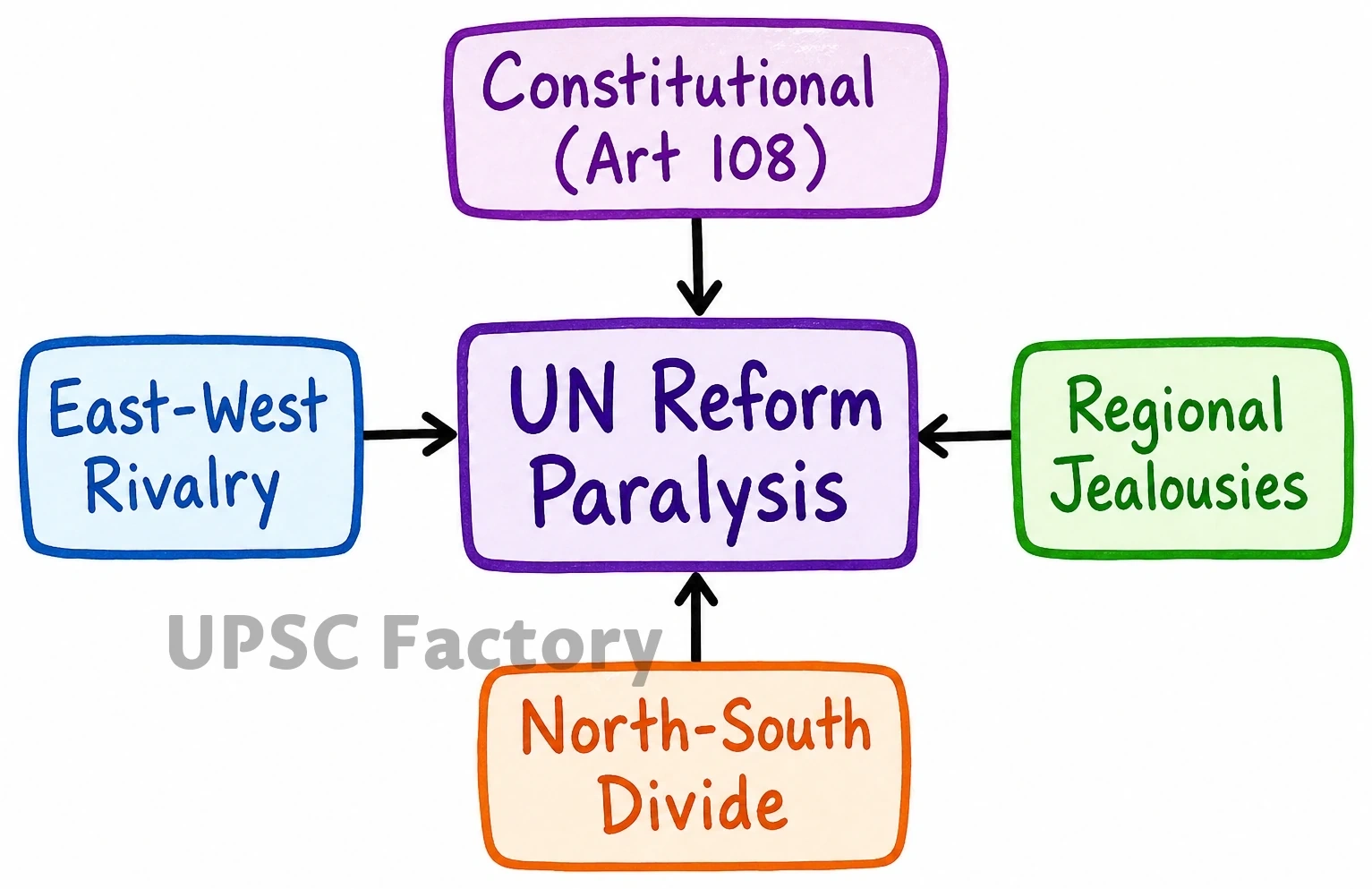
- Intra-Regional Rivalries: Regional jealousies severely obstruct consensus, primarily driven by the Uniting for Consensus (Coffee Club) directly countering G4 ambitions (e.g., Pakistan opposing India, Italy opposing Germany).
- African Fragmentation: Despite the unified Ezulwini Consensus demanding two veto-wielding permanent seats, internal disagreements on specifically selecting African candidates cause persistent delays.
- The North-South Divide: Western powers implicitly link representation to financial/military contributions, whereas the Global South demands historically equitable, democratized governance (e.g., L.69 group demands).
- Constitutional Rigidity: UN Charter Article 108 dictates that amendments require a two-thirds General Assembly majority plus ratification by all P5 members, creating a nearly insurmountable mathematical veto trap.
UN reform requires transcending zero-sum superpower geopolitics. Adopting text-based negotiations within the IGN and integrating Global South leadership are imperative to prevent the UN’s obsolescence.