Model Answer:
Globalization has restructured India’s 370-million-strong youth demographic, serving as a powerful catalyst for modernization while simultaneously introducing socio-economic precarity and cultural ambivalence.
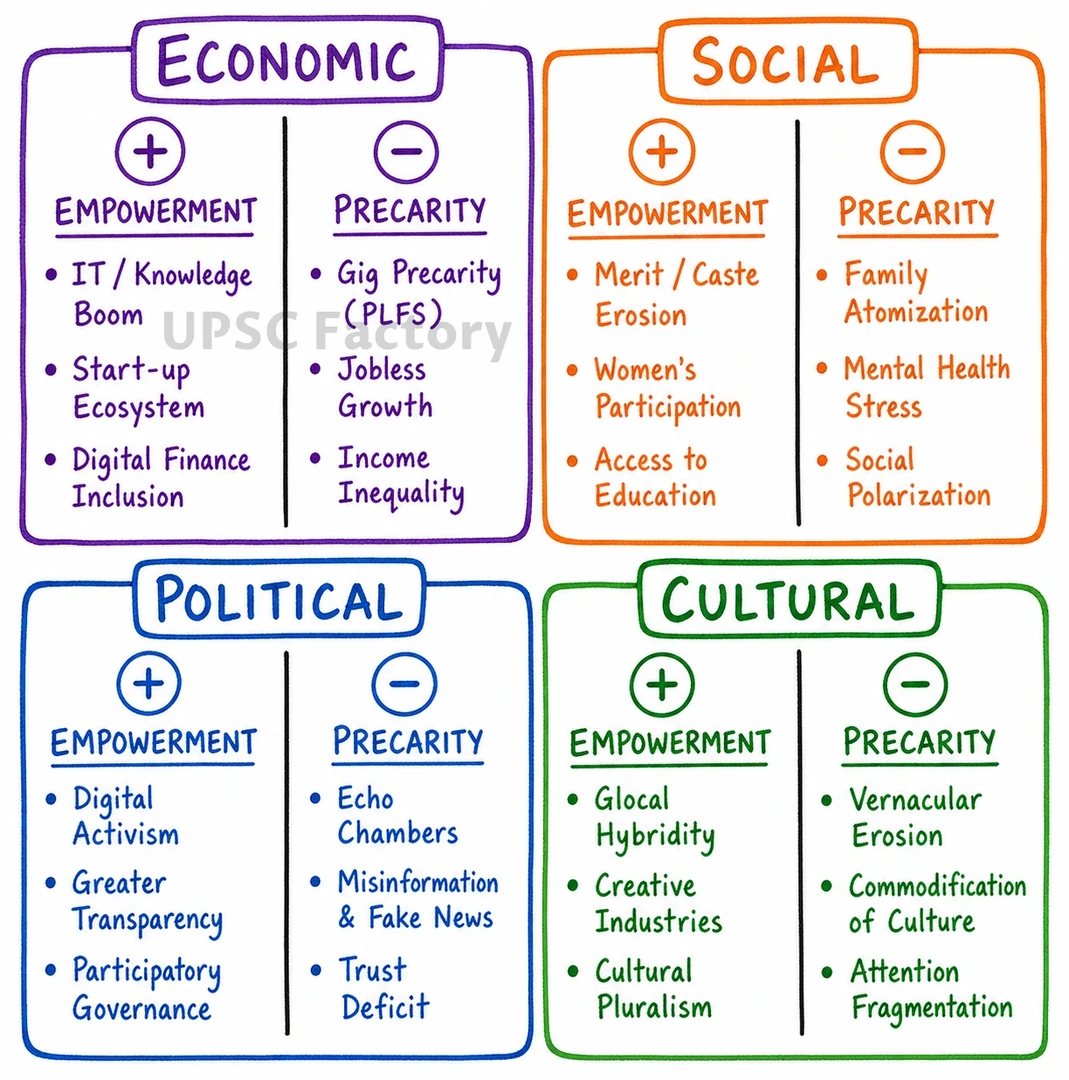
Progressive Empowerment Across Spheres
- Social Mobility: Weakens traditional caste-gender orthodoxies through meritocratic urban workspaces and cosmopolitan networks (Draft National Youth Policy).
- Economic Avenues: Expands employment via the IT/services boom, knowledge economy, and borderless remote work (NASSCOM talent indices).
- Political Consciousness: Fosters decentralized digital activism, human rights awareness, and climate consciousness (e.g., #FridaysForFuture campaigns).
- Cultural Glocalization: Facilitates creative hybridity, blending global pop-culture with indigenous art forms to project soft power (e.g., Coke Studio, Indian indie-music).
Disruptions and Structural Vulnerabilities
- Economic Precarity: Proliferates gig-economy informality, underemployment, and an unprotected youth “precariat” lacking social security (PLFS data).
- Social Atomization: Induces hyper-individualism, erosion of joint-family safety nets, and escalating youth mental health crises (CSDS-KAS Youth Survey).
- Political Polarization: Algorithms create ideological echo chambers, radicalizing youth and promoting post-truth polarization over nuanced civic engagement.
- Cultural Disorientation: Accelerates westernized consumerism and linguistic erosion of vernaculars, fostering identity crises and cultural alienation.
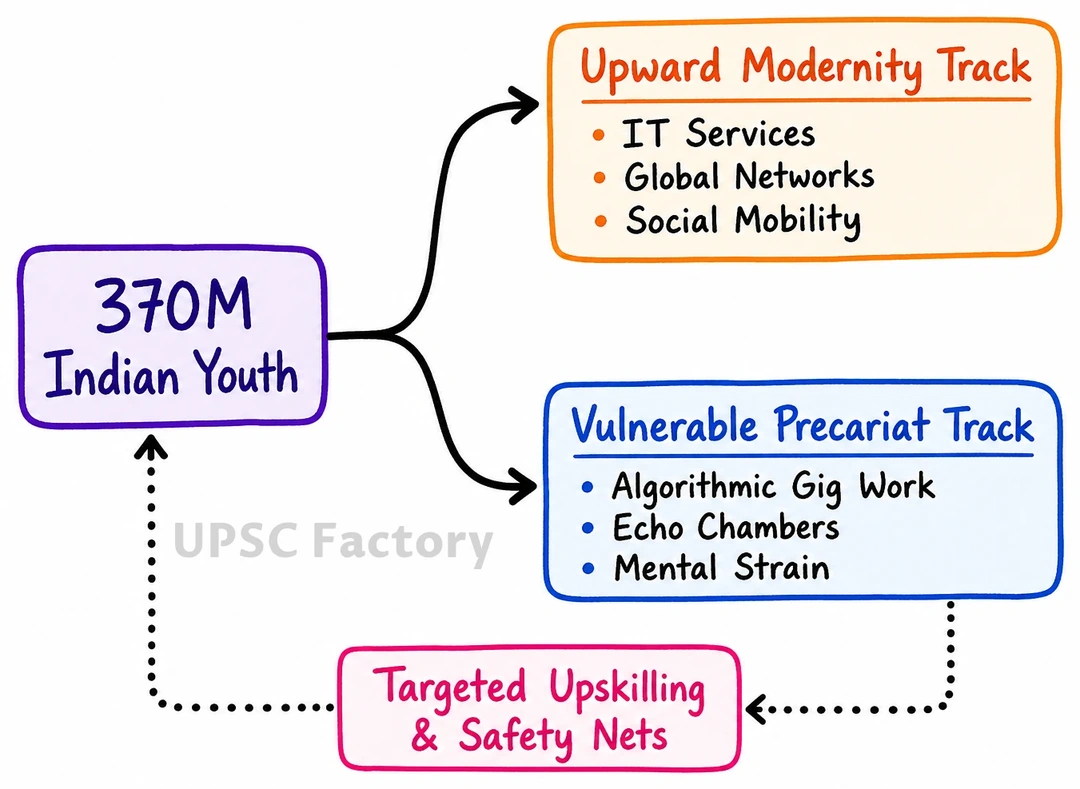
Maximizing the demographic dividend requires targeted upskilling, robust gig-worker safety nets, and value-based education to synthesize global competitiveness with indigenous social cohesion.