Model Answer:
Agricultural Technology Missions integrate institutional, technological, and scientific interventions to bridge yield gaps, eliminate supply deficits, and fortify India’s food systems.
Key Agricultural Technology Missions
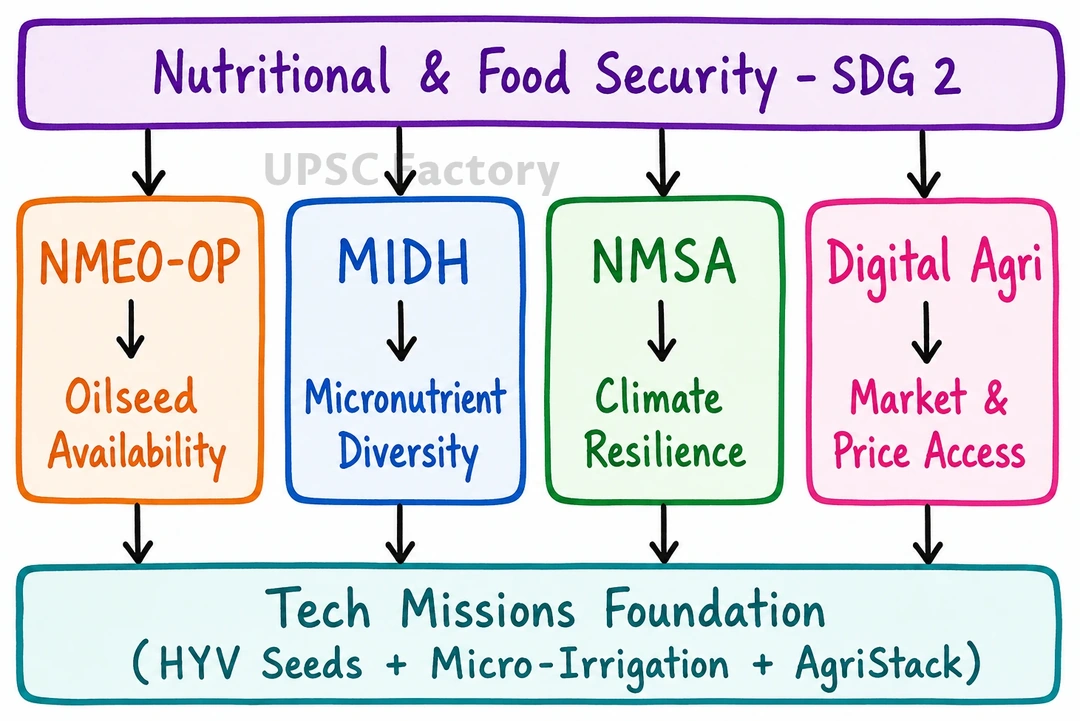
- Oilseeds & Oil Palm (TMOP / NMEO-OP): Drives high-yielding seed adoption to expand domestic edible oil production (Yellow Revolution).
- Horticulture (MIDH / TMNE): Promotes protected cultivation, disease-free planting material, and post-harvest cold chains.
- Sustainable Agriculture (NMSA): Scales precision farming, water-use efficiency, and soil health management (Per Drop More Crop).
- Digital Agriculture Mission: Deploys AI, remote sensing, and digital public infrastructure (AgriStack, Kisan Drones) for precision advisories.
Role in Food and Nutritional Security
- Boosting Food Availability: Enhances per-hectare productivity and reduces post-harvest losses in staples and commercial crops.
- Nutritional Diversification: Expands access to micronutrient-rich fruits, vegetables, and pulses, moving beyond basic calorie sufficiency (SDG-2: Zero Hunger).
- Insulation from Global Shocks: Lowers import dependency in edible oils and pulses, ensuring price stability and economic access (NFSA 2013).
- Climate Resilience: Minimizes abiotic crop vulnerabilities through drought-tolerant varieties and resource conservation technologies.
Scaling tech-driven missions is critical to transition Indian agriculture from basic food security to climate-resilient nutritional security by 2047.