Sociology Notes

Relationship between Sociology and Political Science

Relationship between Sociology and Political Science

Sociology and Political Science are deeply intertwined disciplines that share a symbiotic relationship. While Sociology is the fundamental study of human society, social structures, and institutions in their totality, Political Science is a specialized social science focusing on governance, the state, and formal power dynamics. As the prominent political scientist G.E.G. Catlin aptly remarked, “Political Science and Sociology are two faces or aspects of the same figure.” For a student of sociology, understanding this relationship is crucial for comprehending how social forces shape political outcomes and how state policies, in turn, mold society.

Historical Context and Evolution

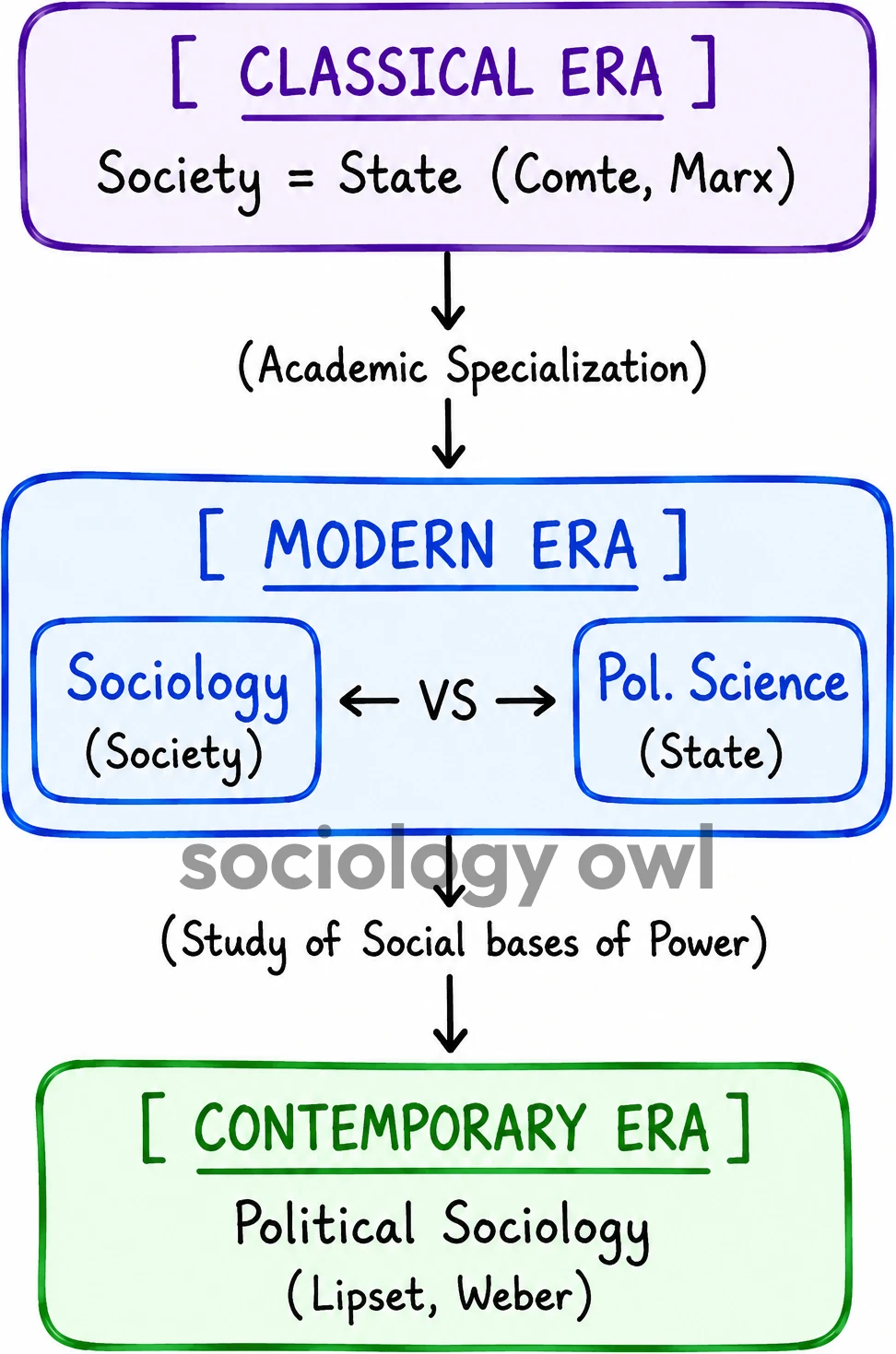
Historically, the distinction between society and the state was largely blurred. Ancient thinkers like Aristotle did not strictly separate the social from the political. However, with the advent of modernity and the Enlightenment, the two disciplines began to diverge.

  • Classical Sociology: Founders of sociology like Auguste Comte and Émile Durkheim viewed sociology as the “queen of all sciences,” encompassing all aspects of human life, including politics. They argued that the state is merely one of many social institutions.
  • Marxist Perspective: Karl Marx famously blurred the lines by arguing that political structures are mere “superstructures” resting upon the economic and social “base.” For Marx, the state was the executive committee of the bourgeoisie, making political science subordinate to sociological (and economic) analysis.
  • Emergence of Political Sociology: Post-World War II, the rigid boundaries dissolved, leading to the birth of Political Sociology. This sub-discipline emerged to study the social bases of politics, bridging the gap between state-centric political science and society-centric sociology. Seymour Martin Lipset‘s seminal work, Political Man, is a cornerstone of this integration.
Theoretical Intersections: Key Thinkers and Concepts

The overlap between these disciplines is best understood through the sociological study of power and authority. Sociologists have continually demonstrated that political phenomena cannot be understood in a social vacuum.

  • Max Weber: Weber provided the foundational sociological definition of the state as an entity that possesses a monopoly on the legitimate use of physical force. His tripartite classification of authority—Traditional, Charismatic, and Rational-Legal—remains a fundamental concept in both disciplines.
  • Elite Theory: Thinkers bridging both fields challenged the democratic ideal by showing how social elites dominate politics. Vilfredo Pareto (Circulation of Elites), Gaetano Mosca (The Ruling Class), and Robert Michels (Iron Law of Oligarchy) demonstrated that political power is inevitably concentrated in the hands of a socially privileged few.
  • C. Wright Mills: In his book The Power Elite, Mills analyzed the interlocking directories of corporate, military, and political leaders in the USA, showing how social networking dictates political decision-making.
  • Antonio Gramsci: His concept of Hegemony explains how the ruling class maintains political control not just through coercion (state), but through cultural and social consensus (civil society).

Comparative Analysis: Sociology vs. Political Science

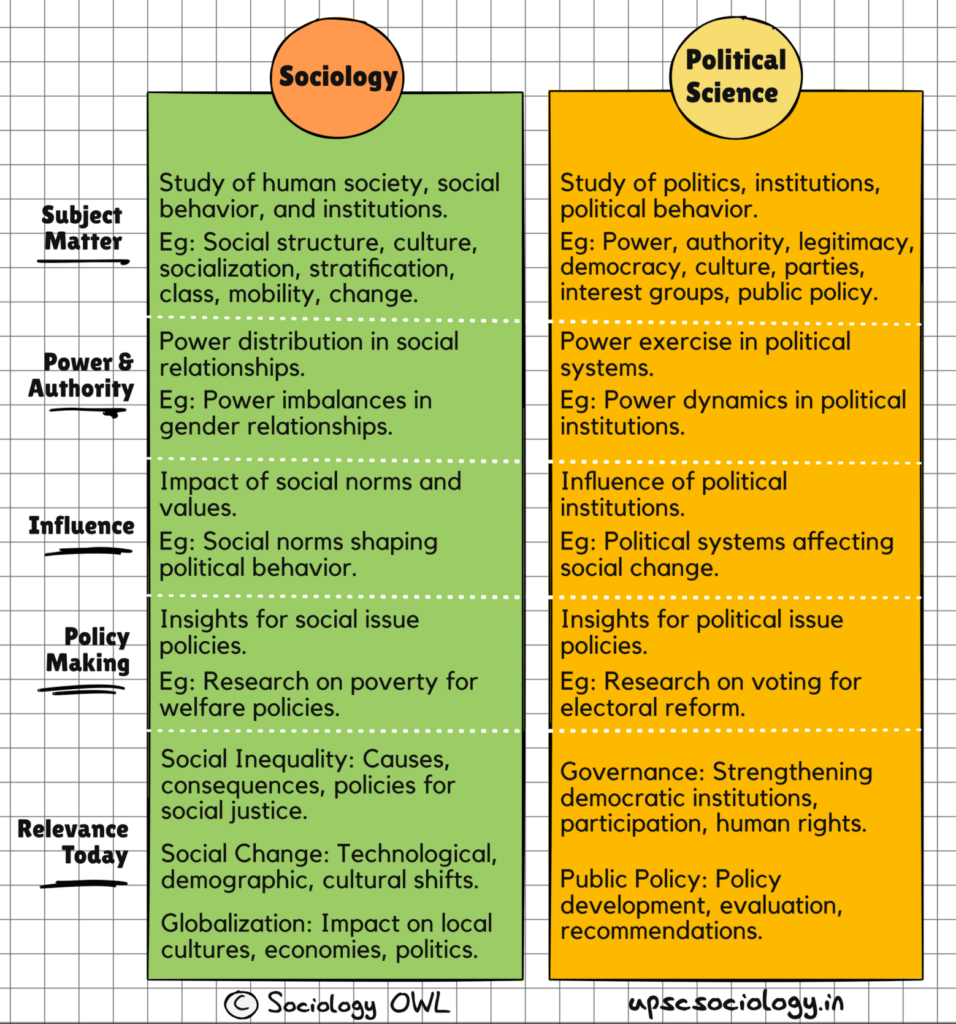
Despite their convergence in Political Sociology, the core disciplines retain distinct methodologies, scopes, and analytical focal points.

FeatureSociologyPolitical Science
ScopeHolistic and broad. Studies society in its entirety, encompassing all social institutions (family, religion, economy).Specific and narrow. Focuses primarily on the state, government, formal laws, and political institutions.
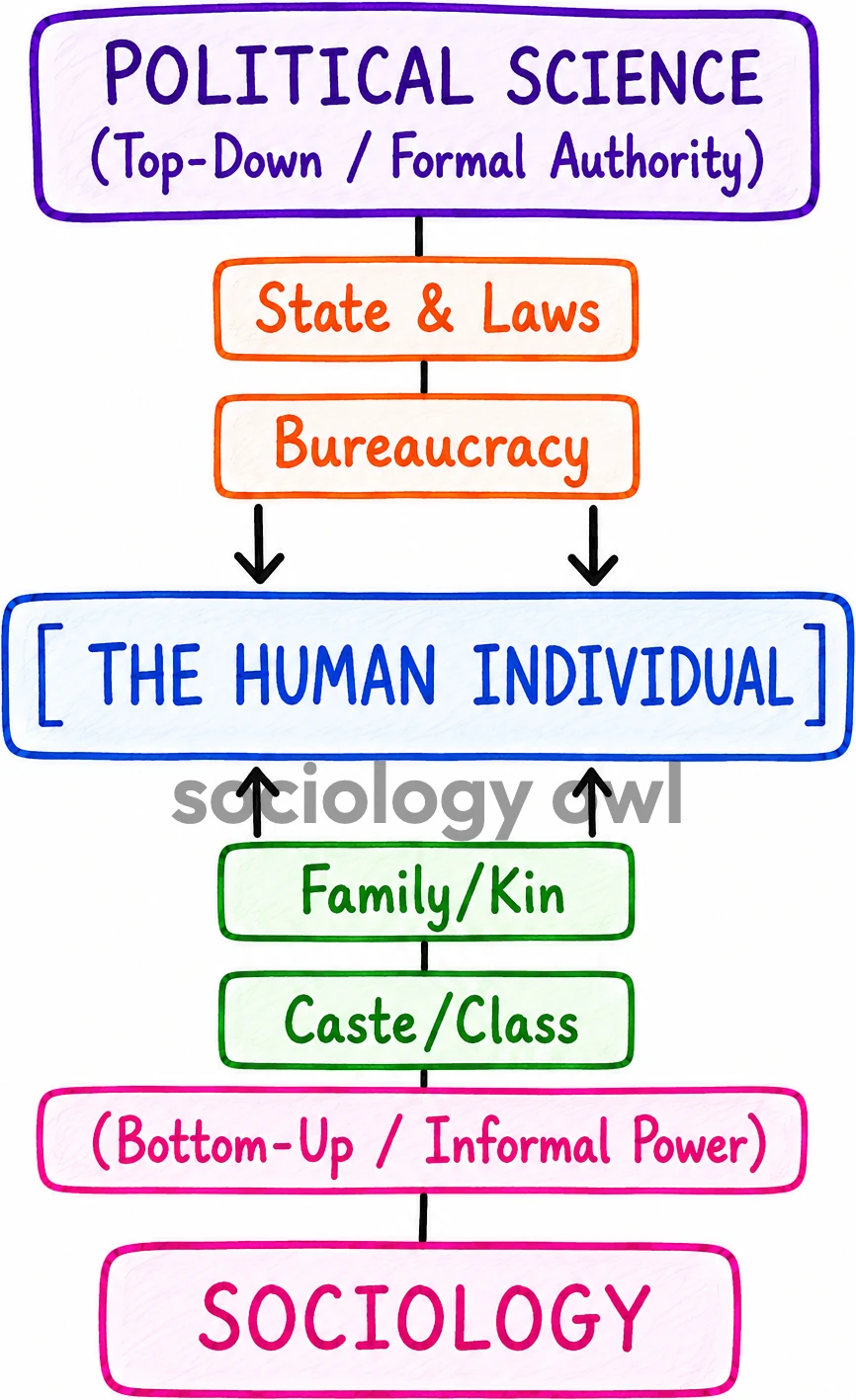
Approach to PowerExamines both formal and informal power (e.g., patriarchal power in a family, caste dynamics in a village). Takes a bottom-up approach.Examines formal power and authority (e.g., legislature, judiciary, bureaucracy). Takes a top-down approach.
Primary ConcernInterested in the social background of political actors and how social stratification influences voting behavior.Interested in the mechanisms of government, constitutional frameworks, and electoral outcomes (Psephology).
MethodologyHeavily relies on qualitative methods, participant observation, and ethnography to understand underlying social currents.Relies on institutional analysis, constitutional studies, and large-scale quantitative data for electoral analysis.

The Indian Context: Paper 2 Integration

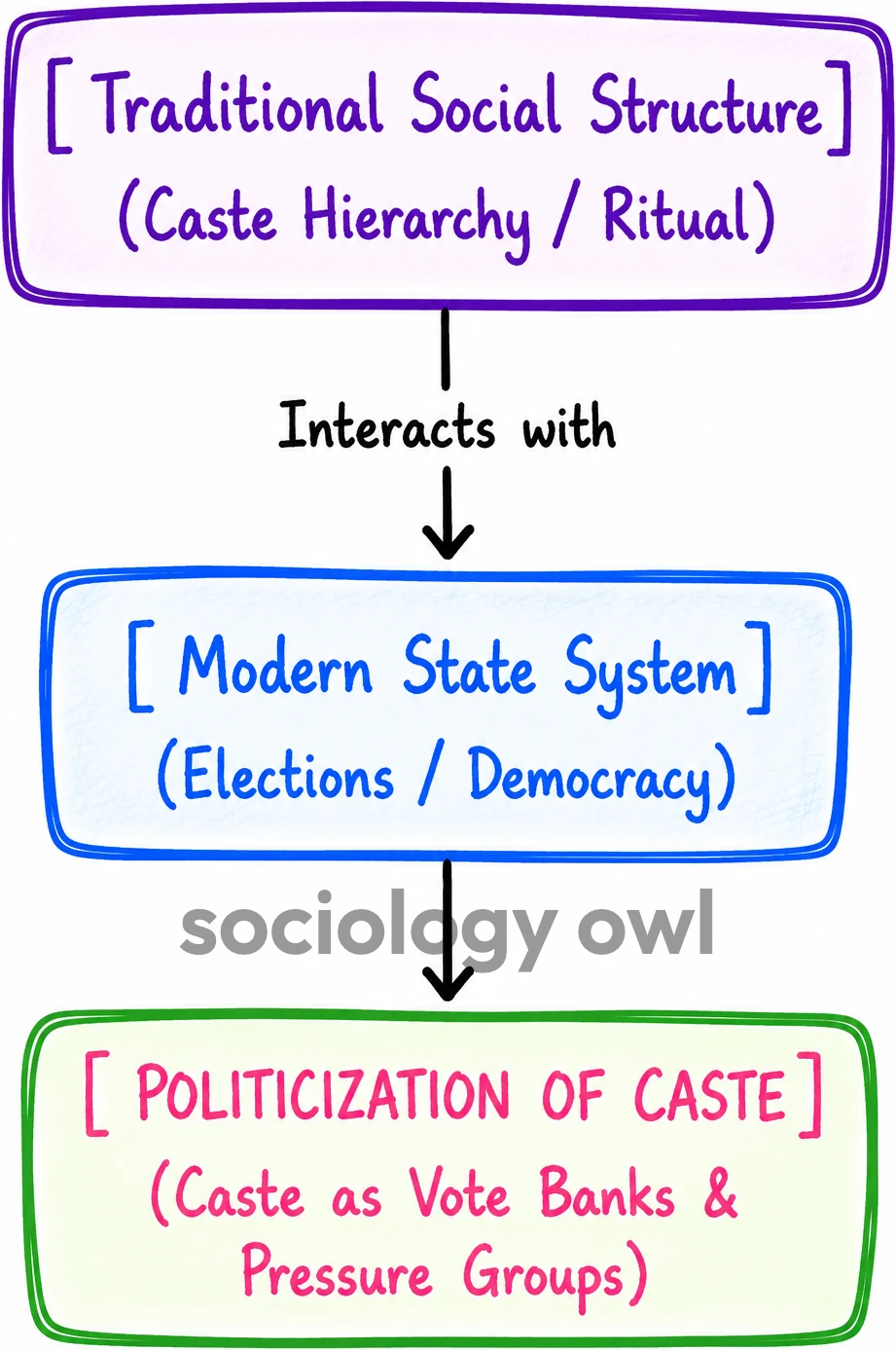
In the Indian context, the boundaries between sociology and political science completely dissolve. Indian democracy cannot be understood without its foundational social institution: Caste. Indian sociologists have extensively documented how social stratification directly dictates political mobilization.

  • Rajni Kothari: In his seminal work Caste in Indian Politics, Kothari argued against the notion that politics would destroy caste. Instead, he coined the concept of the politicization of caste, explaining how castes act as modern interest groups and pressure groups in democratic politics.
  • M.N. Srinivas: His concepts of the Dominant Caste and Vote Bank are vital. He demonstrated how castes with numerical strength, land ownership, and high ritual status completely monopolize local political power (Panchayats) and state legislatures.
  • Andre Beteille: In his classic study of a Tanjore village, Caste, Class, and Power, Beteille tracked the historical shift of political power. He showed how power traditionally overlapped with the Brahmin caste, but in modern democratic India, it has decoupled from ritual status and shifted to non-Brahmin dominant castes.
  • Christophe Jaffrelot: Termed the rise of OBCs (Other Backward Classes) in North Indian politics as the “Silent Revolution,” showcasing how social mobility movements transform into formal political capture.
  • Dipankar Gupta: Highlights how “caste arithmetic” forms the basis of political alliances in India, blurring the lines between social identity and political strategy.
Contemporary Relevance in a Globalized World

In the modern, globalized era, the intersection of sociology and political science has expanded into new, dynamic territories:

  • New Social Movements (NSMs): Movements centered around environment, LGBTQ+ rights, and gender equality (e.g., the #MeToo movement) prove that social identity is heavily politicized today. NSMs operate outside traditional political parties, making sociological analysis essential for political scientists.
  • Digital Sociology and Politics: The advent of social media has transformed political socialization. Algorithms now create “echo chambers” that polarize societies. Studying modern elections requires understanding digital social networks, as seen in the Arab Spring or contemporary electoral campaigns.
  • Globalization and the State: The traditional political science focus on state sovereignty is being challenged. Transnational social actors (NGOs, MNCs, global civil societies) now wield immense power, requiring a sociological lens to understand global governance.
  • Identity Politics: Across the globe, from White Nationalism in the West to ethno-religious politics in South Asia, political mobilization is increasingly based on social identities, proving that the social fabric dictates political destiny.

Conclusion

The relationship between Sociology and Political Science is not one of competition, but of deep complementarity. While Political Science provides the structural framework of the state and governance, Sociology breathes life into it by analyzing the human beings, cultures, and social inequalities that operate within those structures. As the renowned political sociologist Maurice Duverger stated, “Sociology is the base; Political Science is the superstructure.” In an increasingly complex world driven by identity politics, digital mobilization, and shifting power dynamics, a multidimensional approach combining the structural precision of Political Science with the empathetic, holistic depth of Sociology is indispensable for understanding human society.
Relationship between Sociology and Political Science

Relationship between Sociology and Political Science Read More »
Relationship between Sociology and History

Relationship between Sociology and History

Introduction

Sociology and history are closely intertwined disciplines that seek to understand human societies. While sociology focuses on the structure, functioning, and dynamics of society, history attempts to reconstruct the past to understand how present social structures have evolved. As the prominent scholar G.E. Howard famously remarked, “History is past Sociology, and Sociology is present History.” For a UPSC aspirant, understanding this relationship is vital for analyzing social continuity and change over time.

Historical Context: The Evolution of the Relationship

In the 19th century, early sociologists relied heavily on historical data to build grand evolutionary theories. Auguste Comte (Law of Three Stages), Herbert Spencer (Social Darwinism), and Karl Marx (Historical Materialism) all used historical trajectories to explain societal evolution.

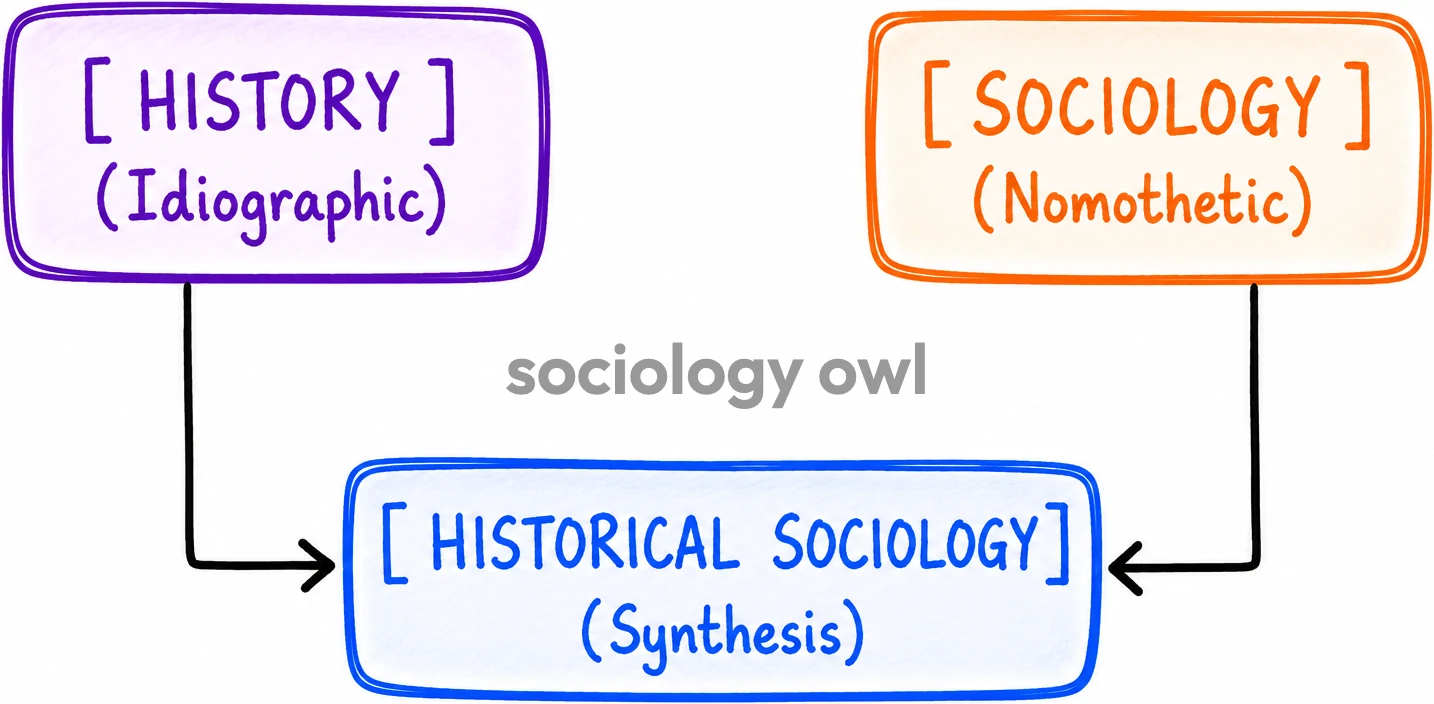
However, early 20th-century scholars like Wilhelm Windelband tried to separate the two by classifying history as an idiographic discipline (focusing on unique, specific past events) and sociology as a nomothetic discipline (focusing on formulating general laws of society). Over time, this rigid boundary blurred, giving rise to Historical Sociology, proving that understanding social phenomena requires historical depth.

Key Differences Between Sociology and History

Despite their interdependence, the two disciplines retain distinct methodological and epistemological approaches:

ParameterSociologyHistory
Focus and ScopeFocuses primarily on contemporary society, social structures, and ongoing social processes.Focuses on past events, their chronological sequence, and specific eras.
Nature of StudyNomothetic: Aims to generalize and build universal theories or laws about human behavior.Idiographic: Aims to describe unique, particular, and specific events of the past.
MethodologyUtilizes both qualitative and quantitative methods (surveys, participant observation, statistics).Relies heavily on archival research, source criticism, and chronological documentation.
Attitude towards TimeStudies the “present” while using the past merely as a tool for context.Studies the “past” as an end in itself to reconstruct what happened.

Interdependence: The Confluence of Two Disciplines

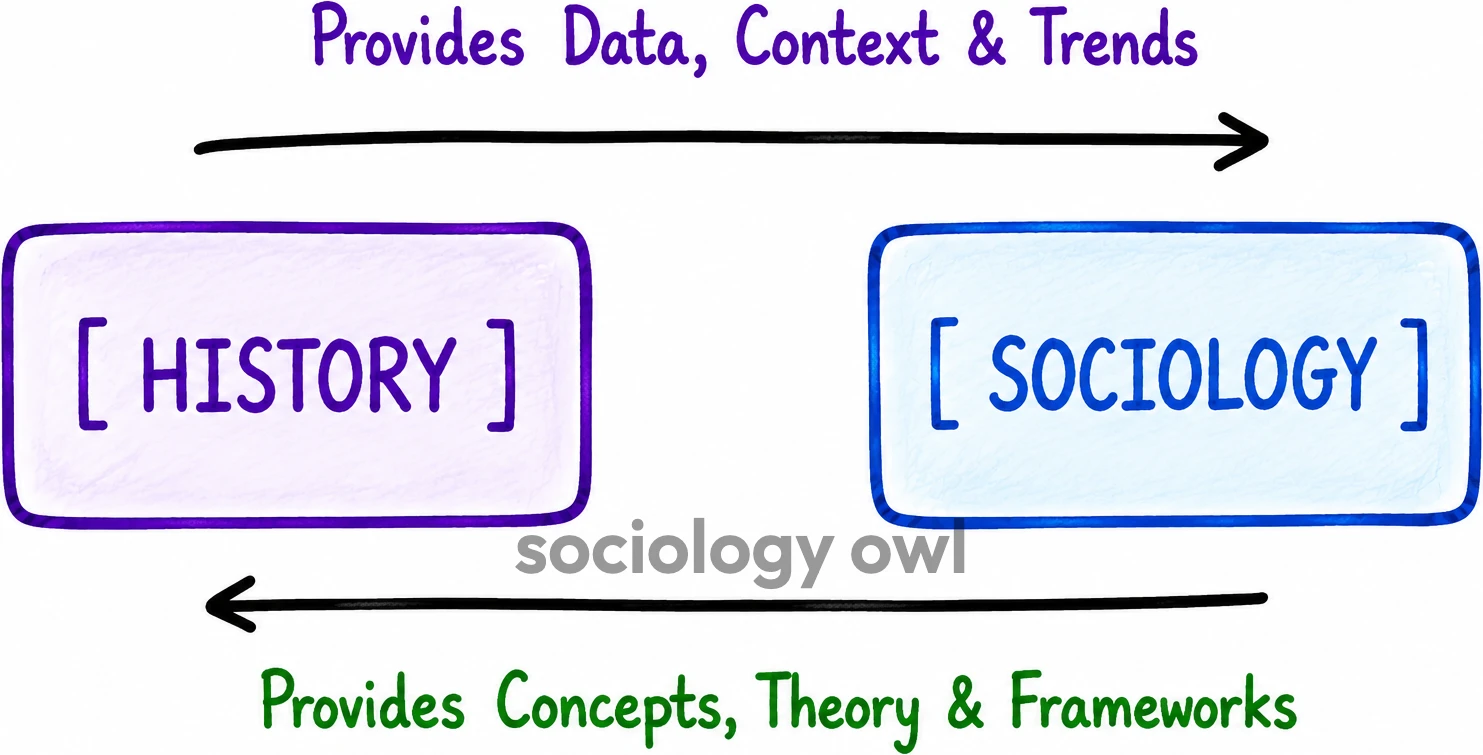
How History Informs Sociology

  • Providing Data for Sociological Theories: Sociologists often use history as a laboratory to test theories. For example, Max Weber utilized vast historical data in his seminal work, “The Protestant Ethic and the Spirit of Capitalism,” to trace the historical origins of modern capitalism.
  • Understanding Social Change: Karl Marx’s concept of Historical Materialism argues that the history of all hitherto existing society is the history of class struggles, making history the bedrock of his sociological framework.
  • Contextualizing the Present: C. Wright Mills, in his concept of Sociological Imagination, emphasized that one cannot understand the biography of an individual without understanding the historical epoch they live in.

How Sociology Informs History

  • Shift from “Great Men” to “Ordinary Lives”: Sociological tools helped historians shift focus from political history (kings and wars) to Social History. The Annales School, particularly Fernand Braudel, used sociological concepts to study long-term social structures (longue durée) rather than episodic events.
  • Providing Analytical Frameworks: The eminent historian E.H. Carr noted that the more sociological history becomes, and the more historical sociology becomes, the better for both. Historians now use concepts like class, gender, and social stratification to interpret the past.

The Indian Context (Integration with Paper 2)

In Indian sociology, the historical approach has been indispensable for understanding the complexities of caste, religion, and agrarian structures:

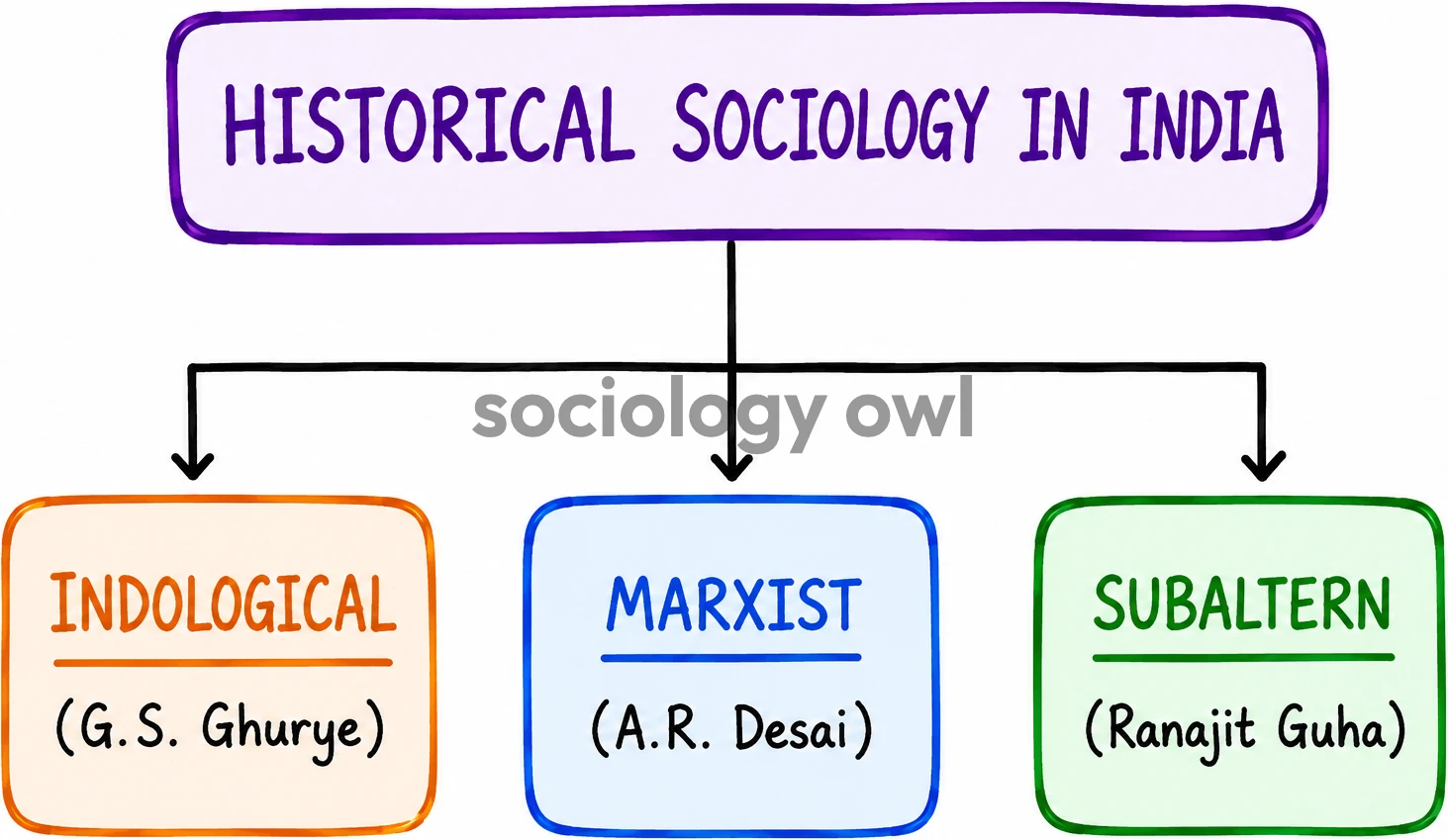
  • G.S. Ghurye (Indological Approach): Often regarded as the father of Indian sociology, Ghurye heavily relied on historical and ancient Sanskrit texts (like the Vedas and Manusmriti) to trace the historical evolution of the caste system and kinship networks in India.
  • A.R. Desai (Marxist Approach): In his classic book, “Social Background of Indian Nationalism,” Desai used historical materialism to analyze how British colonial history and emerging capitalist structures shaped the Indian national movement.
  • Subaltern Studies (Ranajit Guha): Indian historical sociologists critiqued elite historiography and used sociological perspectives to write “history from below,” focusing on the peasant uprisings and tribal movements in colonial India.
  • M.N. Srinivas: To develop his concept of Sanskritization, Srinivas utilized a historical understanding of how lower castes historically emulated the rituals and practices of the dominant castes over generations to achieve social mobility.

Contemporary Relevance

In the modern, globalized world, Historical Sociology (championed by scholars like Theda Skocpol and Charles Tilly) is highly relevant. Understanding contemporary global crises—such as the rise of right-wing populism, the structural inequalities exposed by the COVID-19 pandemic, or modern geopolitical conflicts—requires tracing their historical roots. Furthermore, issues like reservation policies, communalism, and secularism in India cannot be comprehended or resolved administratively without a deep sociological understanding of their historical baggage.

Conclusion

Sociology without history is rootless, and history without sociology is fruitless. The synthesis of both disciplines creates a rich, analytical framework that moves beyond mere dates and events to uncover the underlying social forces that shape human destiny. As John Howard noted, “Sociology is history with the hard work left out; history is sociology with the brains left out”—a humorous yet profound reminder that neither discipline can achieve its full potential without the other. For civil servants, this interdisciplinary mastery is crucial for drafting policies that are both historically informed and sociologically sound.

Relationship between Sociology and History Read More »

Relationship between Sociology and Psychology

Relationship between Sociology and Psychology

Introduction and Historical Context

Sociology and Psychology are sibling disciplines within the social sciences, often intersecting but maintaining distinct analytical focal points. The historical evolution of their relationship is characterized by an initial phase of strict boundary maintenance, followed by gradual convergence.

Historically, early sociologists had to fight intellectual battles to establish sociology as an independent discipline, free from psychological reductionism (the tendency to explain social phenomena purely through individual psychological traits). Emile Durkheim, in his seminal work The Rules of Sociological Method (1895), strictly differentiated the two, arguing that sociology studies Social Facts (external, coercive, and general), whereas psychology studies individual mental states. Durkheim’s study on Suicide (1897) was a masterful demonstration of how an apparently individual psychological act has profound sociological roots (e.g., anomie, integration).

Divergence: Key Differences and Theoretical Boundaries

While both disciplines study human behavior, their vantage points differ significantly. A comparative analysis highlights these boundaries:

ParameterSociologyPsychology
Primary Unit of AnalysisSociety, social institutions, groups, and structural networks.The individual, cognitive processes, and the human psyche.
Core Subject MatterFocuses on social stratification, culture, norms, power dynamics, and social change.Focuses on perception, cognition, personality, memory, and psychopathology.
Theoretical ApproachMacro and meso-level theories (Functionalism, Marxism, Structuralism).Micro-level theories (Behaviorism, Psychoanalysis, Cognitive Development).
MethodologySurveys, participant observation, historical-comparative methods, and demographic analysis.Clinical trials, psychometric testing, lab experiments, and neurological scans.

Convergence: The Interdisciplinary Bridges

Despite Durkheim’s rigid boundaries, later thinkers realized that social structures and individual psyches are mutually constitutive. This gave rise to fields like Social Psychology.

  • Max Weber: Bridged the gap through his concept of Social Action and Verstehen (Interpretative Understanding), arguing that sociology must understand the individual motives and meanings behind actions.
  • Symbolic Interactionism: Thinkers like George Herbert Mead and Charles Horton Cooley (with his concept of the Looking Glass Self) demonstrated that individual identity and self-consciousness are entirely products of social interaction.
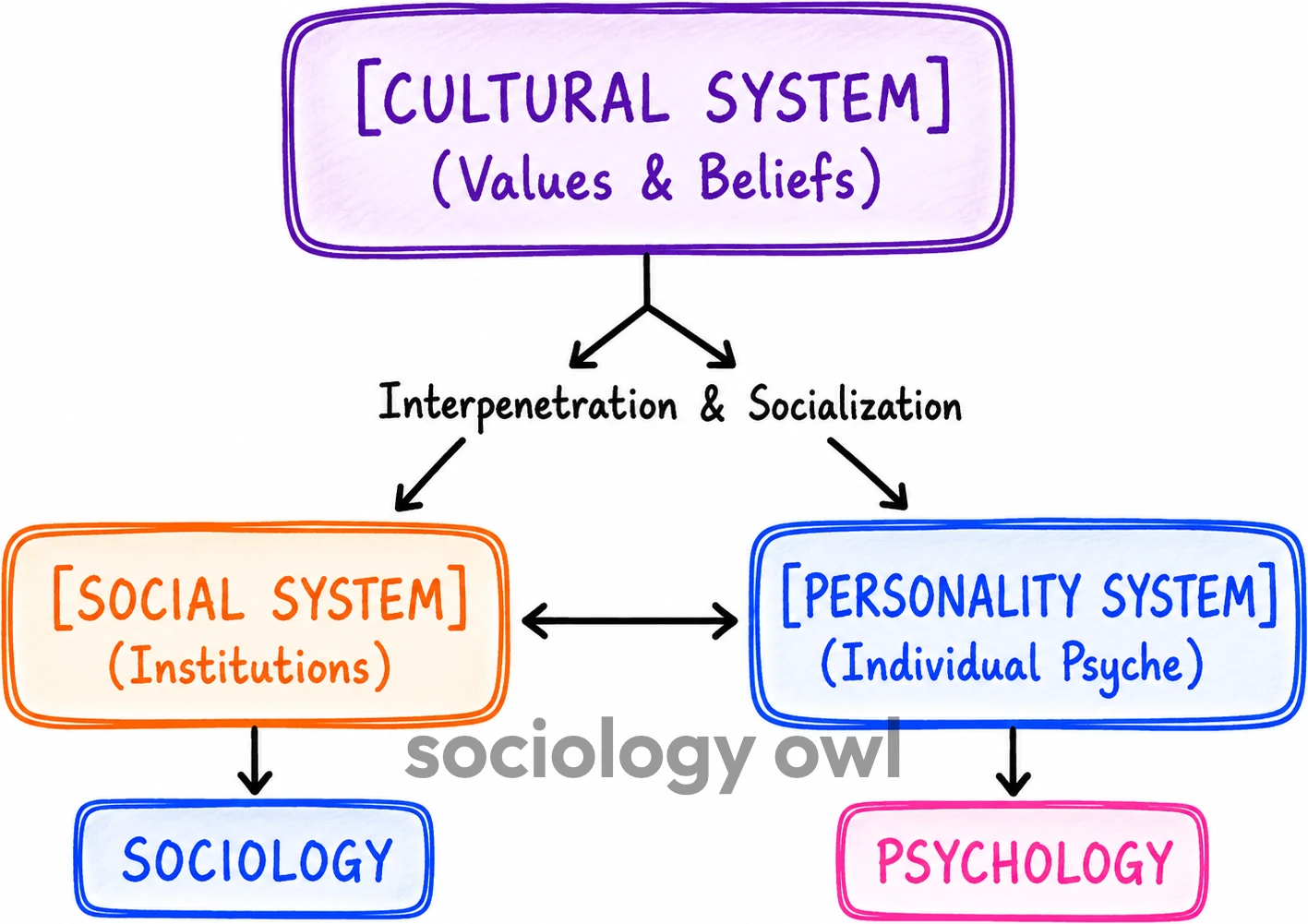
  • Talcott Parsons: In his General Theory of Action, Parsons integrated both fields, arguing that the Social System (roles/institutions), the Cultural System (values), and the Personality System (individual psychological motivations) must interpenetrate for a society to function.
  • The Frankfurt School: Thinkers like Erich Fromm and Herbert Marcuse synthesized Karl Marx (sociology) with Sigmund Freud (psychology) to explain how capitalist social structures lead to psychological alienation and mass neurosis.

The Indian Context: Psycho-Sociological Perspectives

In the UPSC context (Paper 2), the intersection of sociology and psychology is crucial for understanding the unique cultural and historical realities of India, especially concerning caste, family, and colonialism.

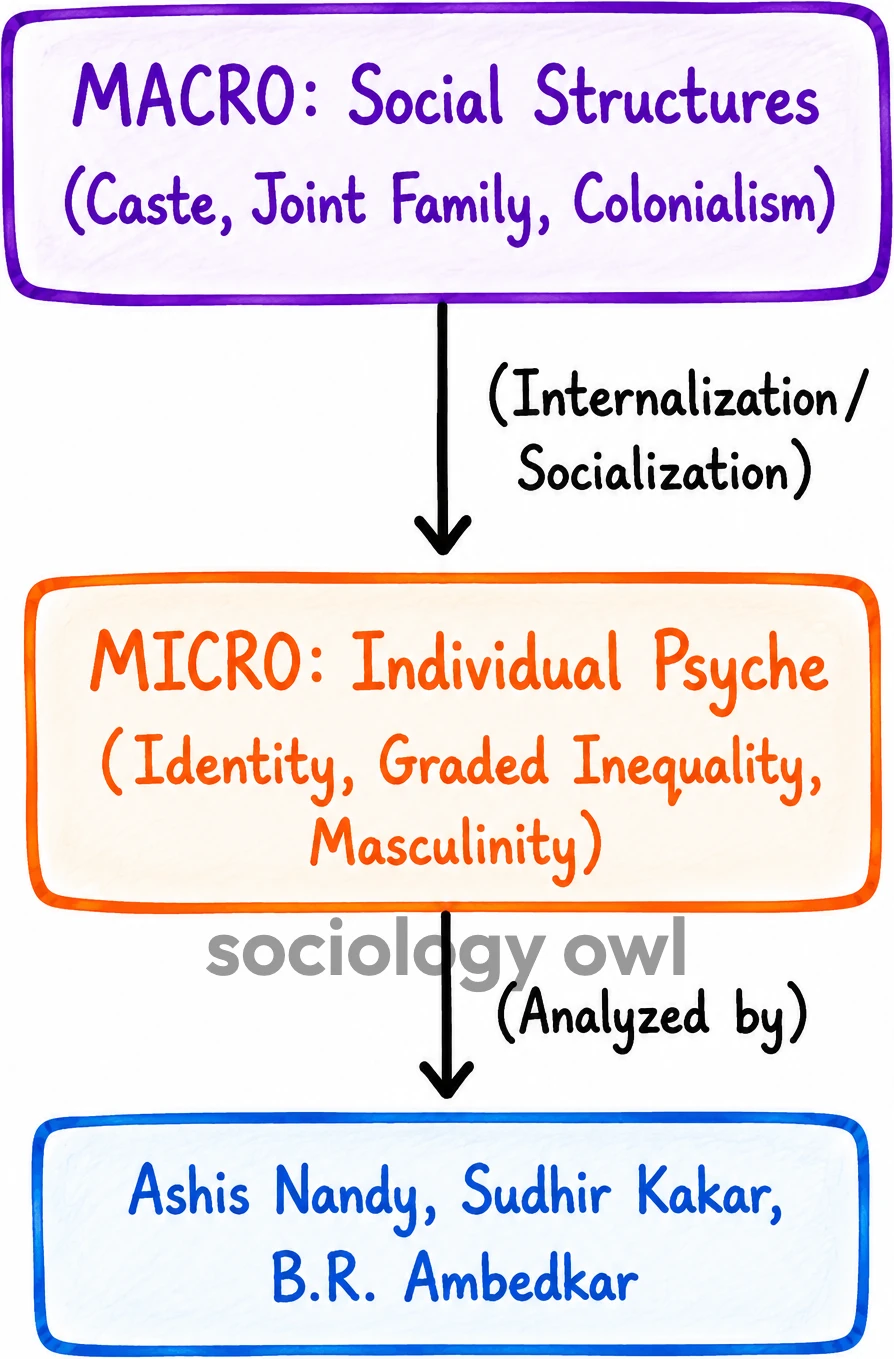
  • Sudhir Kakar: A prominent psychoanalyst and sociologist, Kakar in his book The Inner World: A Psycho-analytic Study of Childhood and Society in India, brilliantly blends psychology and sociology to explain how the Indian joint family structure and Hindu cultural myths shape the unique psychological development of Indians.
  • Ashis Nandy: In The Intimate Enemy, Nandy explores the psychological consequences of British colonialism on the Indian psyche, demonstrating how colonialism was not just a political/social structure, but a psychological state that altered notions of masculinity and cultural identity.
  • B.R. Ambedkar & Caste Psychology: Ambedkar deeply analyzed the psychological dimensions of untouchability. He argued that the caste system survives not just through physical coercion, but through a deeply ingrained graded inequality that affects the psychological self-esteem of the depressed classes and creates a “caste consciousness” in the oppressors.

Contemporary Relevance in a Globalized World

In the modern, highly interconnected world, the boundaries between sociology and psychology are increasingly blurred, making interdisciplinary study essential:

  • Mental Health Crisis and Modernity: The rise of depression and anxiety in contemporary urban societies cannot be understood merely clinically. It requires sociological analysis of the Gig Economy, urban alienation, and what modern sociologists call the “burnout society” (Byung-Chul Han).
  • Social Media and Echo Chambers: The algorithms of social media platforms manipulate individual psychological vulnerabilities (dopamine loops) to create mass sociological phenomena like political polarization, social movements, and echo chambers.
  • Public Policy and Behavioral Nudges: Policies in India like the Swachh Bharat Abhiyan or Beti Bachao Beti Padhao rely heavily on behavioral psychology (nudging) to bring about macro-sociological structural changes in sanitation and gender norms.

Conclusion

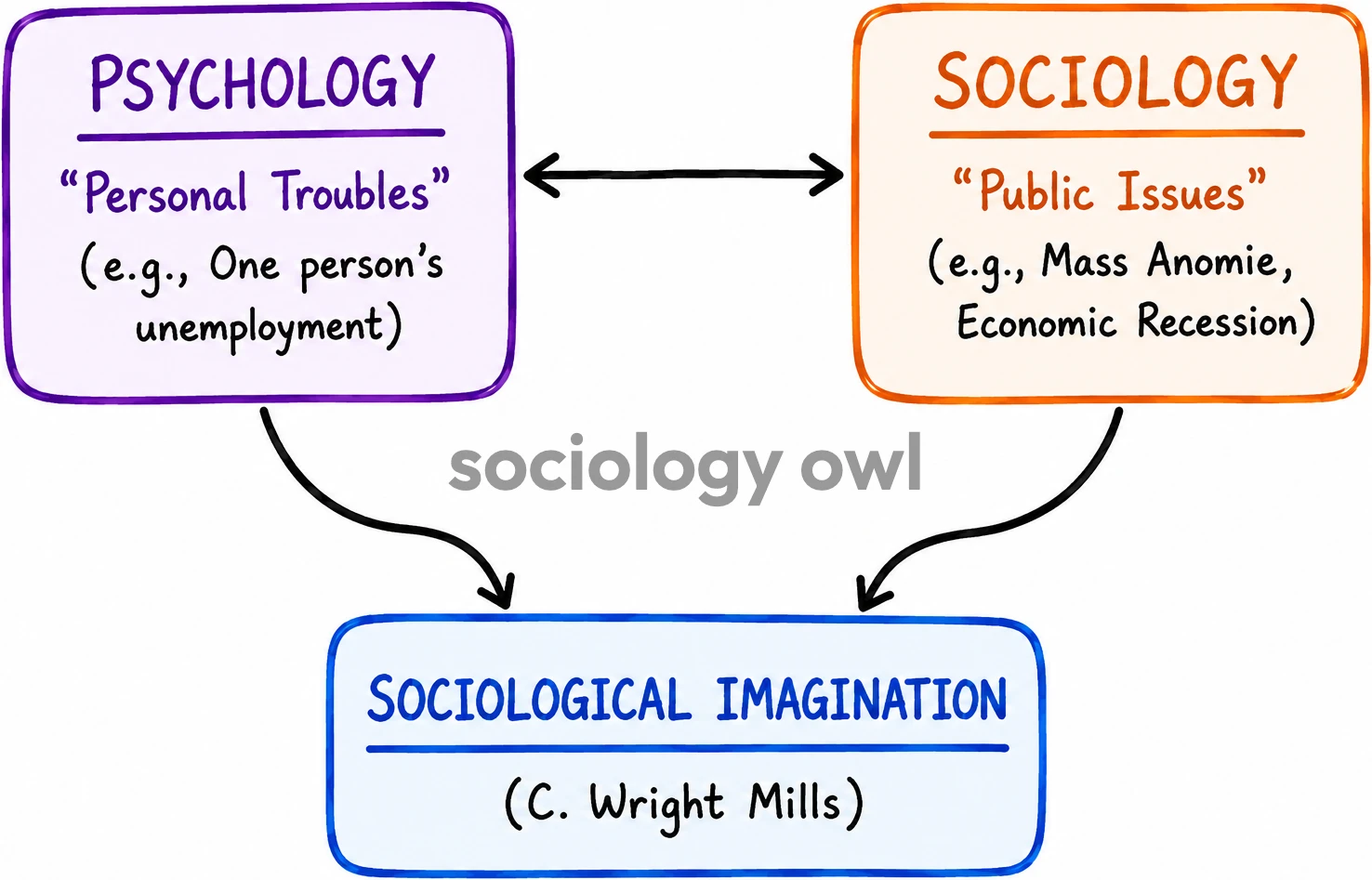
The relationship between Sociology and Psychology is not one of opposition, but of deep complementarity. While psychology provides the micro-foundations of human cognition and behavior, sociology provides the macro-context within which this behavior takes meaning. As the legendary sociologist C. Wright Mills articulated through his concept of the Sociological Imagination, the true task of the social sciences is to understand the profound intersection between “personal troubles of milieu” (psychology) and “public issues of social structure” (sociology).

Mastering both is indispensable for a holistic understanding of the human condition.

Relationship between Sociology and Psychology Read More »

Relationship between Sociology and Economics

Relationship between Sociology and Economics

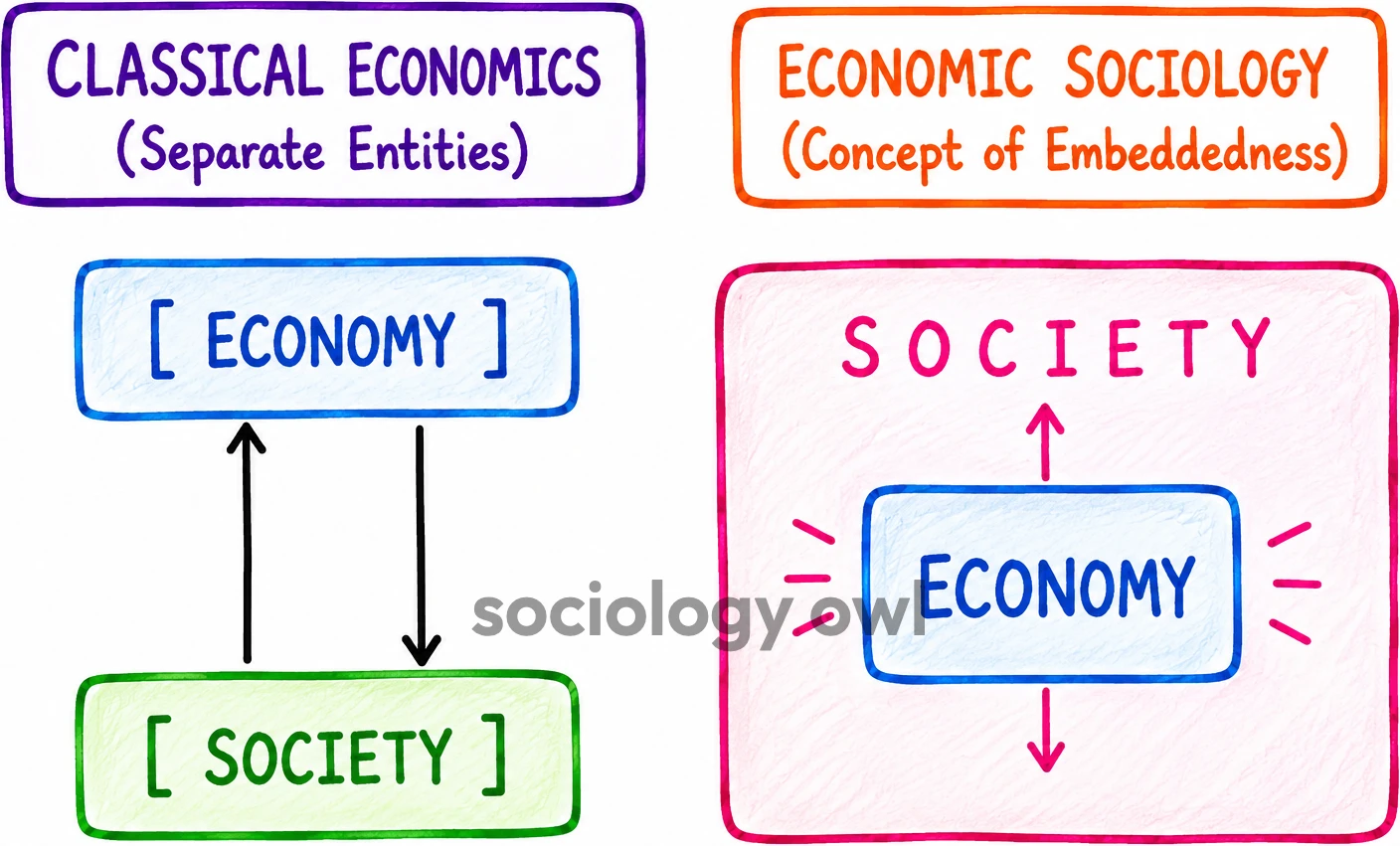
The relationship between Sociology and Economics is one of the most foundational debates in the social sciences. While classical economics operates on the assumption of Homo Economicus (the rational, utility-maximizing individual), sociology studies Homo Sociologicus (the individual driven by social norms, values, and institutions). For a UPSC sociology perspective, this relationship is not merely a comparison of subjects but an analysis of how economic systems are deeply intertwined with social structures.

Historical Context: The Classical Foundations

The boundary between sociology and economics was highly porous during the formative years of both disciplines. The Industrial Revolution prompted classical thinkers to analyze the massive socioeconomic transformations of the 19th century:

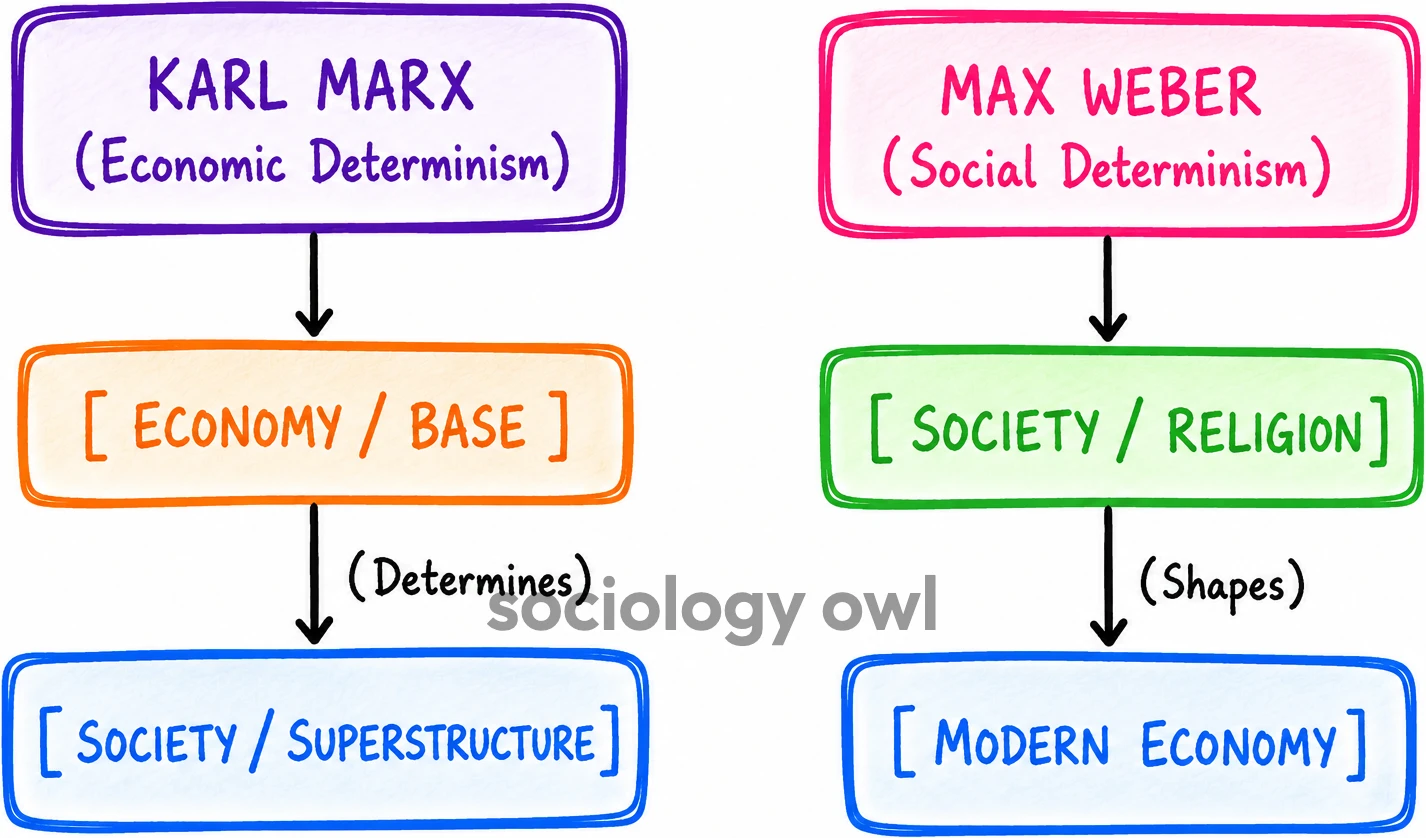
  • Karl Marx: Proposed Economic Determinism through his Base and Superstructure model. He argued that the economic mode of production (Base) dictates all social institutions, religion, and culture (Superstructure).
  • Max Weber: In his seminal work, The Protestant Ethic and the Spirit of Capitalism, Weber inverted Marx’s thesis, proving that social and religious ideas (Calvinist ethics) can drive economic behavior and give rise to modern capitalism.
  • Emile Durkheim: In The Division of Labour in Society, he critiqued classical economists like Adam Smith. Durkheim argued that the division of labor is not just for economic efficiency but serves a moral function by creating Organic Solidarity in modern societies.

Comparative Analysis: Sociology vs. Economics

DimensionEconomicsSociology
Core AssumptionFocuses on Homo Economicus (rational, self-interested, utility maximizer).Focuses on Homo Sociologicus (socially embedded, driven by norms, values, and culture).
Unit of AnalysisIndividuals, firms, and markets (Micro and Macro levels).Social groups, institutions, networks, and stratifications.
MethodologyHighly quantitative, deductive, heavily reliant on econometrics and mathematical modeling.Mixed methods; qualitative (ethnography, interviews) and quantitative, highly inductive.
Theoretical FocusMarket equilibrium, price mechanisms, supply and demand, scarcity.Power dynamics, social inequality, cultural capital, institutional constraints.

The Emergence of Economic Sociology

Modern sociological thought argues that economic actions cannot be studied in a vacuum. This led to the rise of Economic Sociology, which applies sociological frameworks to economic phenomena:

  • Karl Polanyi: In The Great Transformation, he introduced the concept of Embeddedness, arguing that in pre-modern societies, the economy was “embedded” in social relations, whereas modern capitalism tries to disembed the market from society, leading to social dislocation.
  • Mark Granovetter: Advanced the modern theory of Embeddedness, demonstrating how economic action is actively structured by Social Networks and interpersonal trust.
  • Thorstein Veblen: In The Theory of the Leisure Class, he coined the term Conspicuous Consumption, showing how economic purchasing is driven by the desire for social status rather than utility.
  • Pierre Bourdieu: Expanded the concept of capital beyond economics, introducing Social Capital (networks) and Cultural Capital (education, tastes), which can be converted into economic capital.

The Indian Context: Paper 2 Integration

In the Indian context, economics and sociology are inseparable. The unique social stratification of India directly dictates economic realities. Prominent Indian sociologists have deeply explored this nexus:

  • William Wiser and Yogendra Singh: Studied the Jajmani System, an economic system of reciprocal exchange of goods and services that was fundamentally embedded in the Caste System and religious obligations, overriding pure market logic.
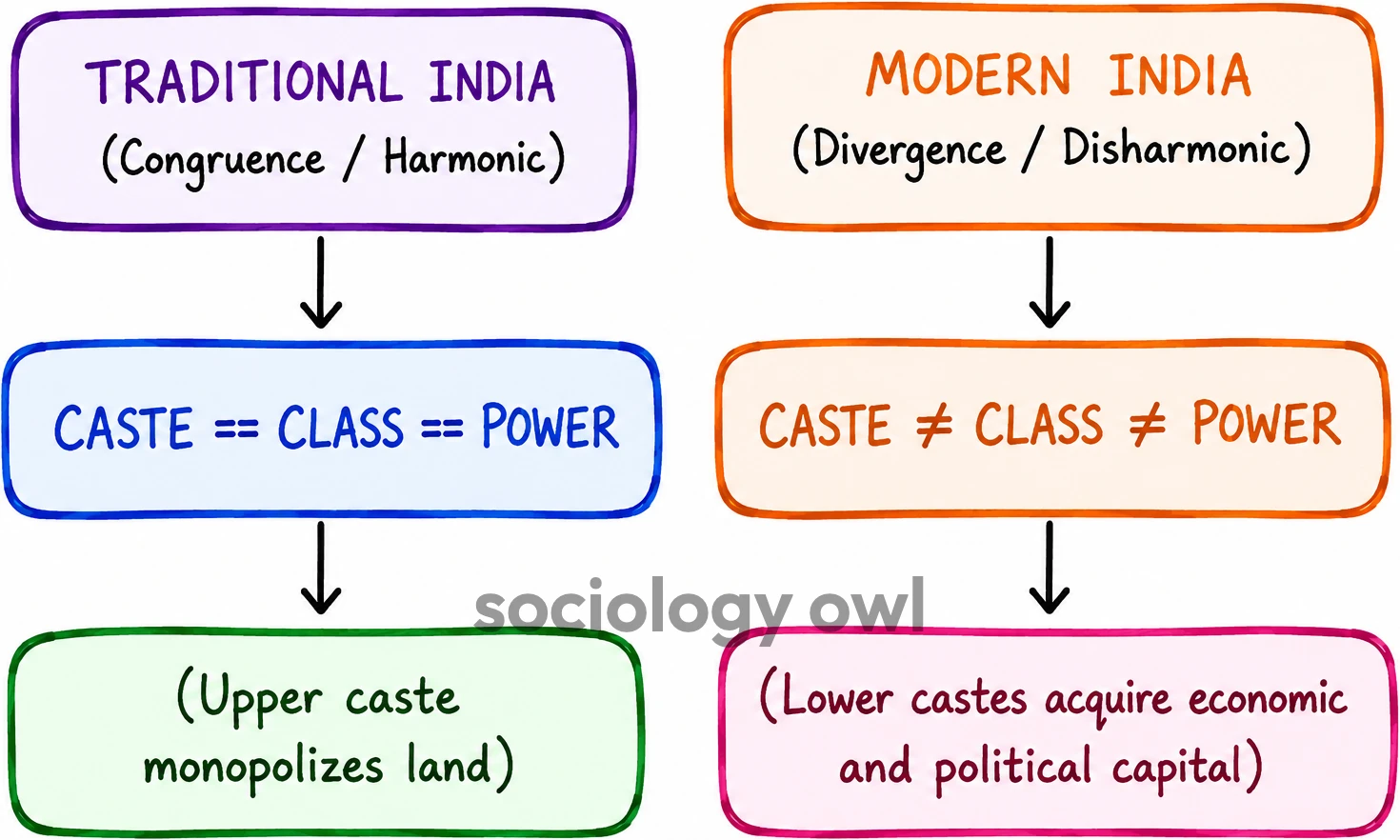
  • Andre Beteille: In his study of a Tanjore village, Caste, Class, and Power, he observed how the traditional congruence between caste (social) and class (economic) was breaking down. Economic reforms were allowing lower castes to acquire land and challenge the Brahminical hegemony.
  • A.R. Desai: Used a Marxist framework in Social Background of Indian Nationalism to analyze how British economic policies (like Zamindari) transformed the Indian agrarian class structure, leading to new social classes and agrarian distress.
  • M.N. Srinivas: His concept of the Dominant Caste illustrates how numerical strength and economic power (land ownership) translate into local social and political dominance.
  • Jan Breman: In his studies on informal labor (Footloose Labour), Breman highlights how modern capitalist expansion in India has led to the informalization of the workforce, stripping away social security and exacerbating caste-based vulnerabilities.

Contemporary Relevance in a Globalized World

The contemporary globalized era necessitates an interdisciplinary approach, merging sociology and economics to understand complex 21st-century realities:

  • The Gig Economy and Alienation: While economists view gig platforms (Uber, Zomato) as efficient labor-matching markets, sociologists analyze them as modern sites of Marxist Alienation, where algorithmic management strips workers of social security and collective bargaining.
  • Feminization of Poverty: Economists study the gender wage gap, but sociologists (like Sylvia Walby) attribute this to deep-rooted Patriarchy and the social devaluation of unpaid care work.
  • Behavioral Economics: The rise of behavioral economics (e.g., Richard Thaler’s Nudge Theory) marks the convergence of both fields, as economists finally acknowledge Bounded Rationality—that human choices are heavily influenced by social, cultural, and psychological biases.
  • Global Value Chains: Sociologists like Immanuel Wallerstein (World Systems Theory) show how global economic trade is not just about comparative advantage, but structural exploitation of the “Periphery” (developing nations) by the “Core” (developed nations).

Conclusion

The relationship between Sociology and Economics has evolved from distinct separation in the classical era to profound integration today. Modern social problems such as poverty, jobless growth, and extreme inequality cannot be solved by mathematical models alone; they require an understanding of the cultural and institutional realities that shape human behavior. As Pierre Bourdieu aptly stated, “Economics is, in reality, a branch of historical sociology.” A purely economic analysis without a sociological lens remains fundamentally incomplete, as every market is ultimately a social construct built upon human relationships.

Relationship between Sociology and Economics Read More »

Scope of Sociology – Formalistic School & Synthetic School

Scope of Sociology - Formalistic School & Synthetic School

Introduction and Historical Context

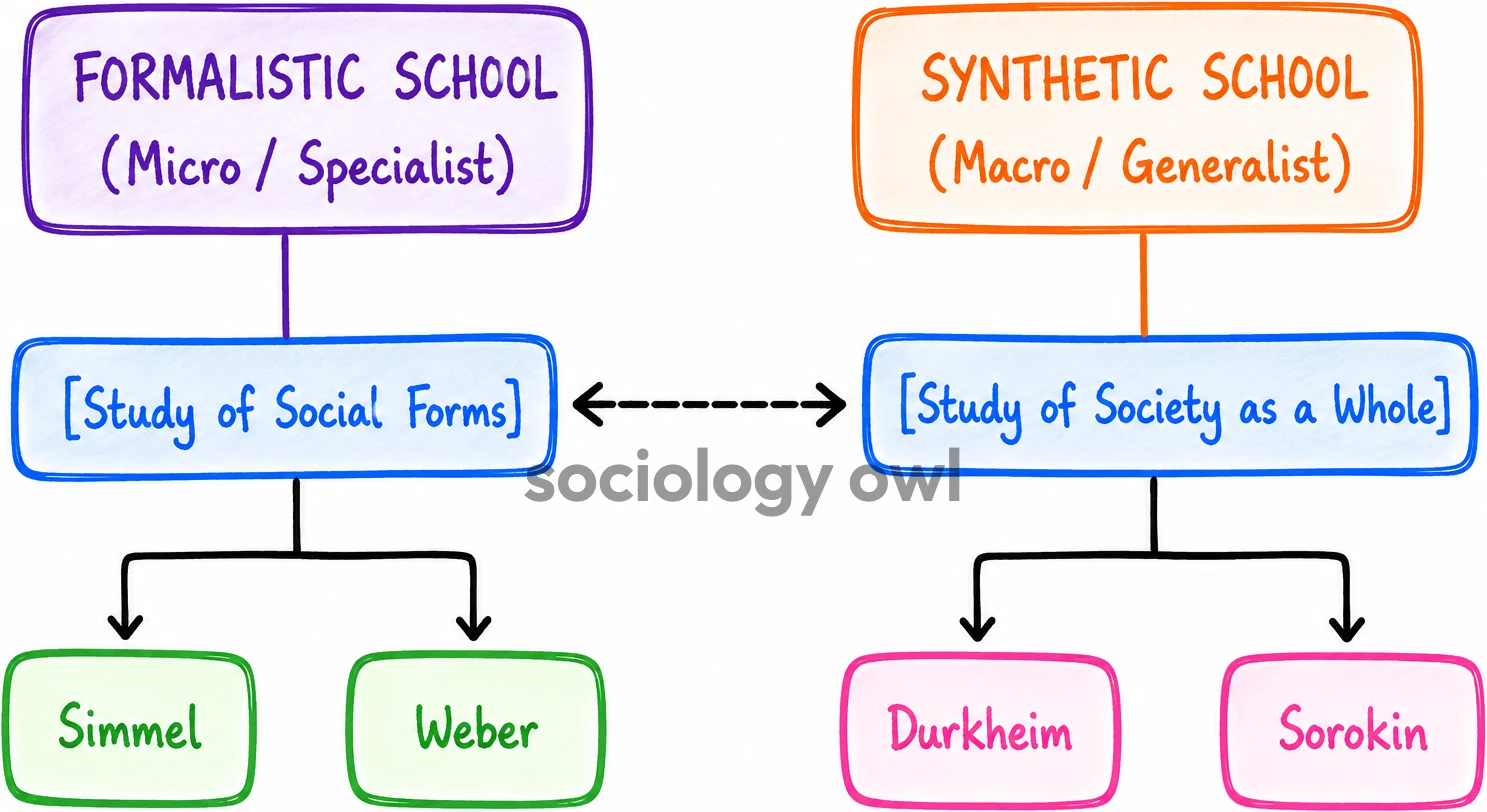
The scope of sociology refers to the boundaries and subject matter of the discipline. As a relatively young social science, sociology struggled for academic legitimacy during the late 19th and early 20th centuries. Auguste Comte originally envisioned sociology as the “queen of all sciences,” possessing a limitless scope. However, as the discipline evolved, a debate emerged regarding whether sociology should be a specialized, narrow science or a general, overarching one. This debate birthed two distinct perspectives: the Formalistic (or Specialist) School and the Synthetic School.

formalistic-vs-synthetic-sociology-schools

I. The Formalistic (Specialist) School

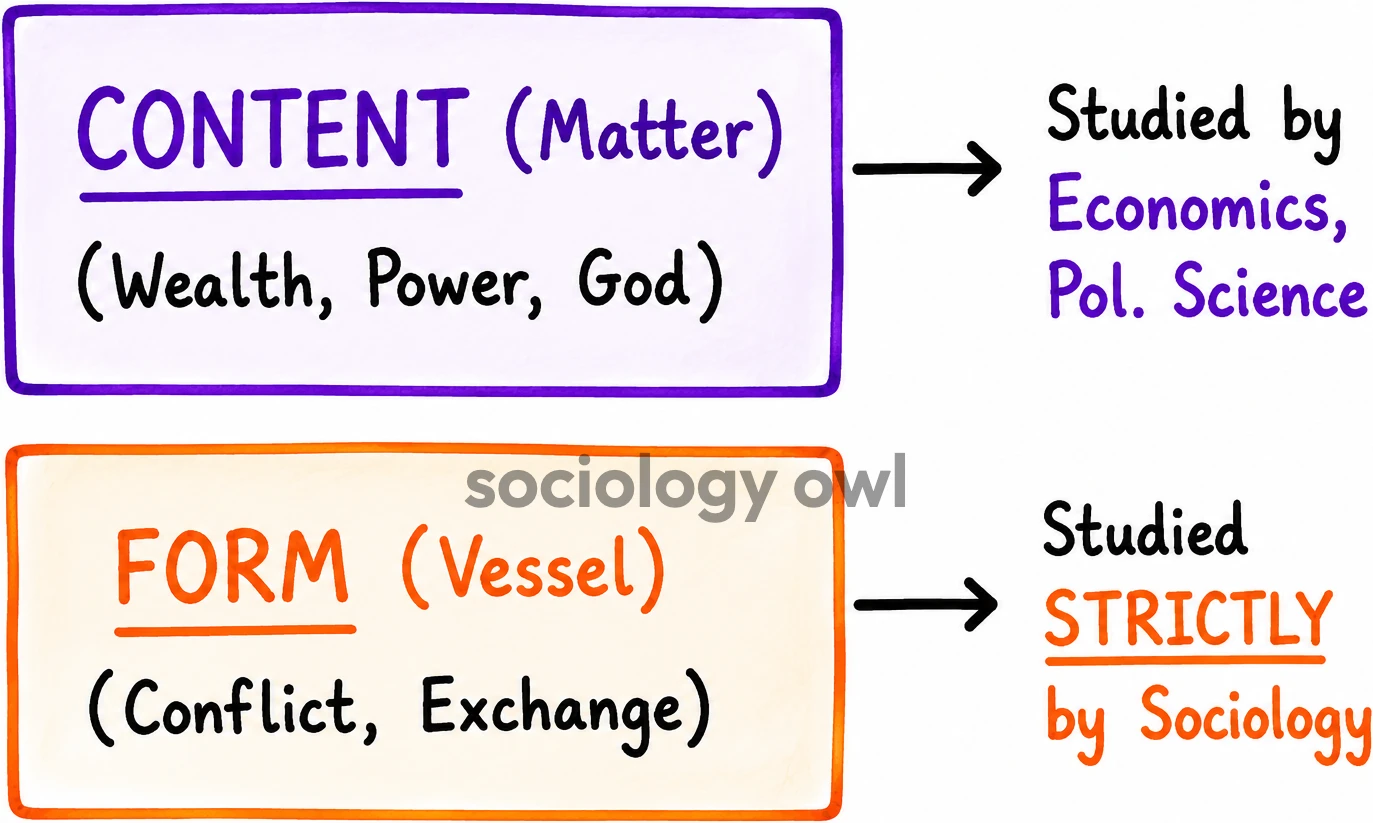
The Formalistic School argues that sociology should be an independent, specific, and pure science with a clearly defined, narrow scope. Instead of studying everything in society, it should exclusively study the forms of social relationships, leaving the “content” (economic, political, or religious aspects) to other specialized sciences.

Key Characteristics

  • Focus on Form over Content: Just as geometry studies the spatial forms of objects (triangles, squares) rather than the material they are made of, sociology should study the forms of human interaction (e.g., competition, subordination, conflict) regardless of the social sphere in which they occur.
  • Micro-Sociological Approach: It emphasizes the micro-level dynamics of human interactions and abstract social relationships.
  • Independent Science: It advocates for strict boundaries to prevent sociology from becoming a disorganized amalgamation of other social sciences.

Prominent Thinkers & Concepts

  • Georg Simmel: The pioneer of this school. In his work “Sociology” (1908), Simmel argued that sociology is the study of forms of socialization. He analyzed abstract forms like domination, submission, and isolation, separating them from their specific contexts.
  • Ferdinand Tönnies: Famous for his dichotomy of Gemeinschaft (Community) and Gesellschaft (Society). He argued that sociology’s scope is to study these distinct forms of social groupings.
  • Alfred Vierkandt: Asserted that sociology should only study the ultimate mental or psychic bonds that tie people together, such as love, respect, and submission.
  • Leopold von Wiese: Developed a highly systematic taxonomy of social relationships, identifying over 650 distinct forms of human interaction.
  • Max Weber: Though known for interpretive sociology, Weber aligns partially with this school by defining the scope of sociology as the interpretative understanding of Social Action, focusing on specific social behaviors rather than the entire societal whole.

II. The Synthetic School

The Synthetic School arose as a reaction to the Formalistic School. It argues that society is an interconnected whole and cannot be studied in isolated “forms.” Therefore, the scope of sociology must be general and comprehensive, acting as a synthesis of all social sciences.

Key Characteristics

  • Holistic Perspective: Society is viewed as an organism (drawing from early organicism) where all parts are interdependent. Form and content cannot be artificially separated.
  • Macro-Sociological Approach: Focuses on large-scale social structures, institutions, and overarching patterns of social change.
  • Interdisciplinary Nature: Sociology requires the integration of data from history, economics, political science, and anthropology to form a complete picture of human society.

Prominent Thinkers & Concepts

  • Émile Durkheim: A founding father of the Synthetic School. In “The Rules of Sociological Method”, he defined sociology as the study of Social Facts. He divided the scope of sociology into three broad fields: Social Morphology (population, geography), Social Physiology (religion, law, morals), and General Sociology (discovering general social laws).
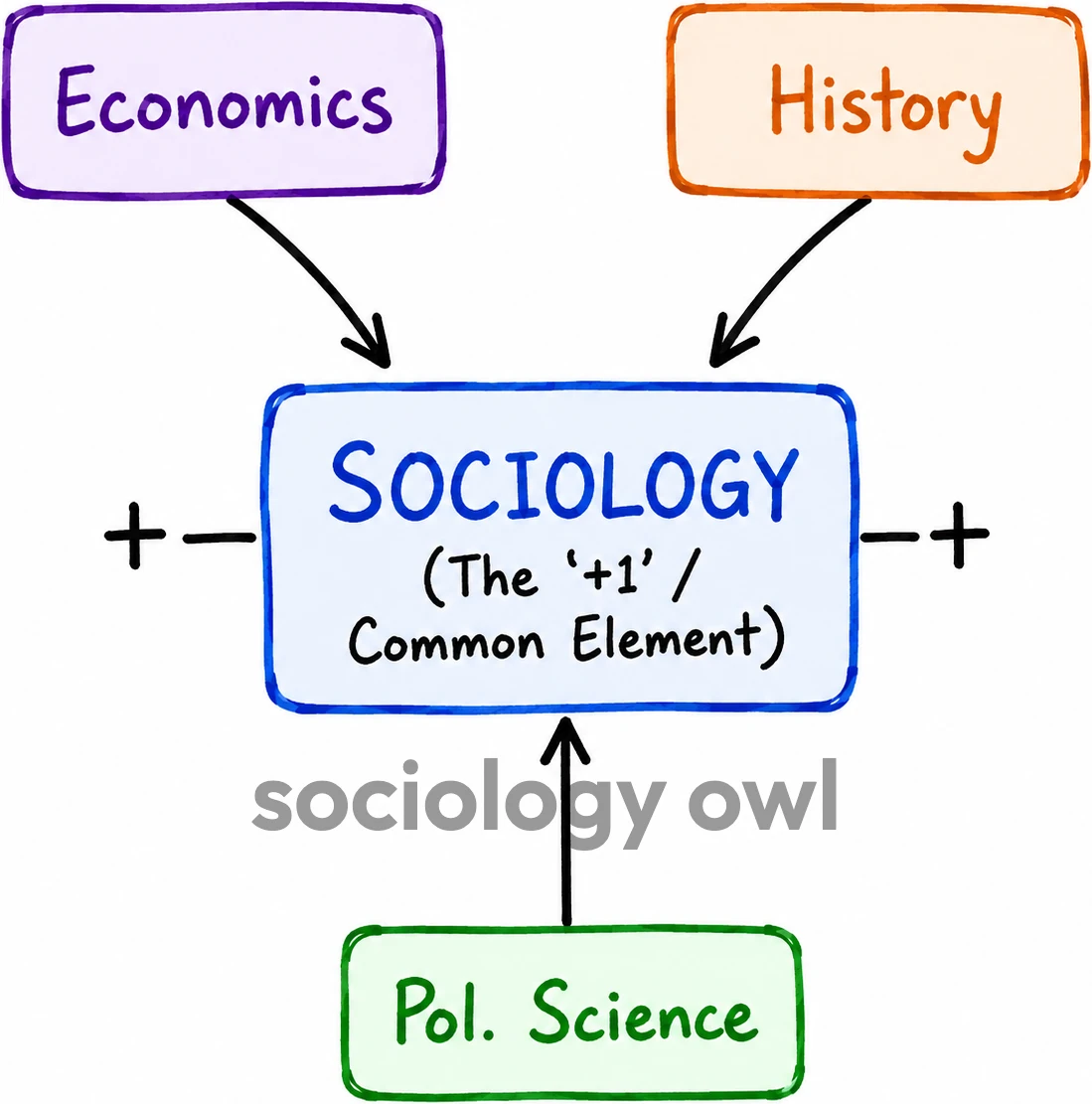
  • Pitirim Sorokin: Proposed the “n+1” formula. He argued that if economics, political science, and history each study specific aspects of society (n), sociology studies the common, overlapping element that connects them all (+1).
  • Morris Ginsberg: Broadened the scope to include Social Morphology, Social Control, Social Processes, and Social Pathology.
  • L.T. Hobhouse: Believed sociology must synthesize the knowledge of all specialized sciences to understand the whole of social life.

III. Comparison of Formalistic and Synthetic Schools

FeatureFormalistic SchoolSynthetic School
ScopeNarrow, specialized, and limited.Vast, general, and encyclopedic.
Subject MatterForms of social relationships (abstract interactions).Society as a whole, social institutions, and structures.
Nature of DisciplinePure and independent science.A synthesis of various applied social sciences.
Key ProponentsSimmel, Tönnies, von Wiese, Vierkandt, WeberDurkheim, Sorokin, Ginsberg, Hobhouse

IV. The Indian Context (Paper 2 Integration)

In the context of Indian sociology, the rigid boundaries proposed by the Formalistic School were largely rejected. The development of sociology in India is inherently aligned with the Synthetic School, heavily overlapping with social anthropology, history, and Indology.

  • G.S. Ghurye: Often called the father of Indian Sociology, his study of Caste and Race in India synthesized historical, Indological, and anthropological data. He did not separate the “form” of caste from its religious or economic “content.”
  • M.N. Srinivas: Employed a structural-functional (synthetic) approach. In his book “Religion and Society Among the Coorgs of South India”, he viewed religion, caste, and village life as deeply interconnected phenomena, rejecting a purely formalistic separation.
  • Radhakamal Mukerjee: Pioneered Social Ecology, arguing for a synthesis of economics, sociology, and ecology to understand the complex realities of the Indian rural and industrial landscape.
  • S.C. Dube: His work “Indian Village” studied village communities as holistic systems (economic, political, ritual), perfectly exemplifying the synthetic scope of Indian sociology.

V. Contemporary Relevance

In the modern, globalized world, the debate between the two schools has largely resolved into a practical coexistence. The Synthetic approach is vital for tackling complex, multi-dimensional global crises like Climate Change, global poverty, and pandemics, where economic, political, and social realities are inseparable. Conversely, the Formalistic approach is experiencing a revival in Digital Sociology. For instance, studying the “form” of a social network or viral communication on platforms like Twitter or Instagram—irrespective of whether the content is political or entertainment—reflects Georg Simmel’s vision of abstract social forms applied to the Internet age (as seen in Manuel Castells’ “Network Society”).

VI. Conclusion

The dichotomy between the Formalistic and Synthetic schools represents the developmental growing pains of sociology as it sought its academic identity. Today, sociologists recognize that form and content are inextricably linked; one cannot study the form of capitalism without understanding its economic content. As the eminent sociologist Alex Inkeles noted in his book “What is Sociology?”, modern sociology encompasses both the specialized study of social interactions and the holistic study of social institutions. Conclusively, as Robert Bierstedt aptly summarized, “Sociology is both a general science and a special science; it is a synthesis of social sciences but maintains its unique vantage point.”

Scope of Sociology – Formalistic School & Synthetic School Read More »

Auguste Comte: Father of Sociology

Auguste Comte: Father of Sociology

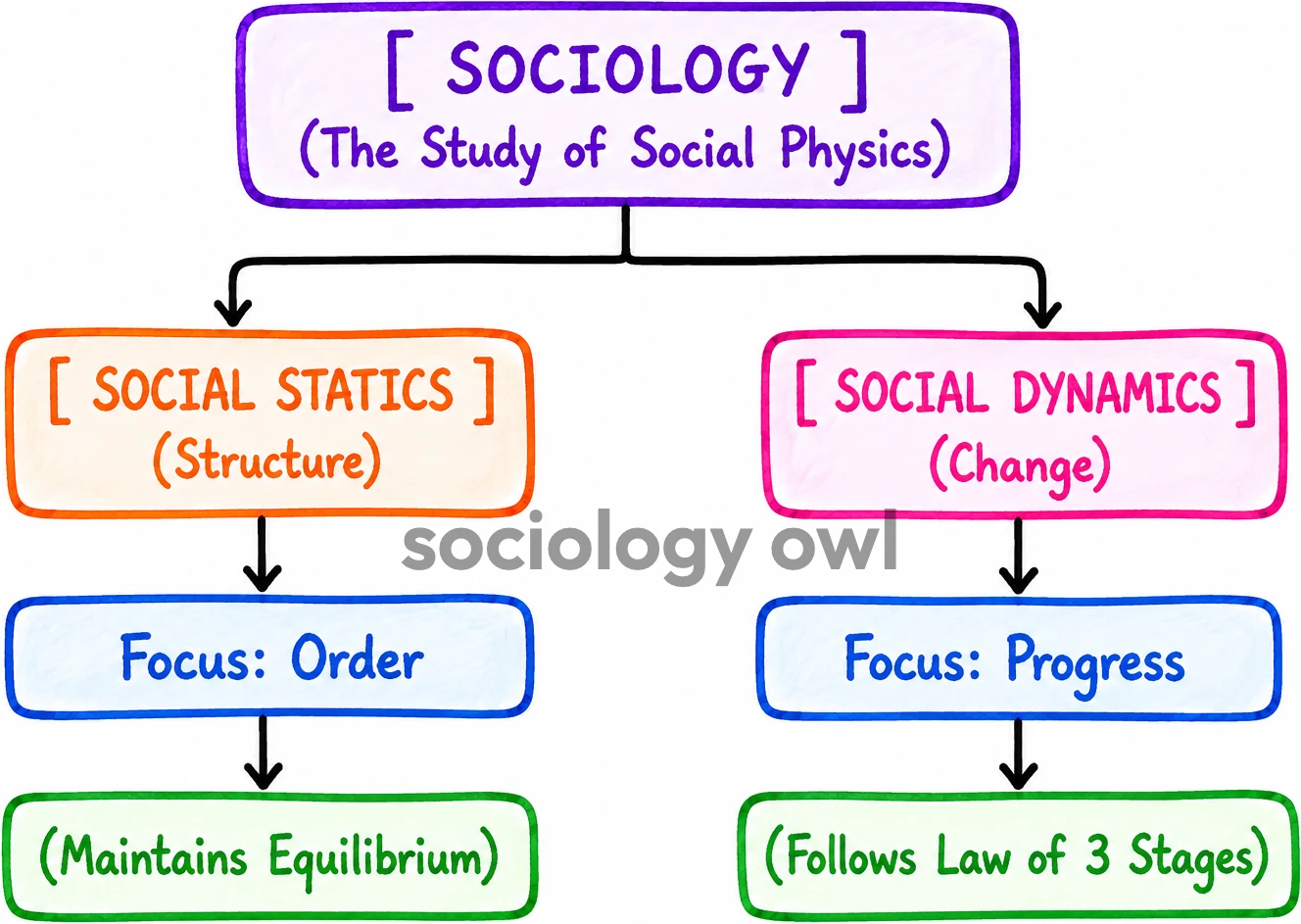
Auguste Comte (1798–1857), originally a student of the utopian socialist Henri de Saint-Simon, is universally recognized as the “Father of Sociology.” He coined the term “Sociology” in 1838 to establish a master discipline that would study society with the same rigorous scientific methods used in the natural sciences. His pioneering work laid the groundwork for the structural-functional perspective and established Positivism as the first major epistemological paradigm in sociology.

Historical Context: The Genesis of Positivism

To understand Comte for the UPSC exam, one must look at the socio-political climate of 19th-century Europe. The twin revolutions—the French Revolution (1789) and the Industrial Revolution—had dismantled traditional social structures, leading to intellectual anarchy and social chaos. Comte viewed this transition with anxiety. Unlike Karl Marx, who advocated for revolution, Comte sought a conservative reconstruction of society. He believed that to restore social order and stability, a new intellectual framework was needed. This necessity birthed Positivism—a philosophy asserting that social harmony could only be achieved if society was studied, understood, and managed through scientific laws rather than theological or metaphysical speculations.

Core Sociological Contributions

1. Positivism and the Scientific Method

In his magnum opus, “Cours de Philosophie Positive” (1830–1842), Comte introduced Positivism. It is an epistemological approach which argues that authentic knowledge is strictly derived from sensory experience and empirical evidence. Comte advocated for the use of natural science methodologies—namely observation, experimentation, and comparison (historical method)—to uncover the invariable laws governing human society, which he initially termed “Social Physics.”

2. The Law of Three Stages

Comte proposed an evolutionary theory of social and intellectual progress, arguing that human thought, and consequently society, inevitably passes through three distinct evolutionary stages. This is a macro-sociological, unilinear evolutionary model.

StageDominant Worldview / ExplanationSocial Unit & Nature of Authority
Theological Stage (Fictitious)Phenomena are explained by the direct action of supernatural entities (Animism, Polytheism, Monotheism).Family unit; Militaristic society ruled by priests and military men.
Metaphysical Stage (Abstract)Supernatural beings are replaced by abstract forces or philosophical principles (e.g., “Nature” or “Natural Rights”).The State; Society governed by churchmen and lawyers.
Positive Stage (Scientific)Explanations are based on scientific observation, reasoning, and empirical laws of cause and effect.The Whole Human Race; Industrial society led by scientists and industrial administrators.

three stages

3. Social Statics and Social Dynamics

Comte divided sociology into two distinct but interconnected branches, essentially laying the foundation for Functionalism and Social Change theories:

  • Social Statics: The study of social structure, order, and harmony. It examines how institutions (like family, religion, and property) interconnect to maintain societal equilibrium. Comte viewed society as an organic whole (organicism).
  • Social Dynamics: The study of social progress and change over time. It is driven by the intellectual evolution described in his Law of Three Stages. For Comte, dynamics were subordinated to statics; progress must occur within the bounds of order.

4. The Religion of Humanity

In his later work, “System of Positive Polity”, Comte shifted from strict science to morality. Realizing that science alone could not bind society emotionally, he proposed a “Religion of Humanity”—a secular religion where humanists and sociologists would serve as priests, worshipping the collective achievements of humanity rather than a divine being. This highlights his ultimate goal: intellectual order leading to moral and social order.

Critique of Comte’s Positivism

While foundational, Comte’s ideas face significant criticism in sociological theory:

  • Max Weber and the Interpretivists argued that society cannot be studied like natural sciences because humans attach subjective meanings to their actions (Verstehen).
  • Karl Popper criticized positivism for lacking falsifiability.
  • Frankfurt School (Critical Theorists) like Jürgen Habermas argued that positivism reduces human beings to mere numbers and perpetuates the status quo, ignoring the structural inequalities of capitalism.

The Indian Context: Positivism in Indian Sociology (Paper 2 Integration)

Although Comte did not write specifically on India, his positivist paradigm deeply influenced the institutionalization of sociology in India during the 20th century:

  • Empirical Rigor in Indian Sociology: The transition from armchair Indology to empirical field research in India mirrors Comte’s push for positivism. M.N. Srinivas championed the “field-view” (empirical observation) over the “book-view” (textual/theological), applying scientific rigor to study concepts like Sanskritization and Dominant Caste.
  • Structural-Functionalism: Indian sociologists like S.C. Dube (in his study of Indian villages) and M.N. Srinivas adopted the functionalist perspective (rooted in Comte’s Social Statics) to understand how caste, kinship, and village structures maintain social equilibrium in India.
  • State Planning and Positivism: Post-independence India’s approach to development, driven by the Planning Commission (now NITI Aayog), reflects a positivist ethos—the belief that social problems (poverty, illiteracy) can be eradicated through rational, scientific planning, statistics, and administrative action by experts.
  • Critique by Indian Marxists: Thinkers like A.R. Desai criticized this static, positivist approach, arguing that it ignored the historical materialist realities and class conflicts inherent in Indian society.

Contemporary Relevance in the Modern World

In the 21st century, Comte’s positivist vision is experiencing a massive revival through Computational Sociology and the Big Data Revolution. Governments and tech giants use algorithmic data mining, predictive policing, and empirical analytics to map human behavior and formulate public policy. Furthermore, global challenges like climate change and pandemics are forcing a return to Comtean ideals, where society looks toward the scientific community (Positive Stage) rather than religious or political demagoguery for solutions and survival.

Conclusion

Auguste Comte’s genius lay in his ability to synthesize the intellectual currents of his time into a coherent master discipline aimed at human betterment. While his unilinear evolutionary theories and the “Religion of Humanity” are largely obsolete today, his methodological insistence on empirical evidence remains the bedrock of modern social science. As the eminent French sociologist Raymond Aron rightly summarized: “Comte is the sociologist of human and social unity… he wanted to resolve the crisis of the modern world by providing it with a system of scientific ideas.”

Auguste Comte: Father of Sociology Read More »

The Dark Ages & Renaissance : Sociology Notes

The Dark Ages & Renaissance : Sociology Notes

Historical Context: The Genesis of Sociological Thought

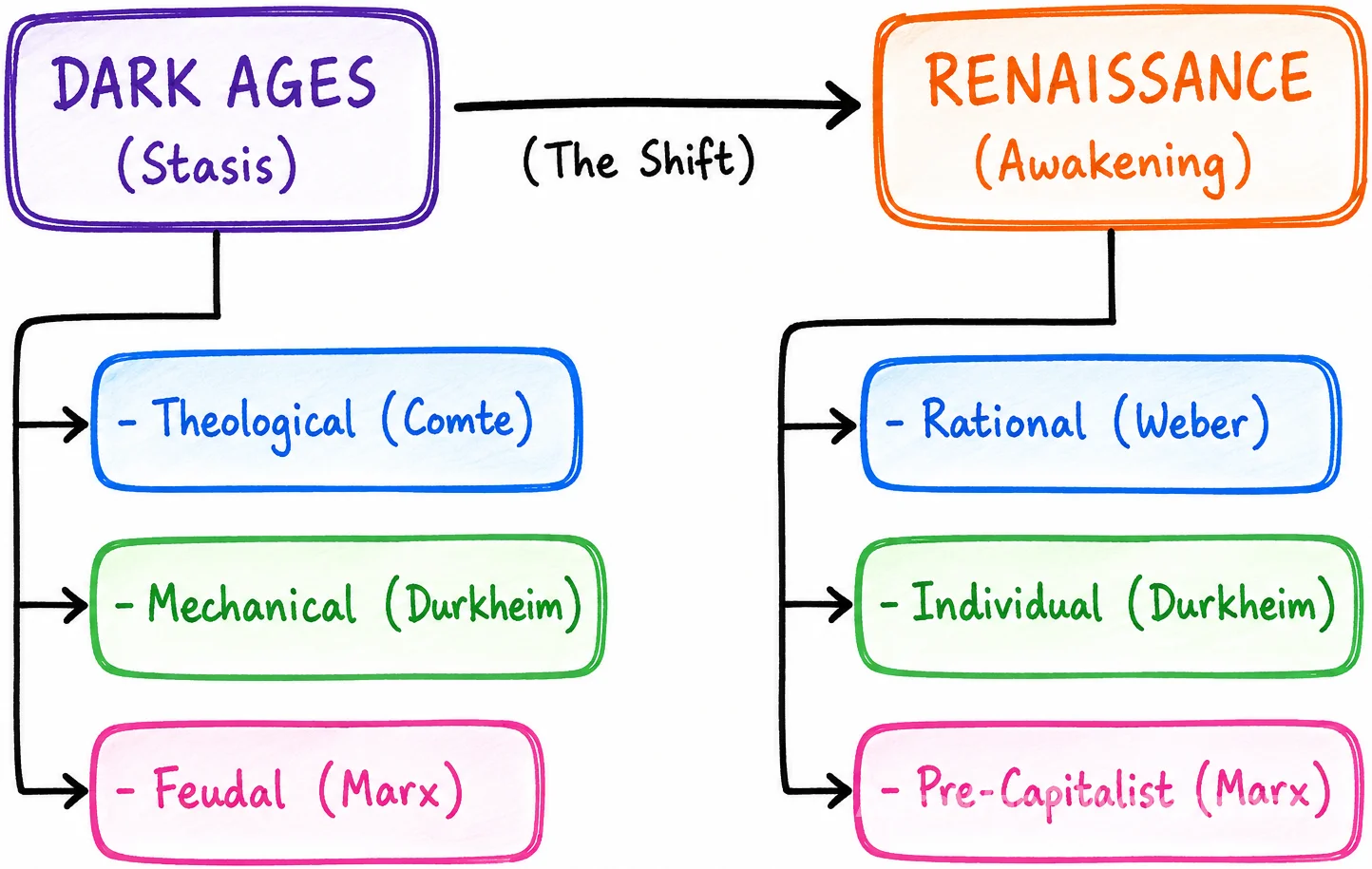
Sociology did not emerge in a vacuum; it was the intellectual byproduct of a massive historical transition. To understand the Emergence of Sociology (Paper 1, Chapter 1), one must analyze the rupture between the Dark Ages and the Renaissance. The Dark Ages represented a period of stasis and theological hegemony, while the Renaissance acted as the catalyst for the Scientific Revolution and the Enlightenment, which ultimately necessitated a new science of society to study the rapidly changing social order.

Sociological Analysis of the Dark Ages (Early Middle Ages)

The Dark Ages (roughly 476 AD to 1000 AD) was characterized by political fragmentation, feudalism, and the absolute dominance of the Catholic Church. Sociologically, this era can be understood through the lenses of classical thinkers:

  • Auguste Comte and the Theological Stage: According to Comte’s Law of Three Stages, the Dark Ages perfectly epitomize the Theological Stage, where society was guided by religious dogma, priests were the ultimate intellectual authority, and natural phenomena were attributed to supernatural forces.
  • Karl Marx and Feudal Mode of Production: For Marx, this period is defined by the Feudal Mode of Production. Society was highly stratified into estates (lords, vassals, and serfs), marked by agrarian stasis and exploitation legitimized by religious ideology.
  • Mechanical Solidarity: Using Emile Durkheim’s framework, society during this period exhibited Mechanical Solidarity, characterized by high collective consciousness, repressive laws, and minimal division of labor.

Sociological Analysis of the Renaissance (14th – 17th Century)

The Renaissance (“Rebirth”) marked a fundamental epistemological shift from a God-centric universe to a human-centric one. It laid the groundwork for modernity, rationalism, and eventually, sociological inquiry.

  • The Rise of Humanism and Individualism: The Renaissance emphasized human potential and rational inquiry. Sociologically, this marks the beginning of the shift towards Individualism, which Durkheim later identified as a core component of modern Organic Solidarity.
  • Max Weber and the Disenchantment of the World: Weber would view the Renaissance as the initial spark of Rationalization. As art and science began to question religious orthodoxy, the process of the Disenchantment of the World began, replacing magical/religious thought with empirical observation (e.g., Galileo, Leonardo da Vinci).
  • Secularization of Authority: The unquestioned authority of the Church was challenged, leading to the gradual separation of church and state, a structural differentiation central to Talcott Parsons’ theory of evolutionary social change.

Comparative Analysis: Dark Ages vs. Renaissance

Sociological DimensionThe Dark AgesThe Renaissance
Dominant IdeologyTheocentrism (God-centric) and SupernaturalismHumanism (Man-centric) and Rationalism
Economic StructureFeudalism, agrarian economy, local subsistenceRise of mercantilism, trade, and the early bourgeoisie
Social Solidarity (Durkheim)Mechanical Solidarity (homogeneity)Transitioning toward Organic Solidarity (differentiation)
Basis of Authority (Weber)Traditional Authority (Kingship, Church)Emergence of Legal-Rational thought processes

The Indian Context: Did India Experience a Renaissance? (Paper 2 Integration)

Applying European historical epochs directly to India is analytically flawed, yet the concepts of “Dark Ages” and “Renaissance” are heavily utilized in studying Indian social change.

  • Yogendra Singh on the Modernization of Indian Tradition: Yogendra Singh notes that unlike the European Renaissance which was an internal (orthogenetic) evolution, India’s exposure to modernity was largely heterogenetic, forced through British colonialism.
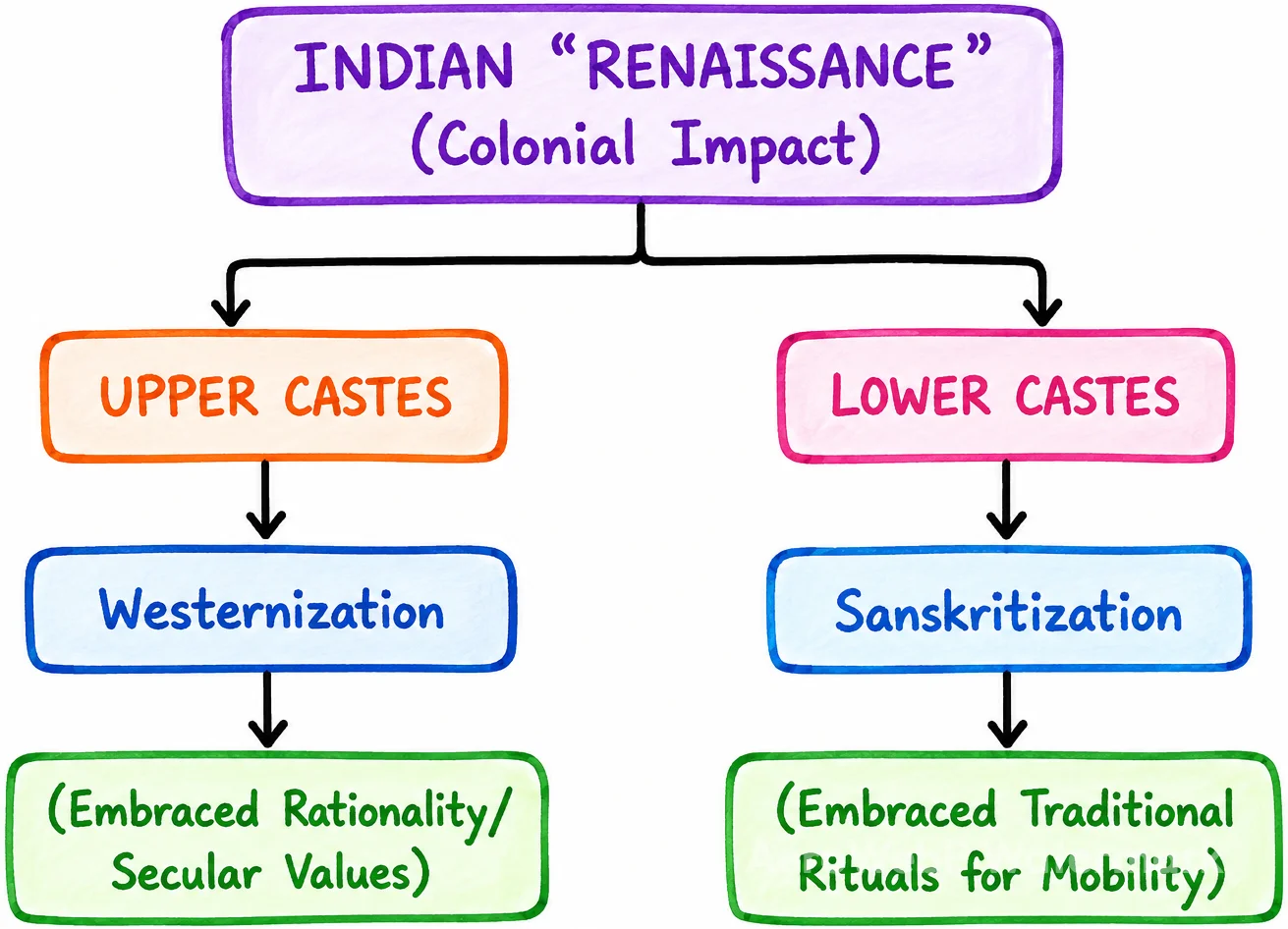
  • The Bengal Renaissance: In the 19th century, India experienced its own socio-cultural awakening, often termed the Bengal Renaissance. Thinkers like Raja Ram Mohan Roy championed rationalism and social reform (abolition of Sati). However, Marxist sociologist A.R. Desai argued in Social Background of Indian Nationalism that this “renaissance” was highly elitist, restricted to the upper-caste Bhadralok, and structurally tied to colonial capitalist interests.
  • M.N. Srinivas and Sanskritization vs. Westernization: During India’s socio-cultural awakening, the lower castes sought mobility through Sanskritization (mimicking upper-caste traditions), while the upper castes sought progress through Westernization (adopting Renaissance-born rationalist values).

  • G.S. Ghurye’s Indological View: Ghurye rejected the colonial narrative that pre-British India was in a “Dark Age.” He highlighted the rich synthesis of Indo-Aryan culture, arguing that India had continuous intellectual vitality rather than a stagnant Dark Age followed by a Western-imported Renaissance.

Contemporary Relevance in a Globalized World

The legacy of the Renaissance—hyper-rationality, scientific advancement, and human mastery over nature—continues to drive modern globalization. However, contemporary sociologists offer a critical view. The Frankfurt School, particularly thinkers like Theodor Adorno and Max Horkheimer in their work Dialectic of Enlightenment, argue that the extreme rationality birthed during the Renaissance and Enlightenment has led to a new kind of “Dark Age”—one of technological domination, ecological crisis, and the alienation of the individual. Furthermore, in the digital age, scholars debate whether we are entering a “Digital Renaissance” of democratized knowledge or a “Digital Dark Age” marked by echo chambers, misinformation, and algorithmic control.

Conclusion

The transition from the Dark Ages to the Renaissance was not merely a change in art and literature, but a profound transformation in human consciousness and social structure. As prominent sociologist Robert Nisbet states in his seminal book, The Sociological Tradition, sociology itself is a response to the collapse of the old medieval order. Without the Renaissance shattering the theological dogmas of the Dark Ages, the sociological imagination required to objectively study human society could never have been born.

The Dark Ages & Renaissance : Sociology Notes Read More »

Modernity & Social Change in Europe

Modernity & Social Change in Europe

The transition from traditional, agrarian, and religious societies to modern, industrialized, and secular ones in Europe is not merely a historical timeline but the foundational catalyst for the birth of Sociology. Sociologists often refer to sociology as the “Child of Modernity,” emerging as an intellectual response to the unprecedented chaos, anomie, and transformation brought about by this era.

Historical Context: The Dawn of Modernity

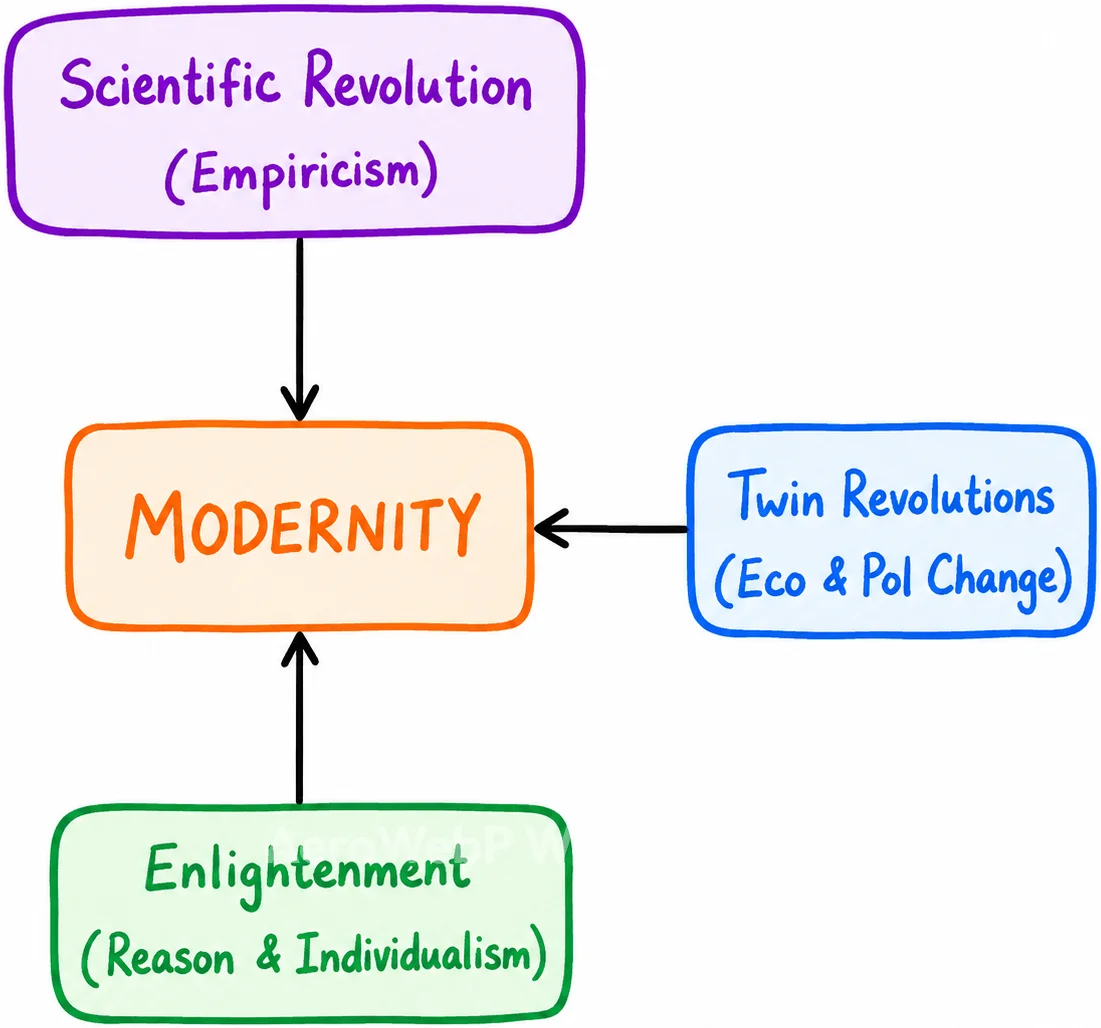
Modernity in Europe did not happen overnight; it was a cumulative result of intellectual and material transformations. The historical context can be traced through a series of sequential revolutions:

  • The Scientific Revolution (15th-16th Century): Thinkers like Copernicus and Galileo shifted the epistemological focus from theology to empirical science and rationality.
  • The Enlightenment (18th Century): A philosophical movement emphasizing reason, skepticism, and individualism. Immanuel Kant defined it as man’s emergence from self-imposed immaturity, driven by the motto “Dare to know!”
  • The Twin Revolutions: Historian Eric Hobsbawm coined this term to describe the French Revolution (1789), which destroyed the feudal-monarchical political order, and the Industrial Revolution (late 18th Century), which upended the agrarian economic system.


Sociological Perspectives on the Dimensions of Social Change

To understand the depth of these transformations, classical sociologists developed conceptual dichotomies to explain the shift from pre-modern to modern Europe.

Sociological DimensionPre-Modern SocietyModern SocietyKey Sociologist & Concept
Social RelationshipsClose-knit, kinship-basedImpersonal, goal-orientedFerdinand Tönnies: Gemeinschaft (Community) to Gesellschaft (Society)
Social SolidarityBased on similarity & shared conscienceBased on interdependence & specializationEmile Durkheim: Mechanical Solidarity to Organic Solidarity
Nature of AuthorityCustoms, religion, heredityLaws, rules, and bureaucracyMax Weber: Traditional Authority to Rational-Legal Authority

1. Economic Changes: The Rise of Capitalism

The Industrial Revolution marked the shift from handicraft economies to mass manufacturing. However, sociologically, this was seen through a critical lens. Karl Marx analyzed this as the rise of Capitalism, which created a new class structure (Bourgeoisie vs. Proletariat). He highlighted how modernity led to the Alienation of the worker from the product, process, self, and society. Conversely, Emile Durkheim viewed this economic shift as the growth of the Division of Labour, which, while creating organic solidarity, also risked producing Anomie (normlessness) during rapid transitions.

2. Political Changes: Bureaucracy and Democracy

The French Revolution replaced the divine right of kings with ideals of liberty, equality, and fraternity. Max Weber studied this political modernization as the inevitable rise of Rational-Legal Authority, materialized through the Bureaucracy. He argued that modern states required structured, rule-bound administrative machinery to function effectively, replacing the arbitrary rule of feudal lords.

3. Cultural and Intellectual Changes: Secularization

Modernity systematically eroded the absolute authority of the Church. Auguste Comte, the founding father of sociology, explained this via his Law of Three Stages, stating society moved from the Theological (religious) to the Metaphysical, and finally to the Positivist (scientific) stage. Max Weber referred to this cultural shift as the Disenchantment of the World—a process where mystical and magical beliefs are replaced by rational calculation, science, and technology.

4. Social Structural Changes: Urbanization and the Nuclear Family

The mass migration from villages to cities dismantled traditional joint families and kinship networks, leading to the rise of the nuclear family. Scholars like Talcott Parsons argued that the isolated nuclear family emerged because it was the most structurally compatible unit for the geographical and social mobility demanded by modern industrial economies.

The Indian Context: Colonial Modernity and Tradition (Paper 2 Integration)

While European modernity was endogenous (internally generated), India’s experience with modernity was exogenous, introduced primarily through British colonialism. This resulted in a unique, complex social reality:

  • Orthogenetic vs. Heterogenetic Changes: Yogendra Singh in his book Modernization of Indian Tradition explains that India underwent structural changes (bureaucracy, modern education) due to heterogenetic (external) colonial forces, yet deeply retained its traditional cultural core.
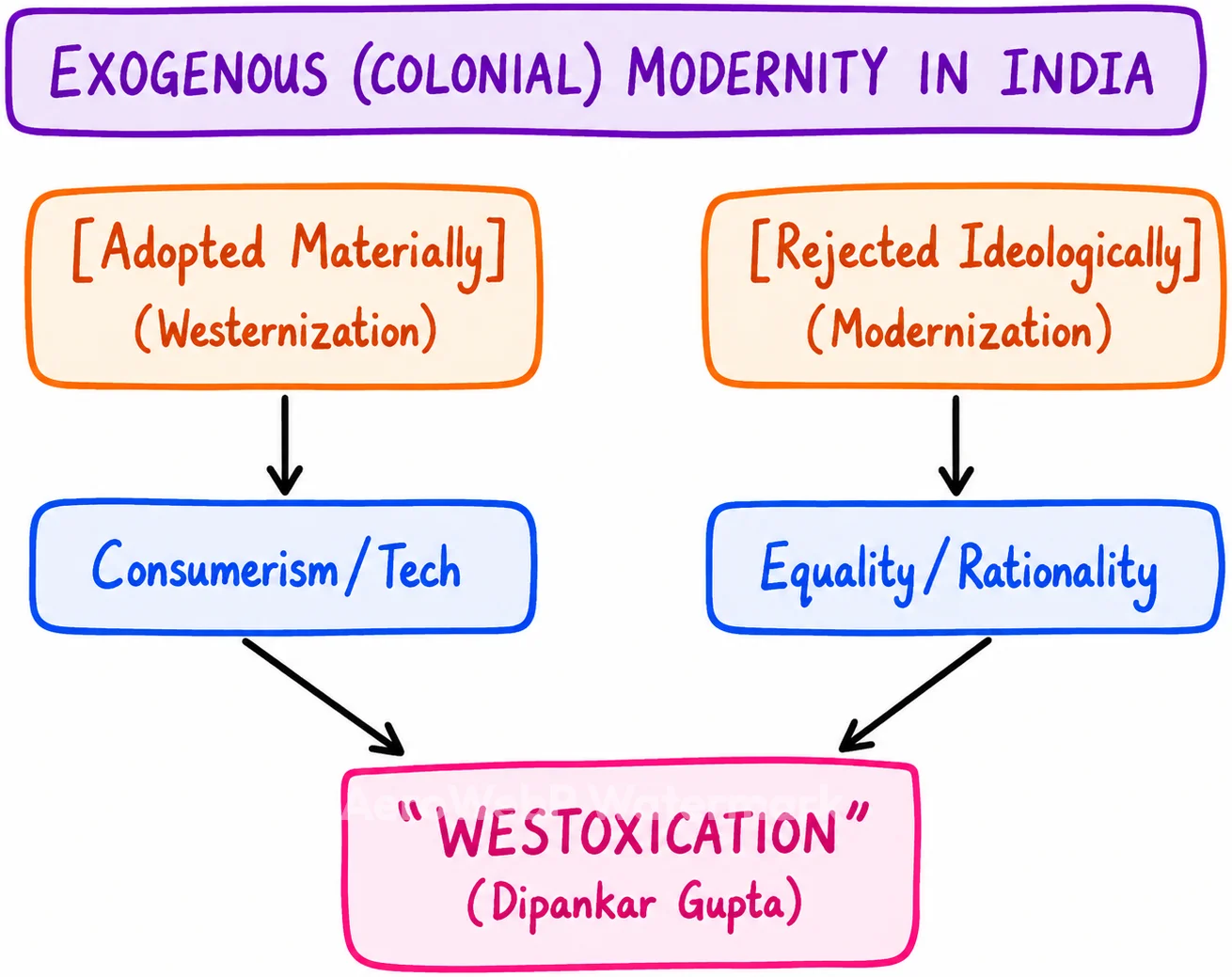
  • Westernization vs. Modernization: M.N. Srinivas differentiated between the two. While Indians adopted Western lifestyles, clothing, and language (Westernization), actual modernization (rational, scientific, and egalitarian thinking) lagged behind.
  • Mistaken Modernity: Dipankar Gupta argues that India suffers from “Westoxication.” Indians have enthusiastically embraced the consumerist and technological aspects of modernity but have largely failed to adopt its core values, such as universalism, civic responsibility, and human equality—often perpetuating casteist and patriarchal mindsets using modern technologies.
  • Uneven Development: Marxist scholar A.R. Desai argued that colonial modernity did not lead to a genuine industrial revolution in India, but rather underdeveloped the nation, creating deep class inequalities that persist today.

modernity

Contemporary Relevance: From Solid to Liquid Modernity

Today, the concept of modernity has evolved beyond the classical industrial society. Contemporary sociologists argue we are in a new phase of social change:

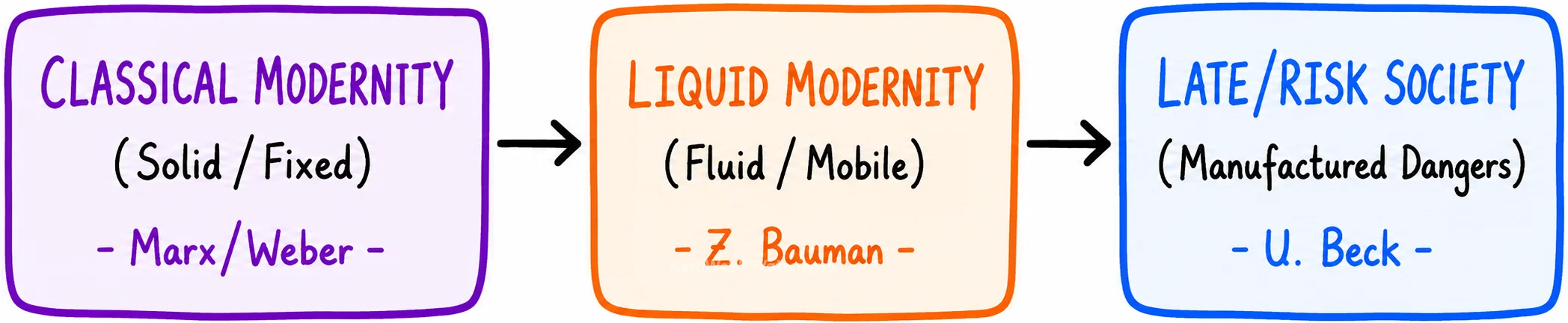
  • Liquid Modernity: Zygmunt Bauman argues that modern societies have transitioned from a “solid” state (stable jobs, lifelong marriages, fixed identities) to a “liquid” state, characterized by precariousness, hyper-mobility, and fleeting relationships.
  • Risk Society: Ulrich Beck highlights that late modernity is defined by the very risks it has manufactured (e.g., climate change, nuclear threats, AI, global pandemics). Modern social change is now about managing these global risks.
  • The Juggernaut of Modernity: Anthony Giddens describes late modernity as a “runaway juggernaut”—a massive, dynamic force of globalization and technology that provides immense benefits but threatens to crush those who cannot control it.

sociology-theories-modernity-flowchart

Conclusion

The transformation of Europe during the advent of modernity was an epochal shift that permanently altered human relations, economic production, and political power. It was out of the need to understand, critique, and manage these profound disruptions that Sociology was born. As T.B. Bottomore aptly noted, sociology is fundamentally the science of the new industrial society. Today, as the world navigates the turbulent waters of post-modernity and globalization, the foundational concepts forged during Europe’s transition remain essential tools for sociological imagination and analysis.

Modernity & Social Change in Europe Read More »

Sociology and Common Sense

Sociology and Common Sense

The relationship between sociology and common sense is one of the most foundational epistemological debates in the discipline. While common sense provides practical, everyday knowledge to navigate social life, sociology offers a systematic, scientific, and empirical lens to analyze society. For a student of sociology, distinguishing between the two—and understanding how they interact—is crucial for developing the Sociological Imagination.

Historical Context: The Emergence of Sociological Thinking

Sociology emerged in 19th-century Europe as a response to the disruptions caused by the French Revolution and the Industrial Revolution. Early founders like Auguste Comte and Emile Durkheim sought to establish sociology as a distinct, objective science (Positivism). To achieve this, it was imperative to break away from traditional philosophy, theology, and everyday “common sense”, which were largely based on unverified assumptions, religious dogma, and anecdotal observations.

Sociology vs. Common Sense: Divergence and Demystification

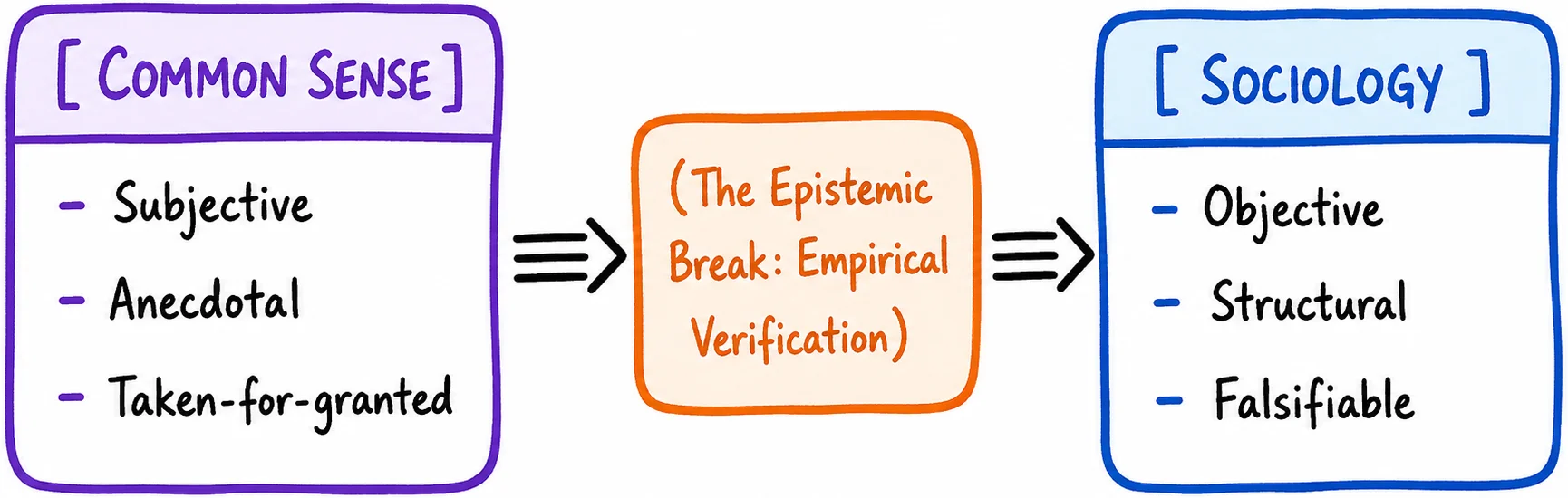
Sociology constantly challenges and scrutinizes common sense assumptions. Prominent sociologists have viewed common sense as an obstacle to true scientific inquiry.

  • Emile Durkheim: In his seminal work, The Rules of Sociological Method, Durkheim argued that sociologists must actively eradicate “prenotions” or common sense assumptions. His study Suicide empirically debunked the common sense view that suicide is purely a psychological or individualistic act, proving it to be a social fact driven by the degree of social integration and regulation.
  • Peter Berger: In Invitation to Sociology, Berger famously stated that the first wisdom of sociology is that “things are not what they seem.” Sociology unmasks the facade of social reality.
  • C. Wright Mills: Through his concept of the Sociological Imagination, Mills differentiated between “personal troubles” (common sense view) and “public issues” (sociological view), urging people to link individual biographies to larger historical and social structures.
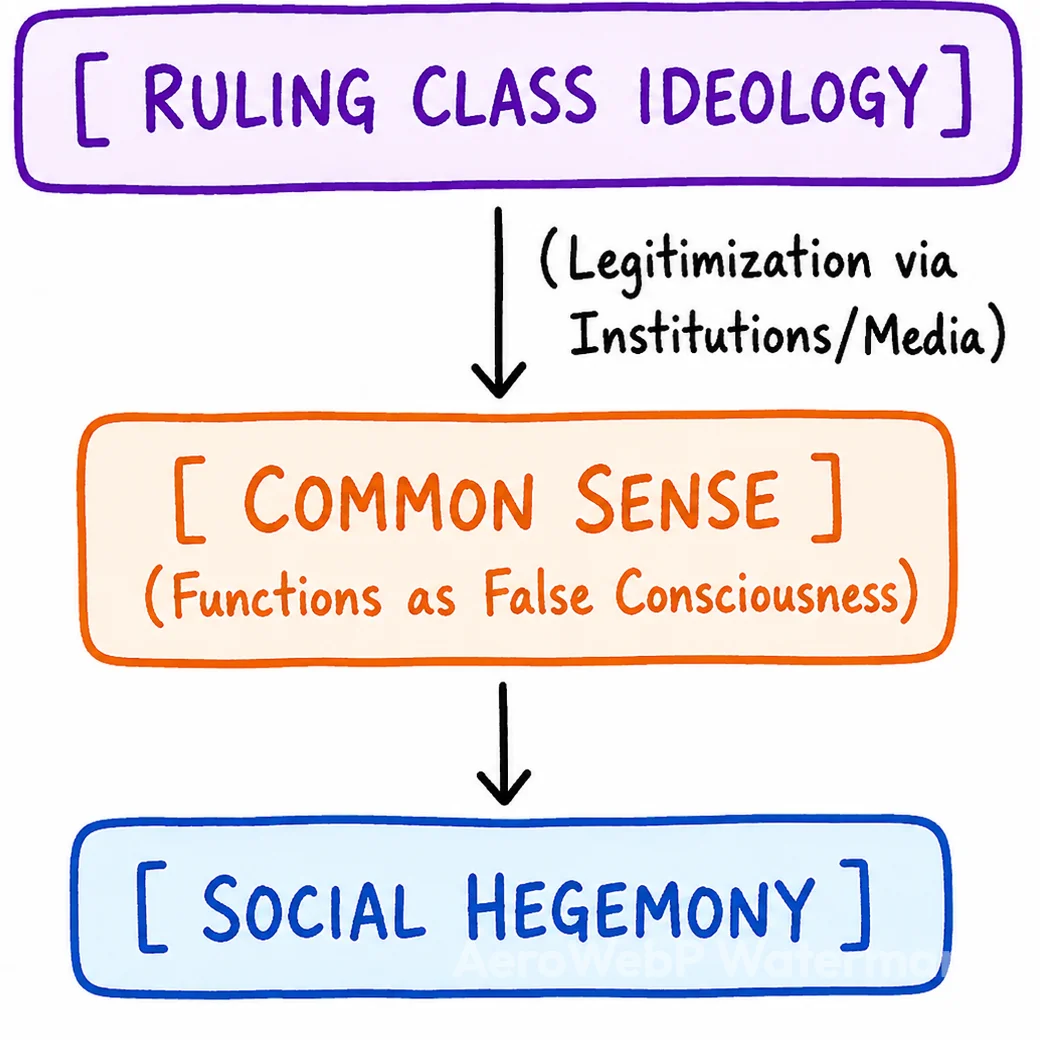
  • Antonio Gramsci & Karl Marx: Marxist thinkers view common sense as False Consciousness. Gramsci argued that common sense is often the ideology of the ruling class disguised as universal truth, used to maintain hegemony.

common-sense-vs-sociology-epistemic-break

Key Distinctions Between Sociology and Common Sense

DimensionCommon SenseSociology
Epistemology (Source)Based on personal anecdotes, tradition, and cultural norms.Based on scientific methods, empirical data, and theoretical frameworks.
Nature of KnowledgeSubjective, localized, and status-quoist.Objective, generalized, comparative, and often critical.
Scope and CausalityRelies on simplistic, unifactorial explanations (e.g., “poor people are lazy”).Explores complex, multifactorial structural realities (e.g., poverty as a result of systemic inequality).
ChangeabilityResistant to change; takes the social world for granted as “natural.”Constantly tested, verified, and open to revision through the falsification process.

ruling-class-ideology-social-hegemony-flowchart

Convergence: Common Sense as the Subject Matter of Sociology

While Positivists rejected common sense, interpretative traditions in sociology argue that common sense cannot be entirely discarded, as it forms the very basis of human interaction.

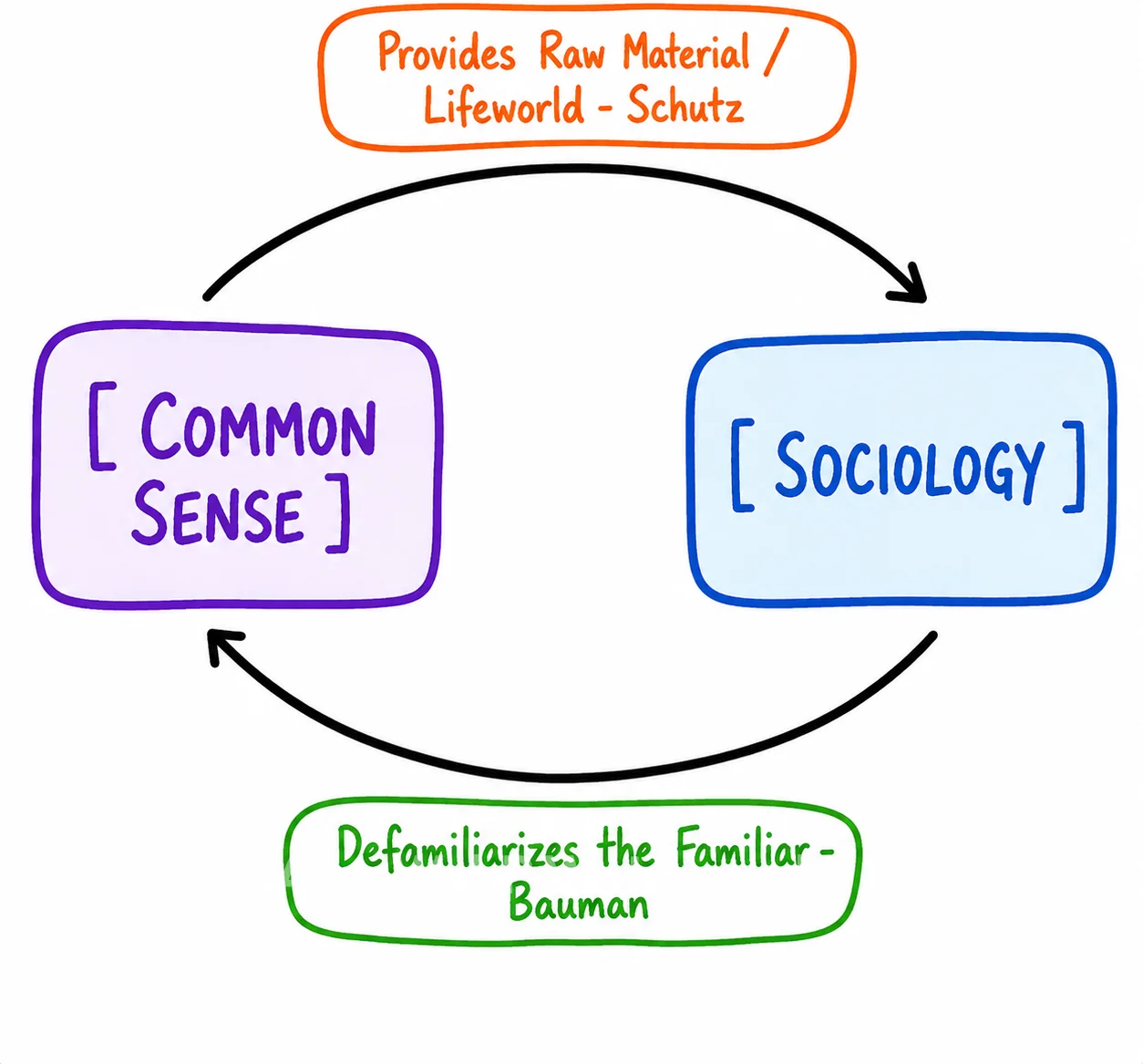
  • Alfred Schutz (Phenomenology): Schutz argued that the social world is constructed through the “typifications” and common sense knowledge of everyday actors. The sociologist’s job is to study this “lifeworld.”
  • Harold Garfinkel (Ethnomethodology): Garfinkel studied the unspoken common sense rules that govern daily life. Through his “Breaching Experiments” (deliberately breaking social norms), he demonstrated how much society relies on shared, taken-for-granted common sense to maintain social order.

The Indian Context: Challenging Common Sense (Paper 2 Integration)

In Indian sociology, scholars have extensively used empirical research to debunk deeply entrenched cultural myths and common sense understandings of Indian society.

  • Andre Beteille: In his essay Sociology and Common Sense, Beteille explicitly warns against conflating the two. He argues that common sense in India relies on stereotypes (e.g., all Brahmins are wealthy, all Dalits are poor). Through his study in Sripuram, Beteille showed the empirical reality of the divergence of caste, class, and power. He emphasized that sociology relies on the comparative method, making it anti-utopian and distinct from common sense.
  • M.N. Srinivas: The common sense view, propagated by early Indologists, was that the Indian caste system was completely rigid, static, and textually bound. Srinivas’s concept of Sanskritization empirically proved that caste possessed systemic mobility and was dynamic.
  • A.M. Shah: Common sense assumes that industrialization is destroying the Indian Joint Family. However, A.M. Shah’s sociological studies proved that while the “household” dimension (residential) may be becoming nuclear, the “family” dimension (functional jointness, property, rituals) remains strong.
  • S.C. Dube: The common sense/colonial view (as proposed by Charles Metcalfe) saw Indian villages as self-sufficient, isolated “little republics.” Dube’s study of Shamirpet village debunked this, showing that Indian villages were deeply integrated into wider economic, political, and kinship networks.

Contemporary Relevance in a Globalized World

In today’s digital age, the line between common sense and verifiable fact is increasingly blurred. We live in a “Post-Truth” era where algorithmic echo chambers, WhatsApp university, and fake news validate subjective anecdotes as universal truths. For instance, the common sense rhetoric against immigrants often blames them for economic downturns. However, contemporary sociological and economic studies consistently show that structural changes (like automation and neoliberal policies) are the actual drivers of unemployment. Sociological thinking acts as a critical antidote to the hyper-polarizing, emotion-driven “manufactured common sense” of the digital age.

Conclusion

The relationship between sociology and common sense is dialectical.

sociology-common-sense-relationship-diagram

While sociology begins by observing the everyday social world, it must systematically transcend the limitations of anecdotal common sense to uncover hidden structural realities. Common sense provides the raw material for sociological inquiry, but sociology refines it into objective knowledge. As the prominent sociologist Zygmunt Bauman aptly observed, the primary purpose of sociology is to “defamiliarize the familiar”—to disrupt our comfortable, common sense understanding of the world, thereby empowering us to see the invisible forces that shape our lives and enabling us to create a more just society.

Sociology and Common Sense Read More »

Relationship between Sociology and Anthropology

Relationship between Sociology and Anthropology

1. Introduction

Sociology and Anthropology are closely related disciplines, often described by American anthropologist A.L. Kroeber as “twin sisters.” While Sociology is the study of modern human society, social structures, and institutions, Anthropology is the holistic study of mankind, its origins, and its culture. The relationship between the two has evolved from a strict historical divide to a high degree of convergence in the contemporary era.

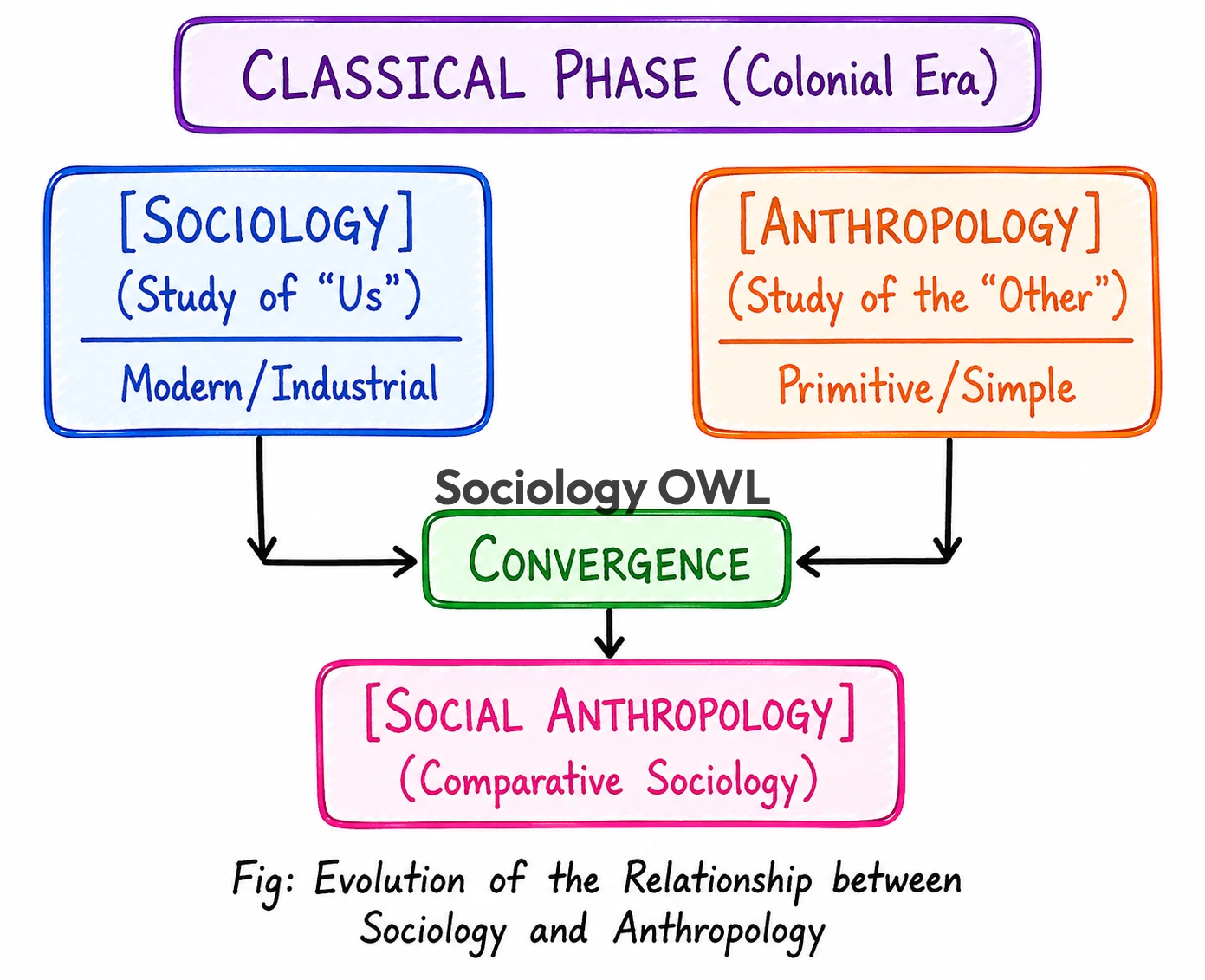
2. The Historical Divide (Classical Phase)

Historically, the two disciplines emerged in different contexts and studied different subject matters:

  • Sociology: Emerged as a response to the Industrial Revolution in Europe. Early sociologists (Marx, Weber, Durkheim) focused on studying complex, modern, industrialized societies (the study of “Us”).
  • Anthropology: Grew largely out of colonial expansion. Early anthropologists (Malinowski, Franz Boas, E.B. Tylor) focused on studying “primitive,” pre-literate, and simple societies in Africa, Asia, and the Americas (the study of the “Other”).

Sociology and Anthropology

3. Key Differences (Traditional View)

For UPSC Mains, structuring the traditional differences conceptually is highly rewarding:

ParameterSociologyAnthropology
Subject MatterModern, complex, industrialized societies.Pre-literate, simple, tribal, and agrarian societies.
ScopeFocuses on specific social institutions (family, religion, class) and social problems.Holistic; studies biological, linguistic, archaeological, and cultural aspects of humans.
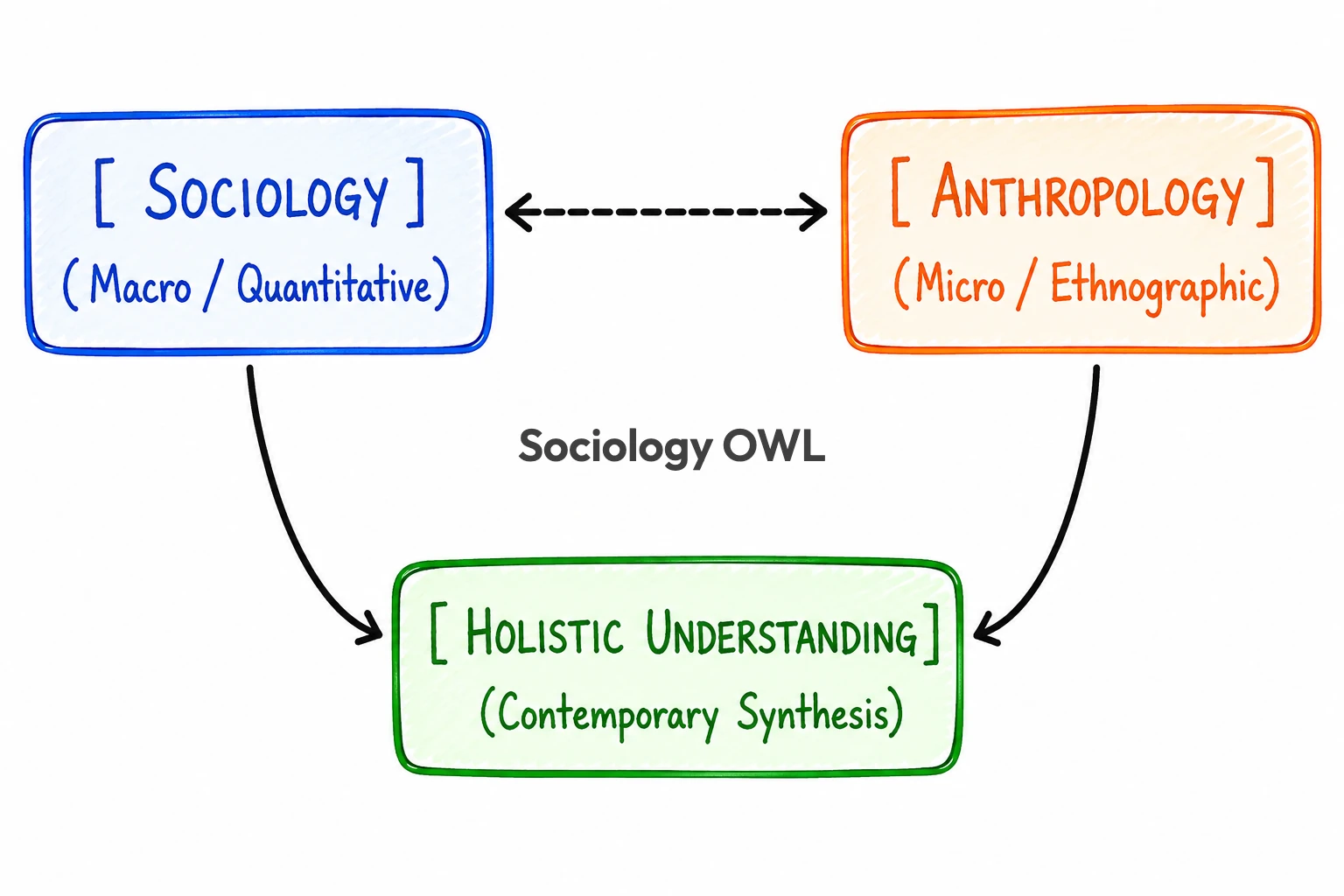
MethodologyMacro-level studies. Relies heavily on Quantitative methods (surveys, statistics, questionnaires).Micro-level studies. Relies on Qualitative methods, especially Ethnography and Participant Observation.
Scale of StudyTends to study parts of a vast, complex society (e.g., studying education in a city).Studies a society as a whole (small-scale societies allow for comprehensive study).
Theoretical FocusFocuses on stratification, conflict, modernization, and social change.Focuses on culture, kinship, rituals, and evolutionary theories.

4. The Convergence: Blurring of Boundaries

Over time, the strict boundaries between the two disciplines began to dissolve. The bridge between the two is Social Anthropology (a sub-discipline of anthropology dominant in Britain and India).

  • Theoretical Exchange: Early anthropologists borrowed heavily from sociology. For instance, Emile Durkheim’s sociological theories deeply influenced anthropologists like A.R. Radcliffe-Brown and Malinowski in developing the framework of Structural-Functionalism.
  • Methodological Exchange: Sociologists began adopting anthropological methods. The Chicago School of Sociology used ethnographic methods and participant observation to study urban slums and gangs (e.g., William Foote Whyte’s Street Corner Society).
  • Radcliffe-Brown’s View: He argued that Social Anthropology is simply a branch of “Comparative Sociology.” Similarly, E.E. Evans-Pritchard considered social anthropology to be closer to sociology than to natural sciences.

Methodological Exchange & Interdisciplinary Approach

5. The Indian Context (Crucial for UPSC)

In India, the distinction between Sociology and Anthropology is virtually non-existent. You cannot study Indian society without blending both.

Indian Continuum

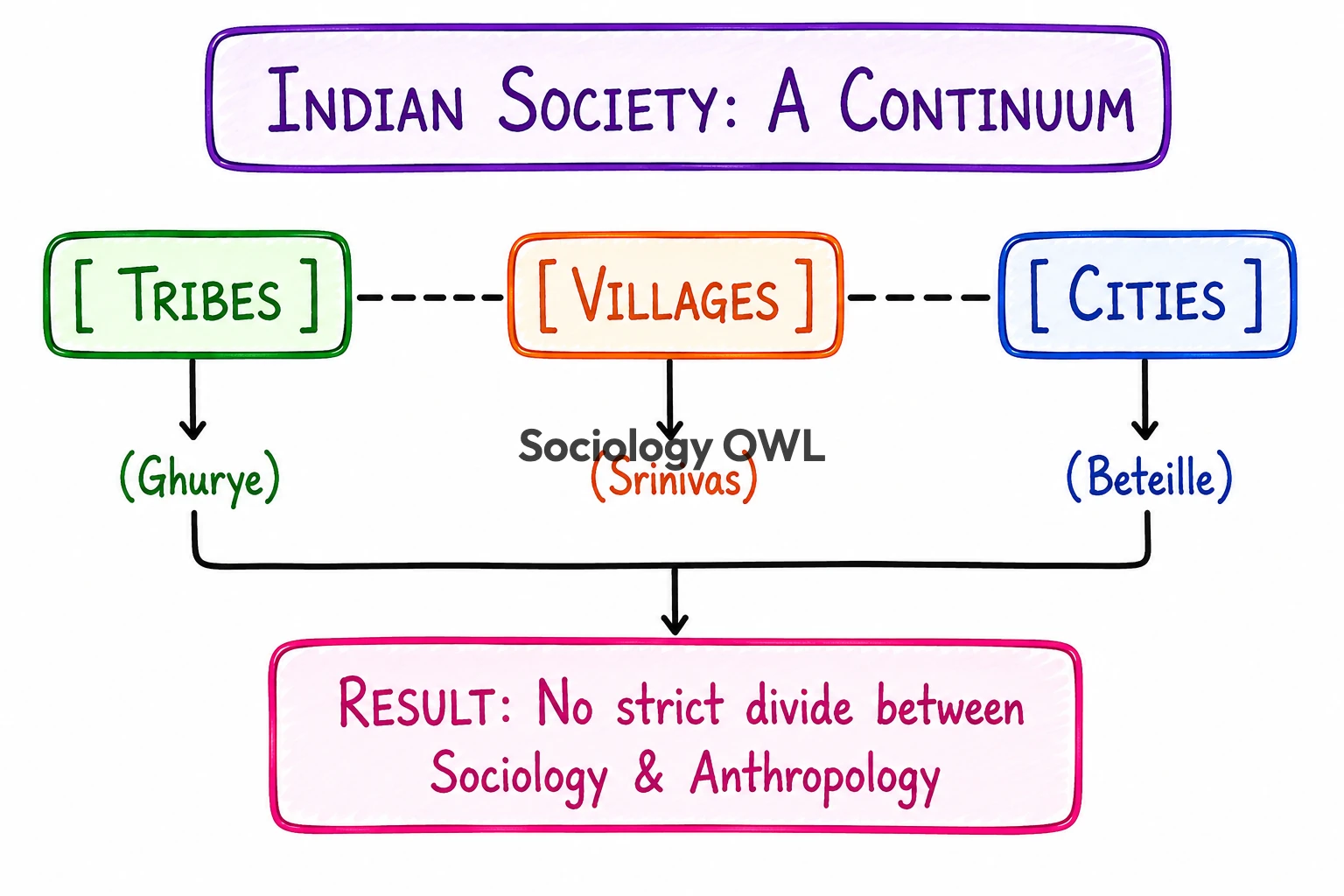
  • Continuum of Society: Unlike the West, India does not have a strict divide between “modern” and “primitive.” India is a continuum of tribes, villages, and modern cities existing simultaneously.
  • Thinkers:
    • G.S. Ghurye (the father of Indian Sociology) combined anthropological studies of tribes with sociological studies of caste and religion.
    • M.N. Srinivas used strict anthropological methods (participant observation in Rampur village) to develop profound sociological concepts like Sanskritization and Dominant Caste.
  • Andre Beteille’s Perspective: Beteille explicitly states that in the Indian context, the division between Sociology and Social Anthropology is meaningless. He notes that studying an Indian village requires the tools of an anthropologist and the analytical framework of a sociologist.

6. Contemporary Relevance and Globalization

In the 21st century, the disciplines have converged further due to globalization:

  • Disappearance of “Primitive” Societies: With modernization, isolated tribal societies are disappearing. Anthropologists are now studying complex urban spaces, multinational corporations, and cyber-communities (e.g., Digital Anthropology).
  • Sociology’s Expansion: Sociologists increasingly study cultural aspects, indigenous movements, and global inequalities, areas previously reserved for anthropologists.
  • Interdisciplinary approach: Both disciplines now heavily engage with Post-modernism, Feminist theories, and Subaltern studies.

7. Conclusion

As Anthony Giddens suggests, the division between sociology and anthropology is largely a historical accident tied to colonialism. Today, the two disciplines are complementary. While sociology provides the macro-theoretical frameworks to understand global structures, anthropology provides the micro-empirical depth to understand lived cultural experiences. A student of society must rely on both to develop a complete understanding of human social life.

Relationship between Sociology and Anthropology Read More »