Model Answer:
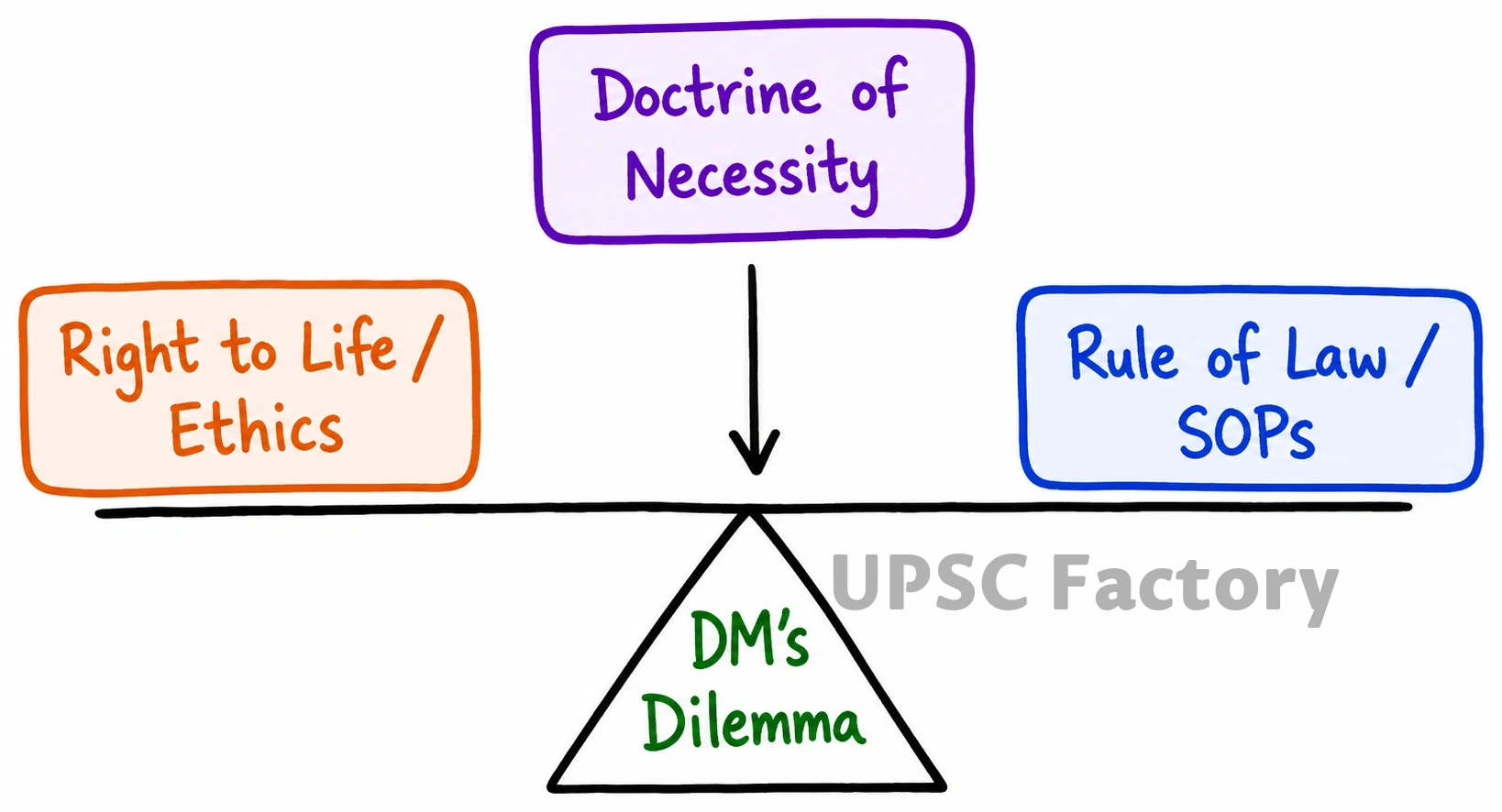
This case presents a classic “Ethics vs. Law” dilemma where administrative duty and medical conscience (Hippocratic Oath) conflict with statutory health regulations during a severe disaster.
Ethical Issues Involved
- Right to Life vs. Rule of Law: Protecting the mother (Article 21) versus adhering strictly to regulatory statutes (Drugs & Cosmetics Act, 1940).
- Beneficence vs. Legal Liability: The doctors’ moral duty to save lives clashes with their fear of administrative penalization.
- Standard Protocols vs. Doctrine of Necessity: Breaking mandatory safe-blood SOPs to address immediate life-and-death stakes within the critical “Golden Hour”.
- Risk Evaluation: Weighing potential post-transfusion infection risks against the absolute certainty of maternal and fetal mortality without intervention.
Evaluation of Options
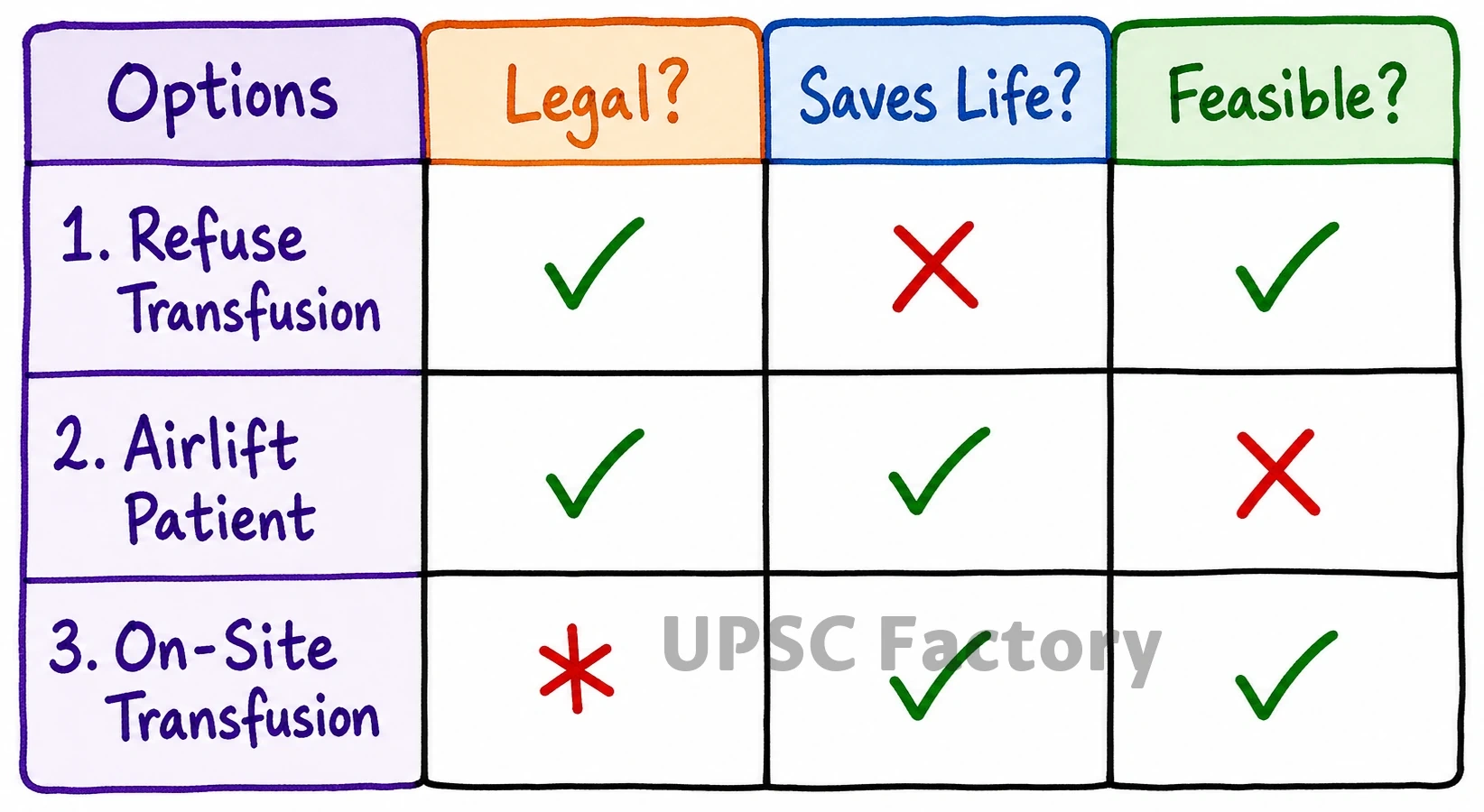
Option 1: Refuse transfusion, adhere strictly to law
- Pros: Ensures absolute legal compliance; shields the medical team from future penalization.
- Cons: Failure of administration; guarantees the immediate death of mother and child, leading to the worst possible overall outcome.
Option 2: Attempt airlift/evacuation to the nearest hospital
- Pros: Adheres completely to established legal and medical safety protocols.
- Cons: Practically impossible given the remote landslide terrain, severe weather, and time constraints, yielding a near-certain fatal outcome.
Option 3: Authorize on-site emergency transfusion (Chosen Action)
- Pros: Maximizes net human well-being by saving two lives; fulfills the primary duty of crisis management to minimize harm.
- Cons: Bypasses statutory blood bank regulations; carries unverified infection risks.
Final Course of Action
- Invoke Doctrine of Necessity: Formally authorize the emergency transfusion, overriding standard protocols to prioritize immediate survival and produce the greatest overall good.
- Provide Written Indemnity: Issue an official DM order protecting the medical team from penalization to resolve their legal dilemma and enable quick action.
- Risk Mitigation: Utilize the available test kits to accurately match blood groups and conduct rapid basic screening to minimize potential negative consequences.
- Informed Consent: Clearly communicate the unverified infection risks to the husband and secure his explicit consent before proceeding.
Rules and statutes exist to safeguard human life and promote collective welfare, not to act as impediments to saving lives. Effective leadership demands prioritizing actionable outcomes and human survival over rigid procedural compliance during extreme crises.