Model Answer:
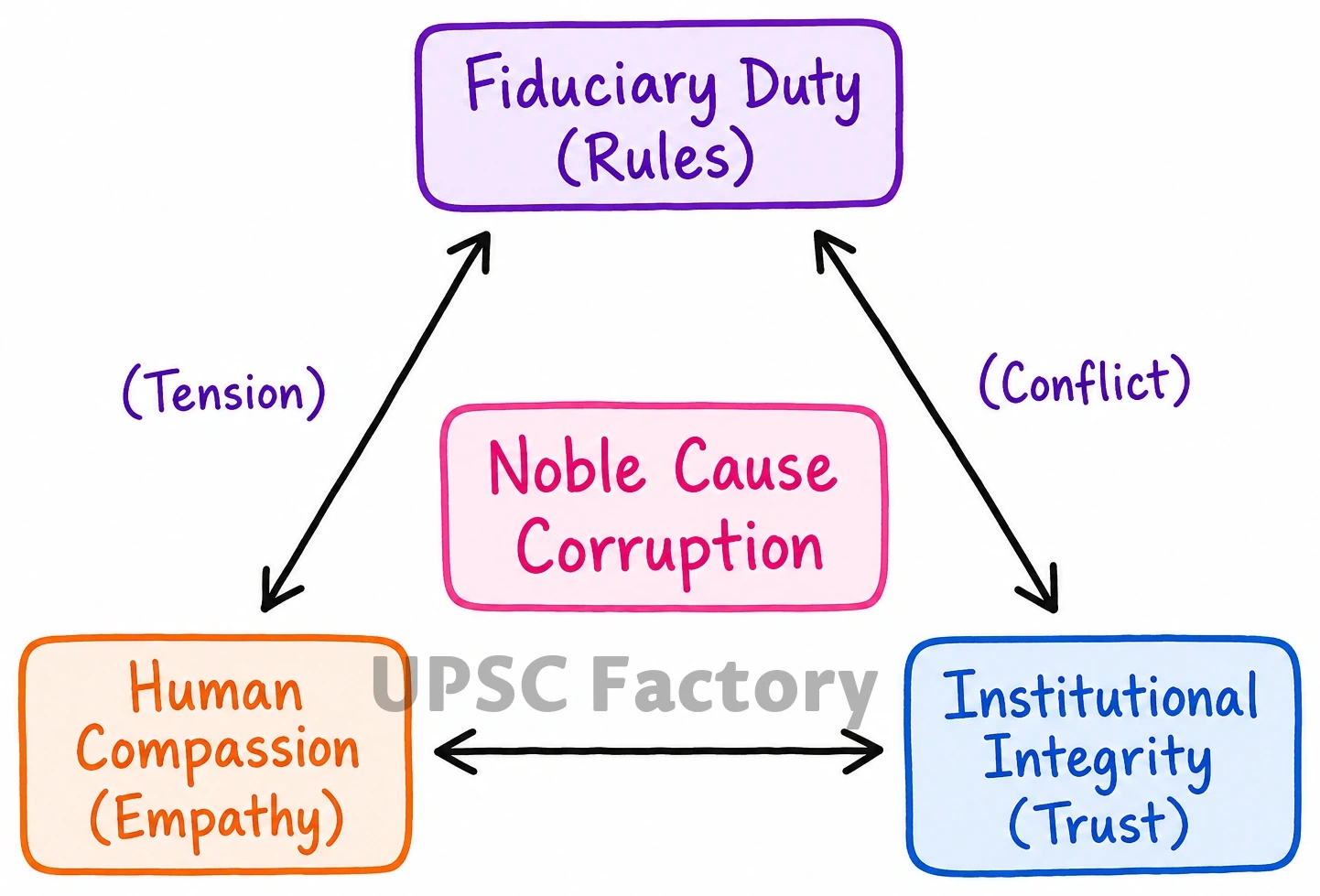
This case highlights the classic conflict between administrative ethics (fiduciary responsibility, legal compliance) and human compassion (saving a life), demonstrating “Noble Cause Corruption.”
1. (a) Ethical Issues Involved
- Fiduciary Breach: Unauthorized diversion of customer funds violates the core banking trust.
- Means vs. Ends Conflict: Using illegal means (misappropriation) for a noble end violates Kant’s Categorical Imperative.
- Conflict of Interest: Prioritizing personal sympathy for a colleague over the legal rights of the dormant account holder.
- Moral Hazard: Normalizing “borrowing” from dormant accounts sets a dangerous, systemic precedent for institutional fraud.
2. (b) Evaluation of the Bank Manager’s Behaviour
- Deontological Failure: The manager completely failed his duty-based ethics by violating statutory banking laws.
- Robin Hood Syndrome: Displayed misplaced heroism; unauthorized lending from a client account constitutes embezzlement, regardless of repayment intent.
- Misuse of Authority: Abused discretionary power to bypass core banking system (CBS) checks (Prevention of Corruption Act).
- Lack of Administrative Objectivity: Succumbed to emotional pressure instead of facilitating legal alternatives like staff welfare loans or salary advances.
3. (c) My Reaction to the Situation
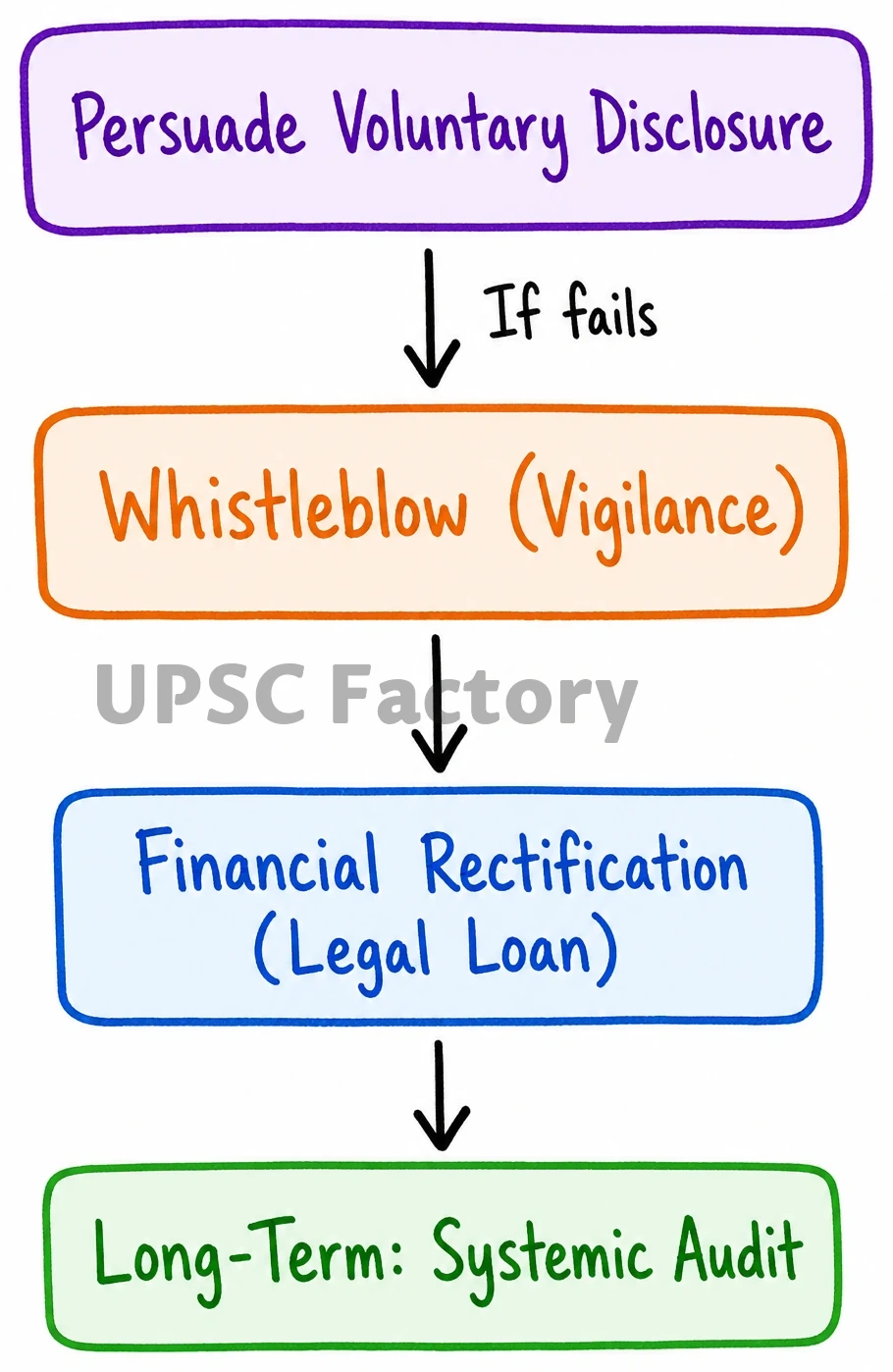
- Persuasion for Voluntary Disclosure: I will empathetically counsel my colleague to immediately confess the irregularity to higher management to mitigate severe punitive action.
- Whistleblowing: If she refuses, I am ethically and legally bound to report the manager’s fraud to the Vigilance Officer (Whistle Blowers Protection Act) to safeguard institutional integrity.
- Financial Rectification: I will assist her in securing a formal personal loan or initiate staff crowdfunding to legally replace the siphoned ₹10 lakh immediately.
- Systemic Correction: I will officially recommend an internal audit of all dormant accounts and propose stricter multi-tier authentication for dormant account transactions.
While empathy is a cardinal public service virtue, it cannot supersede legal obligations. True administrative leadership requires achieving compassionate outcomes strictly through unimpeachable institutional integrity.