Model Answer:
While the corporate sector drives economic growth, its ecological footprint is severe. Mandated CSR (Sec 135, Companies Act) attempts redressal but remains structurally inadequate to counter this onslaught.
Limitations of CSR: Inefficient and Insufficient
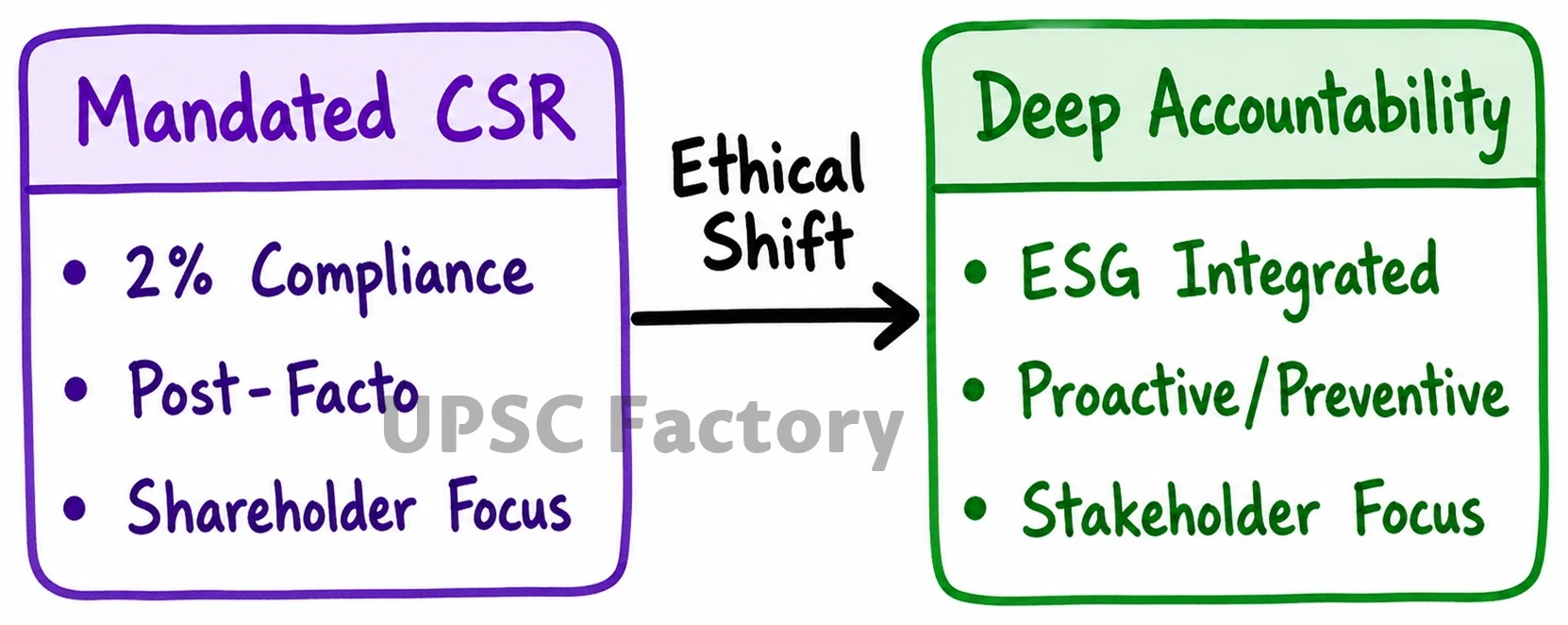
- Post-Facto Approach: Acts as compensatory tokenism rather than preventing ecological damage at the source.
- Greenwashing: Often deployed as a PR tool to mask core unsustainable operations (Vedanta Thoothukudi crisis).
- Compliance over Ethics: Treated merely as a 2% financial tax, fostering a ‘tick-box’ mentality instead of deep responsibility.
- Geographic Skewness: CSR funds disproportionately concentrate in industrialized states, neglecting socio-ecologically vulnerable regions.
- Scale Mismatch: A 2% profit allocation is quantitatively insufficient to reverse systemic climate change or mass displacement.
Achieving Sufficiency: Beyond Mandated CSR
- ESG Integration: Embedding Environmental, Social, and Governance metrics into daily operations, not just end-of-year charity.
- Triple Bottom Line (TBL): Structurally valuing ‘People and Planet’ equally with ‘Profits’ in core business models.
- Stakeholder Capitalism: Shifting from shareholder wealth maximization to holistic community well-being (Tata Group’s embedded stakeholder model).
- Circular Economy: Transitioning from ‘take-make-dispose’ paradigms to regenerative supply chains.
To achieve true environmental and social justice, CSR must evolve from a peripheral statutory mandate into deep corporate accountability, anchoring business ethics in sustainable ESG frameworks.