Model Answer:
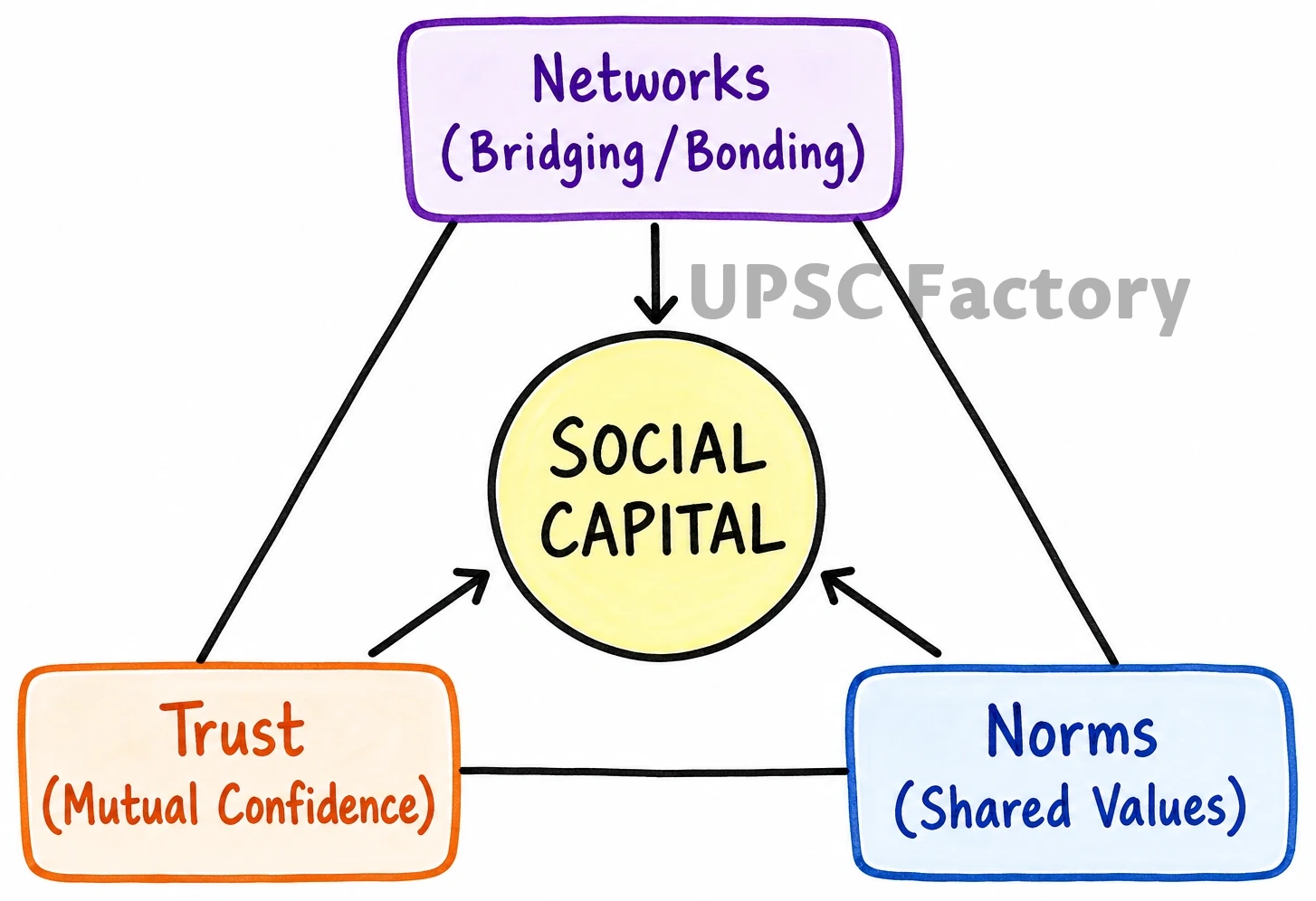
Social capital, popularized by Robert Putnam, refers to the collective value of social networks, shared norms, and interpersonal trust that facilitate societal cooperation.
1. Core Dimensions of Social Capital
- Trust: Foundational mutual confidence enabling collective action.
- Norms: Shared ethical values promoting civic responsibility.
- Networks: Includes bonding (intra-group), bridging (inter-group), and linking (citizen-state connections).
2. How Social Capital Enhances Good Governance
- Promotes Participatory Governance: High institutional trust fosters active civic involvement, driving a shift toward Jan Bhagidari (Swachh Bharat Abhiyan).
- Ensures Administrative Accountability: Strong community networks facilitate robust collective oversight and demand-driven governance (MGNREGA Social Audits).
- Improves Service Delivery: Grassroots collaboration reduces administrative friction and transaction costs (Kudumbashree for decentralized poverty alleviation).
- Facilitates Crisis Management: Deep civic solidarity supplements state capacity during emergencies (community-run kitchens during COVID-19).
- Drives Behavioral Change: Shared civic norms reduce legal non-compliance, aiding effective ethical policy implementation (Beti Bachao Beti Padhao).
As emphasized by the 2nd ARC, actively cultivating social capital is imperative for transitioning from procedural administration to an ethical, citizen-centric model of good governance.