Model Answer:
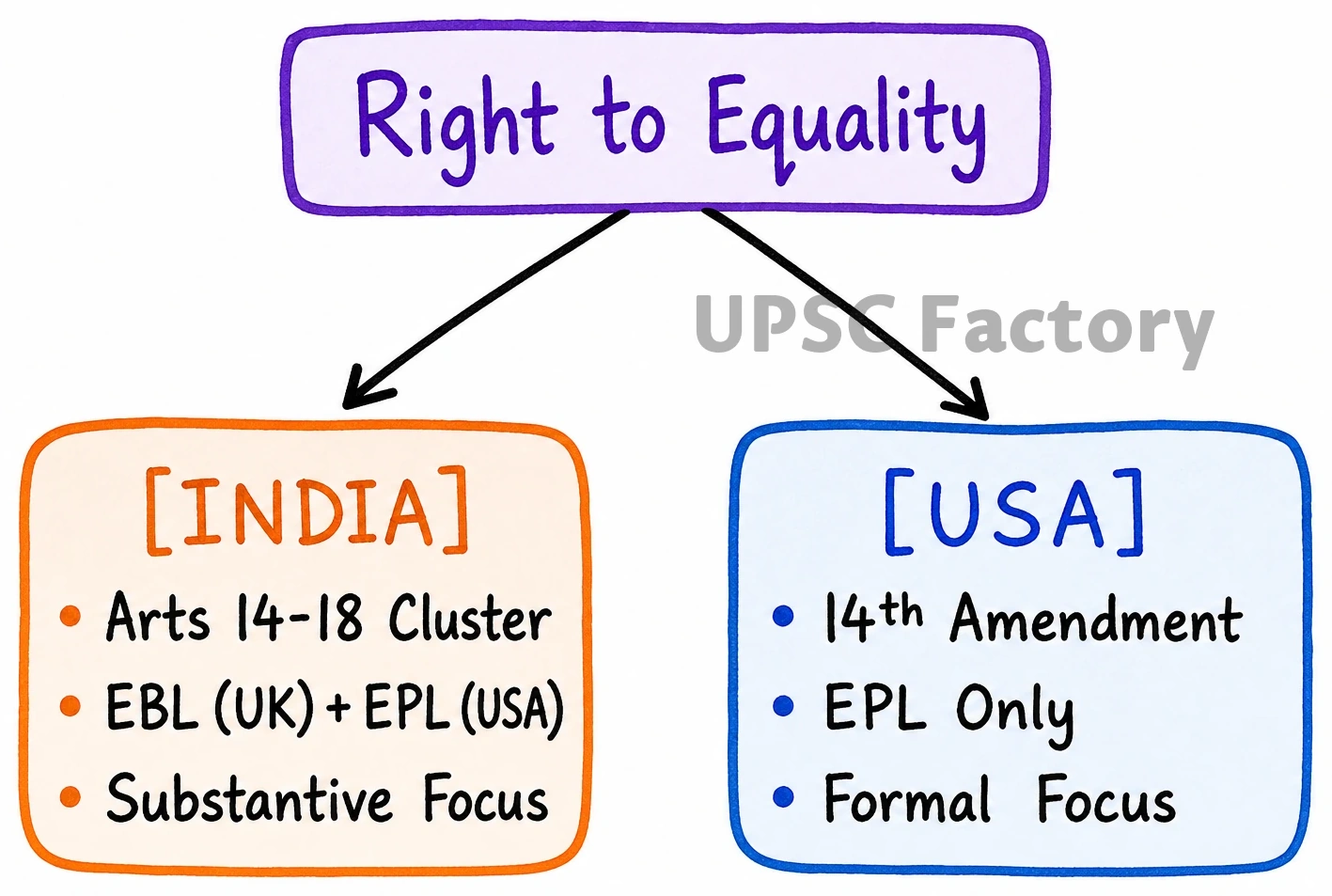
Both India and the USA enshrine the Right to Equality, but India adopts a detailed, substantive constitutional mandate, whereas the USA relies heavily on judicial interpretation of the 14th Amendment.
1. Constitutional Foundations & Scope
- Explicit vs. General Code: India details equality across a specific cluster (Articles 14–18). The USA relies on the broad “Equal Protection Clause” of the 14th Amendment.
- Ideological Origins: India incorporates both the negative concept of “Equality Before Law” (British origin) and the positive “Equal Protection of Laws” (American origin).
- Targeted Social Prohibitions: India’s Constitution explicitly abolishes specific historical social evils (Article 17: Untouchability, Article 18: Titles), whereas the US Constitution lacks such enumerated socio-cultural prohibitions.
2. Affirmative Action & Judicial Paradigms
- Substantive vs. Formal Equality: India champions “substantive equality,” focusing on historical redressal and outcomes. The US traditionally emphasizes “formal equality” and color-blind procedural fairness.
- Constitutional Mandate: Indian affirmative action is an explicit constitutional right (Articles 15(4), 16(4)). US affirmative action relies on statutory laws (Civil Rights Act) and executive actions.
- Quotas vs. Diversity: India permits strict numerical quotas for backward classes (Indra Sawhney). The US bans quotas, historically allowing race only as a diversity “plus factor” (Regents of Univ. of California v. Bakke).
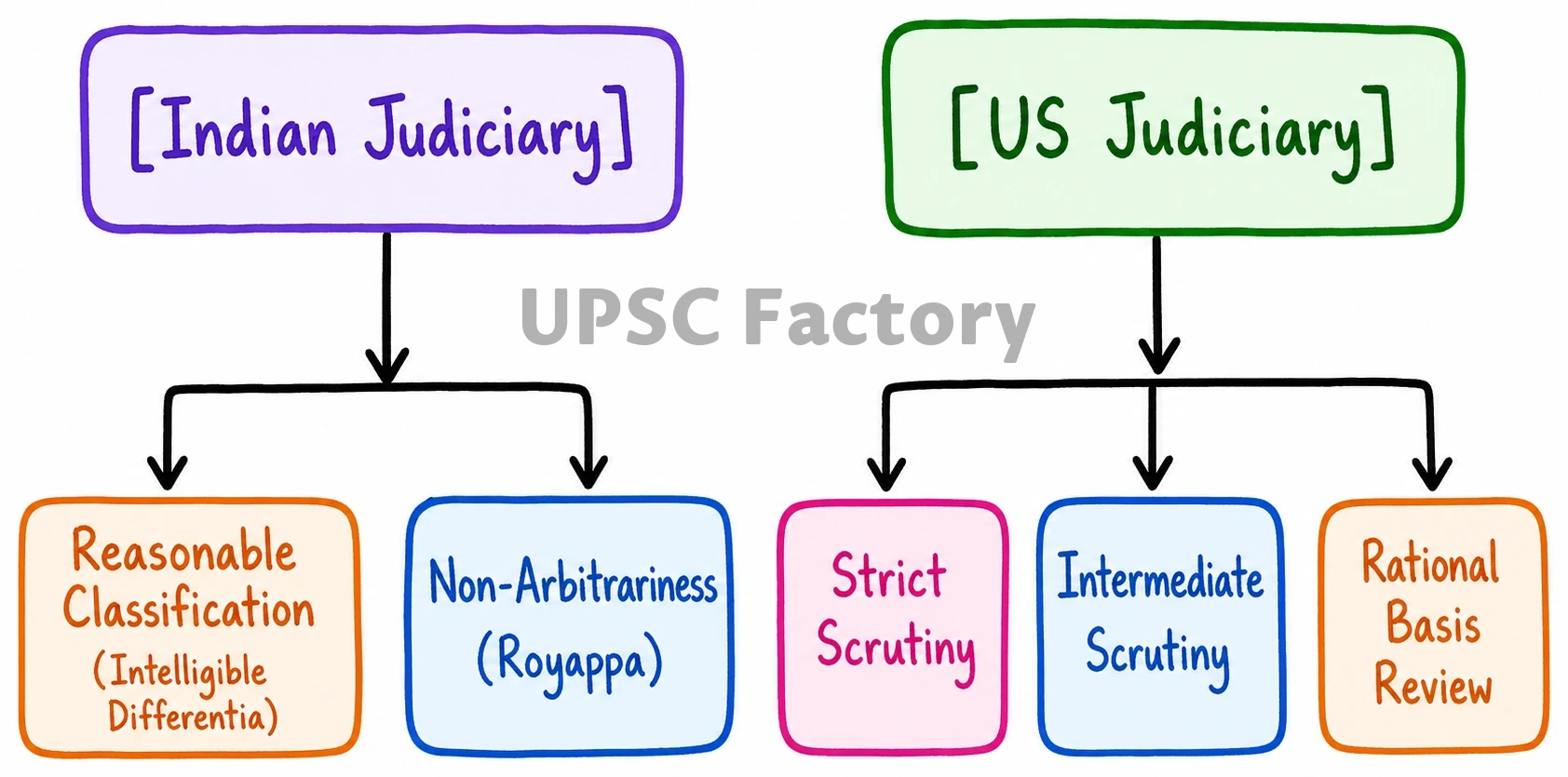
- Judicial Doctrines: Indian courts apply the tests of “Reasonable Classification” and “Non-Arbitrariness” (E.P. Royappa). The US Supreme Court applies tiered scrutiny (Strict Scrutiny, Intermediate, Rational Basis).
- Group vs. Individual Focus: India balances individual equality with group-differentiated rights (caste/tribe). The US equal protection framework overwhelmingly centers on individual rights.
While the US equality framework is anchored in individual liberty and procedural fairness, India’s transformative Constitution prioritizes proactive State intervention to ensure substantive social justice and structural equity.