Model Answer:
Judicial independence is a ‘Basic Structure’ pillar of the Indian Constitution, acting as the bedrock for the rule of law and accountable governance.
1. Constitutional Guarantees Securing Independence
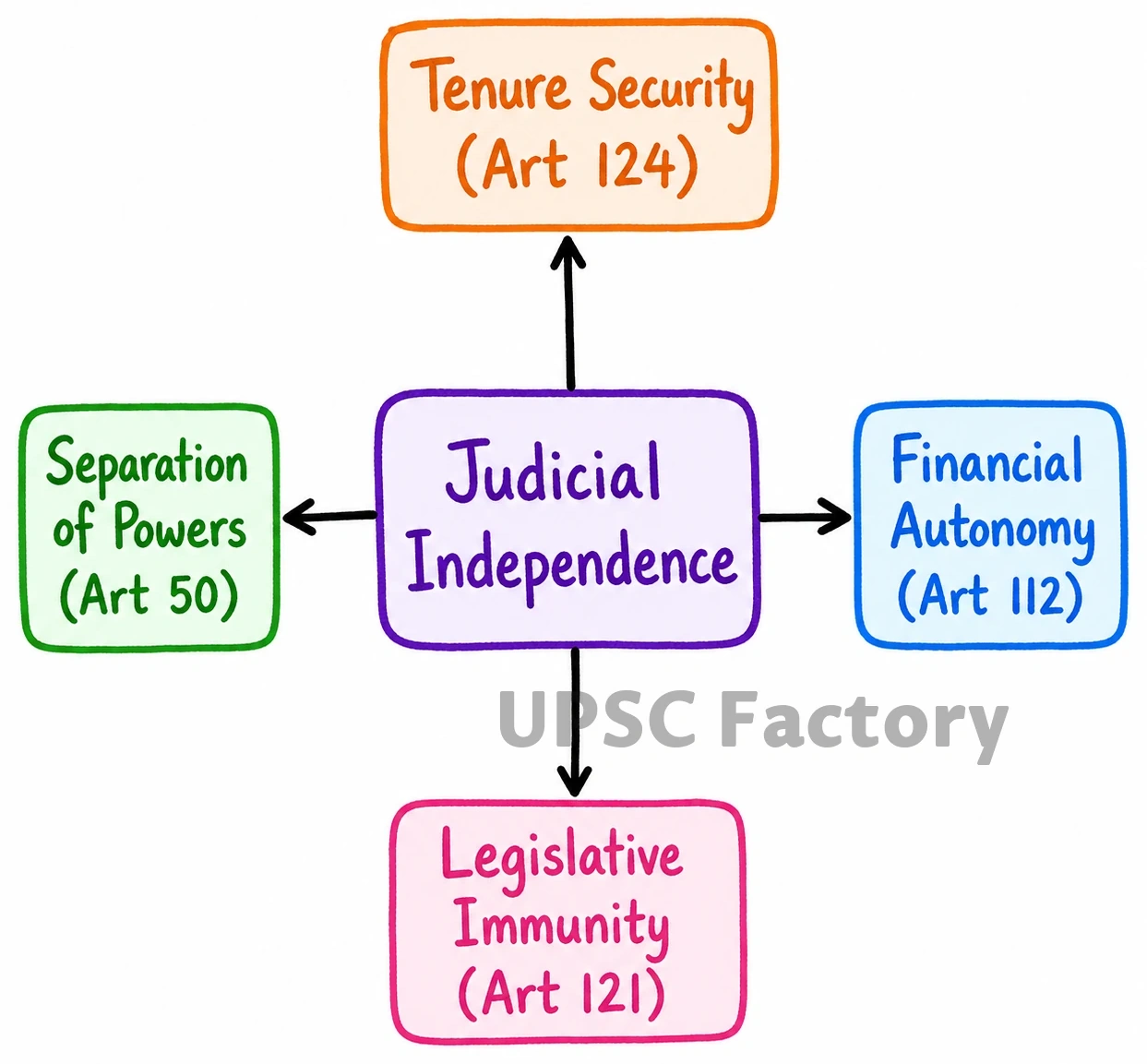
- Separation of Powers: Directive to separate the judiciary from the executive (Article 50).
- Security of Tenure: Stringent impeachment process requiring a special parliamentary majority (Article 124(4)).
- Financial Autonomy: Salaries and administrative expenses are charged on the Consolidated Fund and remain non-votable (Article 112).
- Legislative Immunity: Parliamentary discussions on judges’ conduct are strictly restricted (Article 121).
2. Judicial Independence as a Democratic Prerequisite
- Checking Executive Overreach: Prevents authoritarianism by striking down unconstitutional amendments (NJAC Judgment, 2015).
- Protecting Citizen Liberties: Acts as a constitutional sentinel, delivering complete justice against state excesses (Articles 32, 142).
- Ensuring Democratic Transparency: Protects voter rights and free elections, which are vital for a functional democracy (Electoral Bonds Verdict, 2024).
- Upholding Federalism: Serves as a neutral arbiter in Centre-State disputes, preserving decentralized democratic structures (Article 131).
Thus, a constitutionally insulated judiciary acts as democracy’s ultimate safeguard, constantly balancing majoritarian political mandates with enduring constitutional morality.