Model Answer:
Established under the Protection of Human Rights Act (PHRA) 1993, Human Rights Commissions (HRCs) have safeguarded rights, yet the Supreme Court termed them “toothless tigers” due to systemic incapacities against powerful entities.
Structural and Practical Limitations
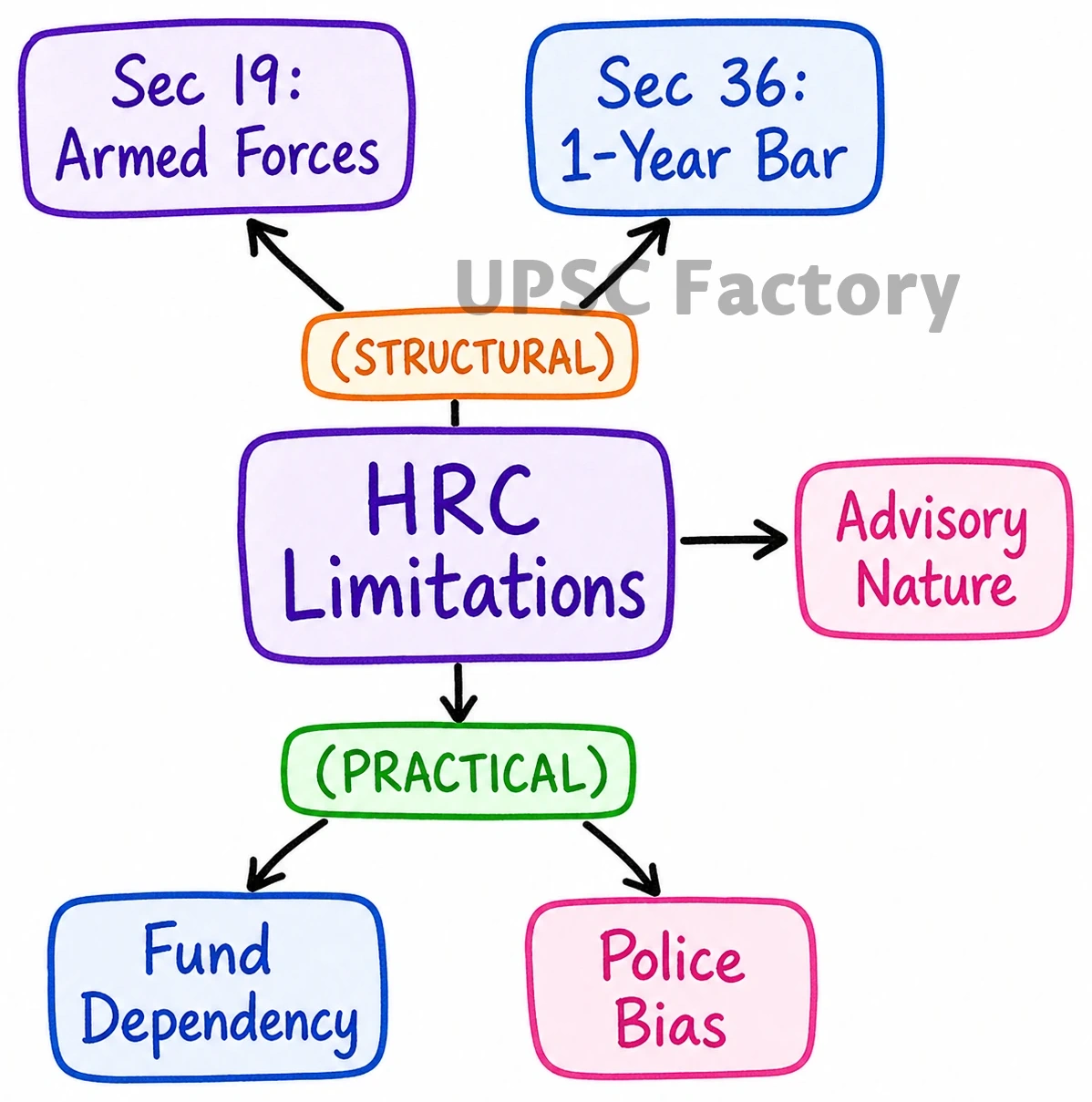
- Advisory Nature: Recommendations are strictly non-binding, making state compliance voluntary and easily ignored by powerful actors.
- Armed Forces Exemption: Section 19 of the PHRA restricts direct investigation of armed forces, diluting accountability (AFSPA regions).
- Investigation Bias: Total reliance on state police on deputation for investigations creates stark conflicts of interest in custodial violence cases.
- Financial Dependency: Lack of independent financial autonomy restricts operational scaling and resource deployment.
- Statutory Time-Bar: Section 36 prohibits investigating incidents reported after one year, denying justice to victims of prolonged systemic abuse.
- Politicized Appointments: Executive-dominated selection committees often compromise institutional neutrality, favoring bureaucratic rehabilitation over human rights expertise.
- Severe Pendency: Massive complaint backlogs coupled with severe infrastructural deficits render timely, practical intervention impossible.
Remedial Measures for Empowerment

- Binding Directives: Confer statutory enforceability to recommendations and mandate Action Taken Reports (ATRs) within a strict 30-day window.
- Independent Investigative Cadre: Establish a dedicated, autonomous investigative wing entirely separate from traditional police hierarchies.
- Amend Section 19: Expand statutory jurisdiction to permit independent inquiries into egregious rights violations by central armed forces.
- Financial Autonomy: Charge HRC budgets directly to the Consolidated Fund of India (akin to CAG/ECI) to ensure fiscal independence.
- Remove Time Limitations: Amend the PHRA to allow judicial discretion in waiving the one-year limitation for severe or suppressed violations.
- Align with Paris Principles: Ensure pluralistic representation from civil society and dilute executive dominance in the selection committee.
Transitioning HRCs from advisory bodies to empowered institutions with statutory teeth is imperative to uphold the Paris Principles and secure the substantive realization of Article 21.