Model Answer:
Under Article 324, the Election Commission of India (ECI) ensures free and fair elections, utilizing the Model Code of Conduct (MCC)—a consensus-driven ethical framework—to maintain electoral integrity.
1. Evolution of the Model Code of Conduct
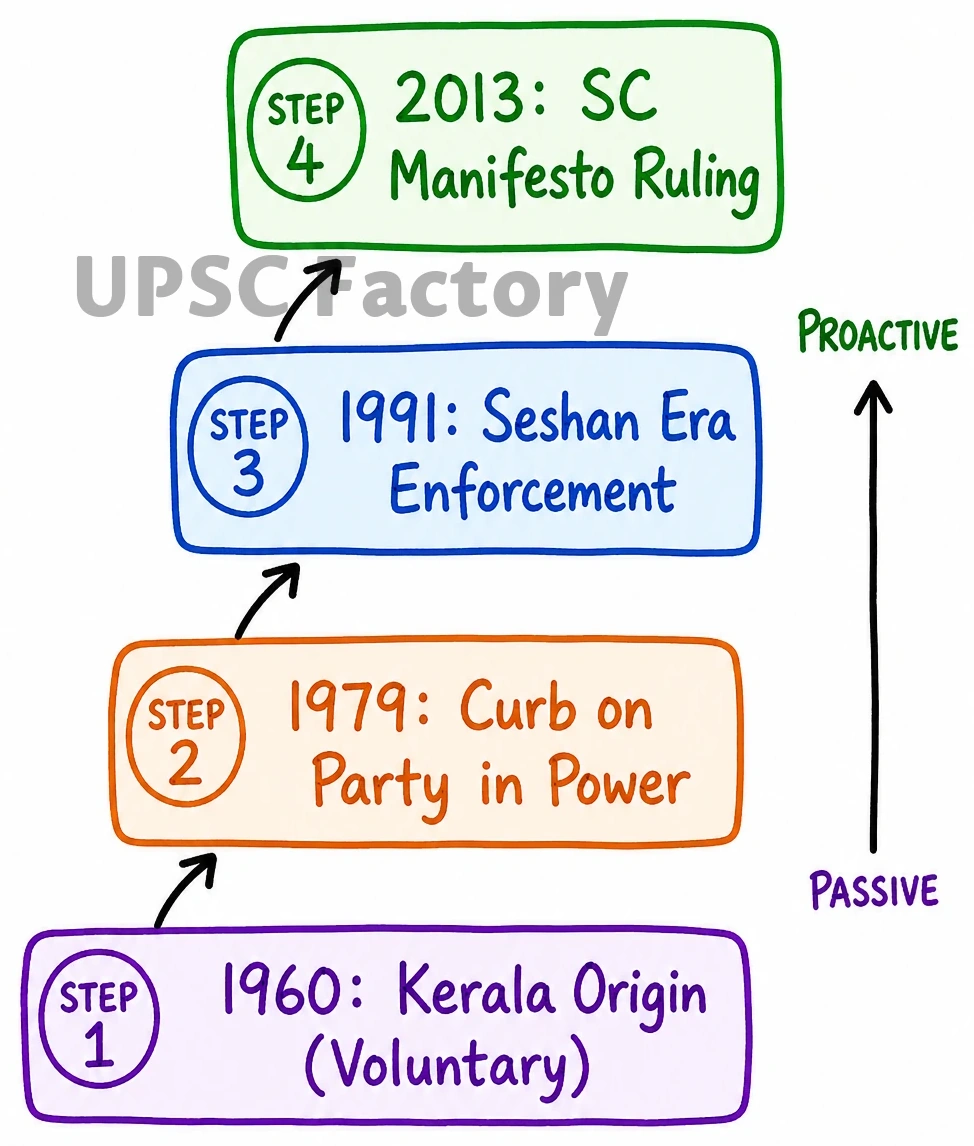
- Genesis: Originated during the 1960 Kerala Assembly elections as a voluntary code agreed upon by political parties.
- National Adoption: ECI circulated it to all recognized parties during the 1962 Lok Sabha elections.
- Regulating Ruling Parties: In 1979, ECI added a dedicated section regulating the “Party in Power” to prevent state machinery misuse.
- Proactive Enforcement: The 1991 T.N. Seshan era transformed the MCC from a passive document into a strictly enforced regulatory tool.
- Manifesto Guidelines: The Supreme Court mandated incorporating election manifesto promises into the MCC to prevent undue voter influence (S. Subramaniam Balaji Case, 2013).
2. Role of ECI in Enforcing the MCC
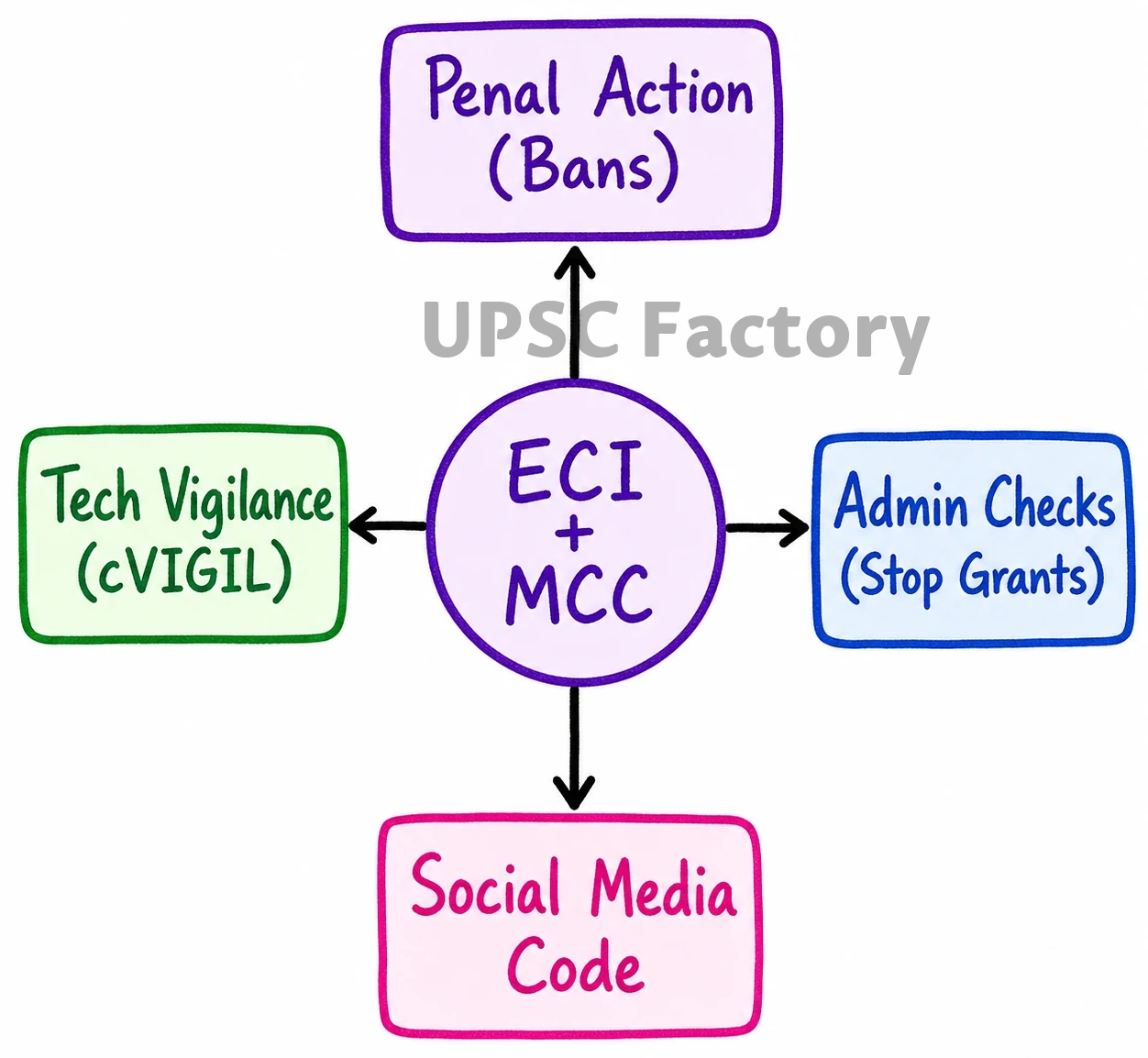
- Moral Suasion & Penal Action: ECI utilizes censures, reprimands, and campaign bans to curb hate speech and divisive rhetoric.
- Preventing Administrative Misuse: Blocks arbitrary official transfers and halts new financial grants immediately upon election notification.
- Technological Vigilance: Empowers citizens to report MCC violations in real-time via the cVIGIL app.
- Digital Regulation: Extends MCC provisions to social media platforms to curb fake news and targeted misinformation (Voluntary Code of Ethics, 2019).
3. Contemporary Challenges
- Non-Statutory Nature: MCC lacks independent legal enforceability, relying heavily on ECI’s moral authority and overlapping statutes (RoPA, 1951).
- Digital Dilemmas: Regulating encrypted messaging, AI deepfakes, and surrogate advertising remains practically difficult.
- Delayed Deterrence: Interventions and bans often come late in the campaign, minimizing their corrective impact.
While the MCC remains the moral compass of Indian elections, equipping the ECI with targeted statutory backing (as recommended by the Goswami Committee) will definitively strengthen India’s democratic ethos.