Model Answer:
While NGOs bridge the state-citizen gap, increasing reliance on external donor funding often alters their operational paradigm, sparking debates on grassroots marginalization.
How Donor Dependence Hinders Community Participation
- Mission Drift: Agendas shift from pressing local needs to donor priorities, alienating grassroots stakeholders (e.g., prioritizing global advocacy over local livelihoods).
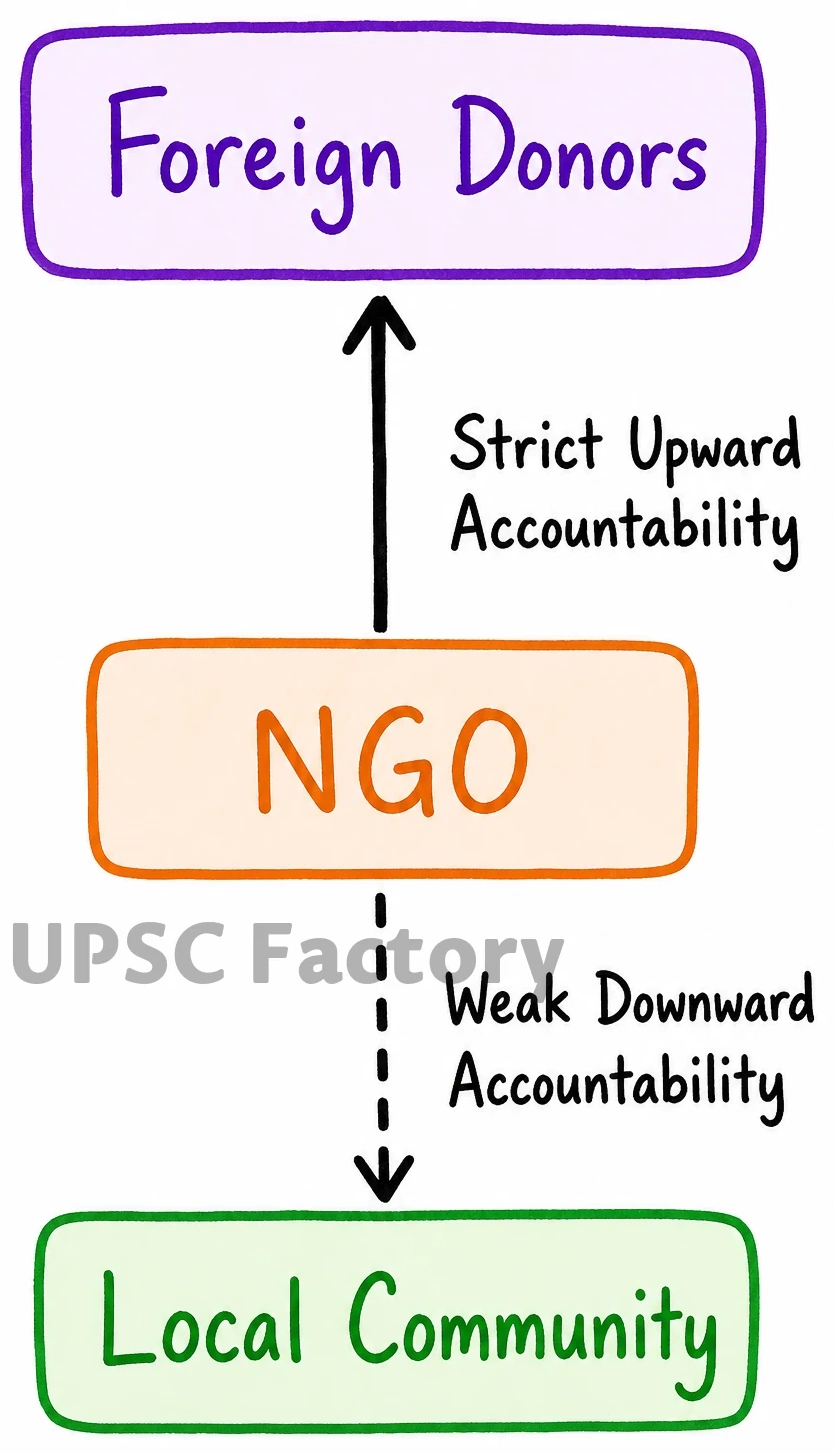
- Upward Accountability: NGOs systematically become accountable to foreign or corporate donors rather than downward to the beneficiary community.
- Bureaucratization: Complex funding proposals, logical frameworks, and reporting metrics sideline unlettered community members from active leadership roles.
- Imposed Top-Down Solutions: Donors often push standardized “one-size-fits-all” models, neglecting indigenous knowledge and unique localized realities.
- Short-Term Projectization: Rigid 2-3 year funding cycles prevent long-term community trust-building, focusing instead on quick, artificially measurable outputs.
- Compliance Burden: Stricter regulatory norms absorb institutional energy, distancing NGOs from active field-level community mobilization (FCRA 2020 amendments).
Counter-View: Donor Funding Enhancing Grassroots Engagement
- Capacity Building: Structured donor capital often funds grassroots training, fostering local leadership and decentralized decision-making (e.g., SEWA).
- Community-Driven Development (CDD): Multilateral agencies explicitly mandate localized control over planning, investment, and resource management (World Bank’s CDD frameworks).
- Scaling Bottom-Up Innovations: Donors provide critical financial scaffolding to scale successful, community-led micro-models (e.g., BMGF partnering with JEEViKA SHGs).
- Mandating Transparency: International funding requirements often institutionalize social audits and grievance redressal mechanisms, empowering communities to enforce accountability.
- Inclusive Mandates: Donors often strictly require the inclusion of marginalized groups (women, tribals) which local power dynamics might otherwise deliberately exclude.
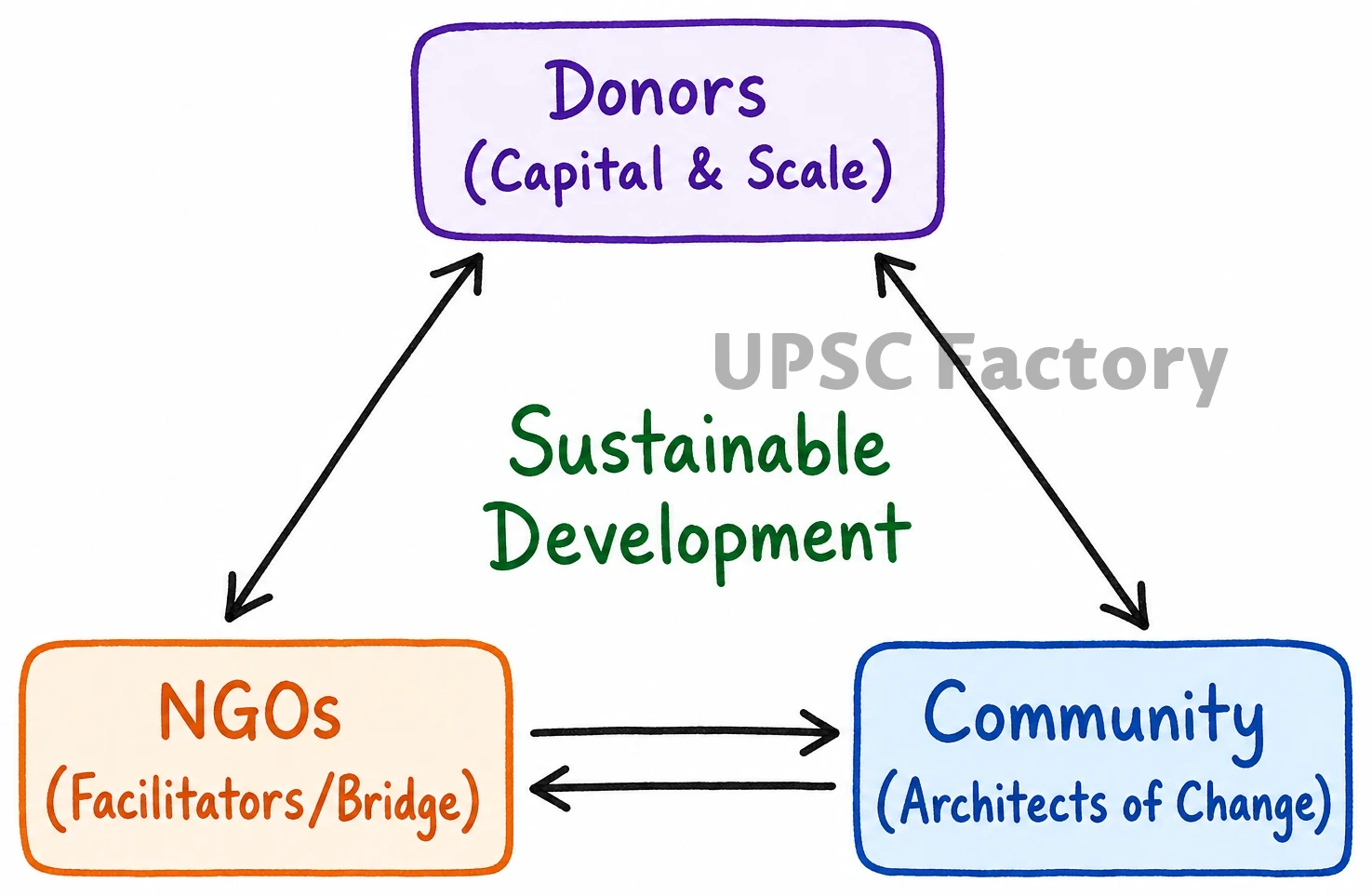
Sustainable development necessitates a symbiotic paradigm where donor agencies act strictly as facilitators of capital and capacity, while local communities remain the primary architects of change.