Model Answer:
Merton’s Reference Group Theory and Digital Identity Formation
Coined by Herbert Hyman and developed by Robert K. Merton, Reference Group Theory explains self-concept evaluation. Today, digital identity-making is a fluid negotiation against online reference groups.
Comparative Function & Relative Deprivation
Users compare themselves to curated influencer lifestyles, breeding status anxiety (Relative Deprivation) and shaping the digital looking-glass self (Charles Cooley).
Normative & Negative Groups
Online subcultures dictate behavioral norms. Conversely, Negative Reference Groups solidify identity through active opposition, visible in digital “cancel culture.”
Anticipatory Socialization
Users adopt the language of desired groups, like mirroring industry leaders on LinkedIn, utilizing “front stage” impression management (Erving Goffman).
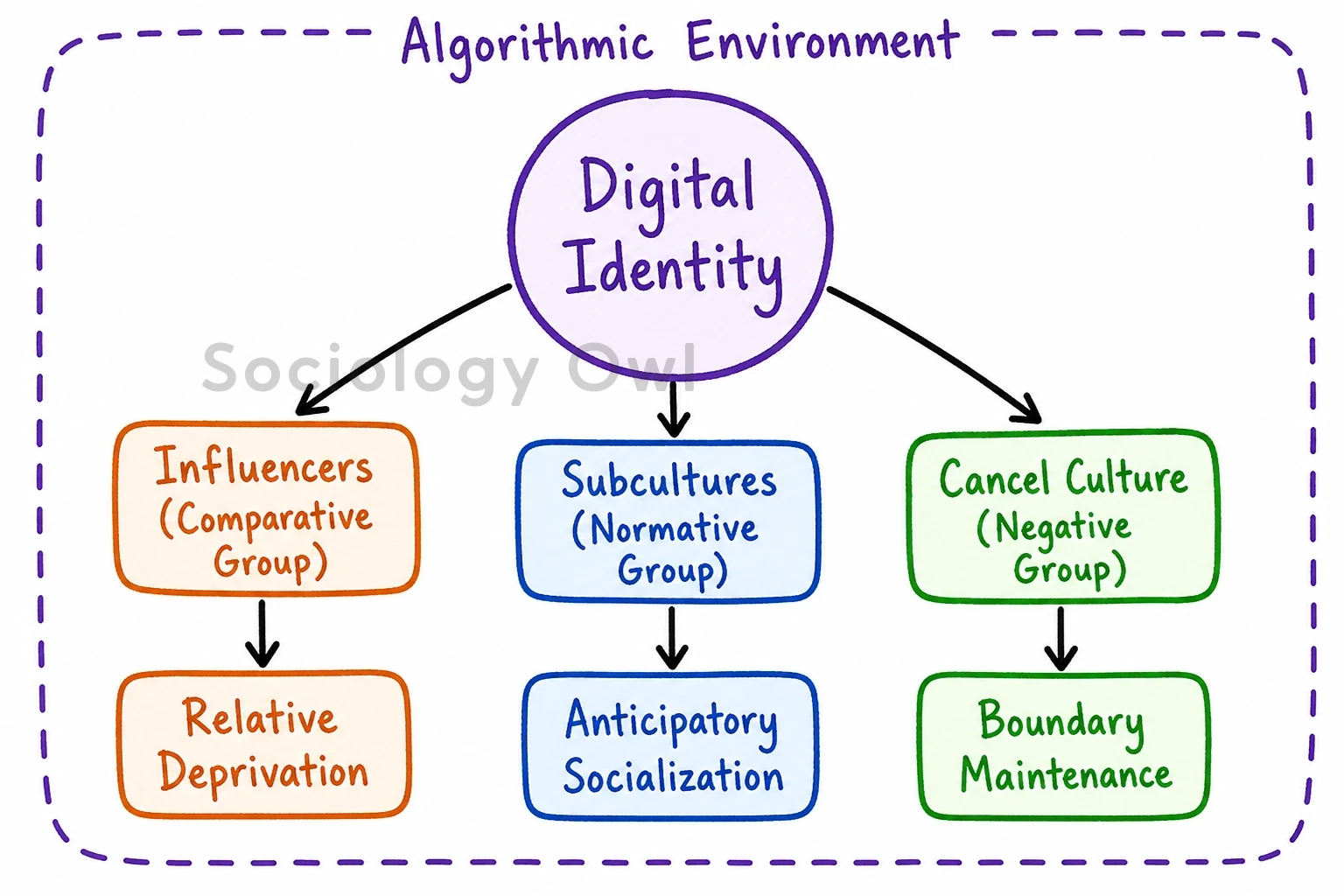
Merton assumed individuals choose their reference groups. Today, algorithms dictate these groups, creating “echo chambers.” Furthermore, digital identities remain transient, reflecting Zygmunt Bauman’s Liquid Modernity, often built on superficial parasocial relationships rather than substantive community ties.
Conclusion
Despite its pre-digital origins, Merton’s structural framework successfully decodes the complex pathways of aspiration, validation, and comparison that drive modern digital identity construction.