Model Answer:
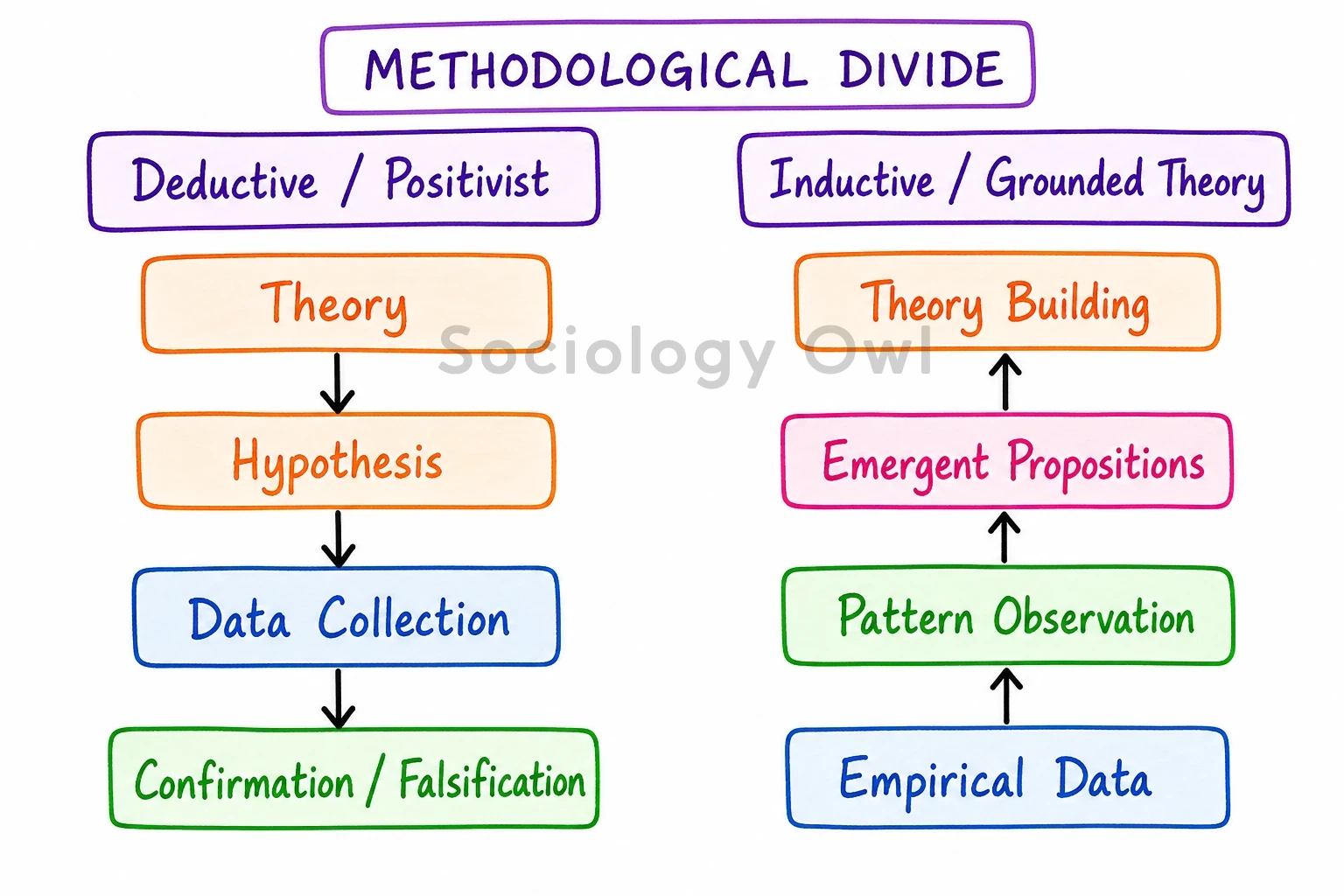
A hypothesis is a tentative, testable proposition linking variables. Goode and Hatt define it as a proposition tested for validity. Rooted in deductive logic, Karl Popper emphasizes its scientific value lies in falsifiability (testing the Null Hypothesis).
Significance of Hypothesis
- Methodological Rigor: It guides precise data collection, prevents irrelevant data accumulation, and ensures objectivity in positivist research.
- Theory Building: It bridges abstract theory and empirical reality. Robert K. Merton notes that testing hypotheses often reveals a “Serendipity Pattern”—anomalous, strategic data that sparks new theories.
Critical Evaluation
- Methodological Imposition: Max Weber (Verstehen) and Feminist scholars argue pre-formulated hypotheses impose rigid, top-down frameworks, obscuring subjective lived meanings.
- Inductive Preference: Glaser and Strauss (Grounded Theory) prefer generating propositions directly from data rather than pre-testing them, avoiding “self-fulfilling” researcher bias.
Today, researchers empirically test modern hypotheses to validate classical theories, such as testing the Marxist premise: “Participation in the global gig economy increases worker alienation.”
Conclusion
While hypotheses drive deductive-positivist research, sociology’s methodological pluralism demands combining them with inductive approaches to truly capture dynamic human complexities.