Model Answer:
Microorganisms act as natural bioreactors, offering sustainable, carbon-neutral biological pathways to generate alternative fuels and mitigate global fossil-fuel deficits.
Microbial Pathways for Alternative Fuels
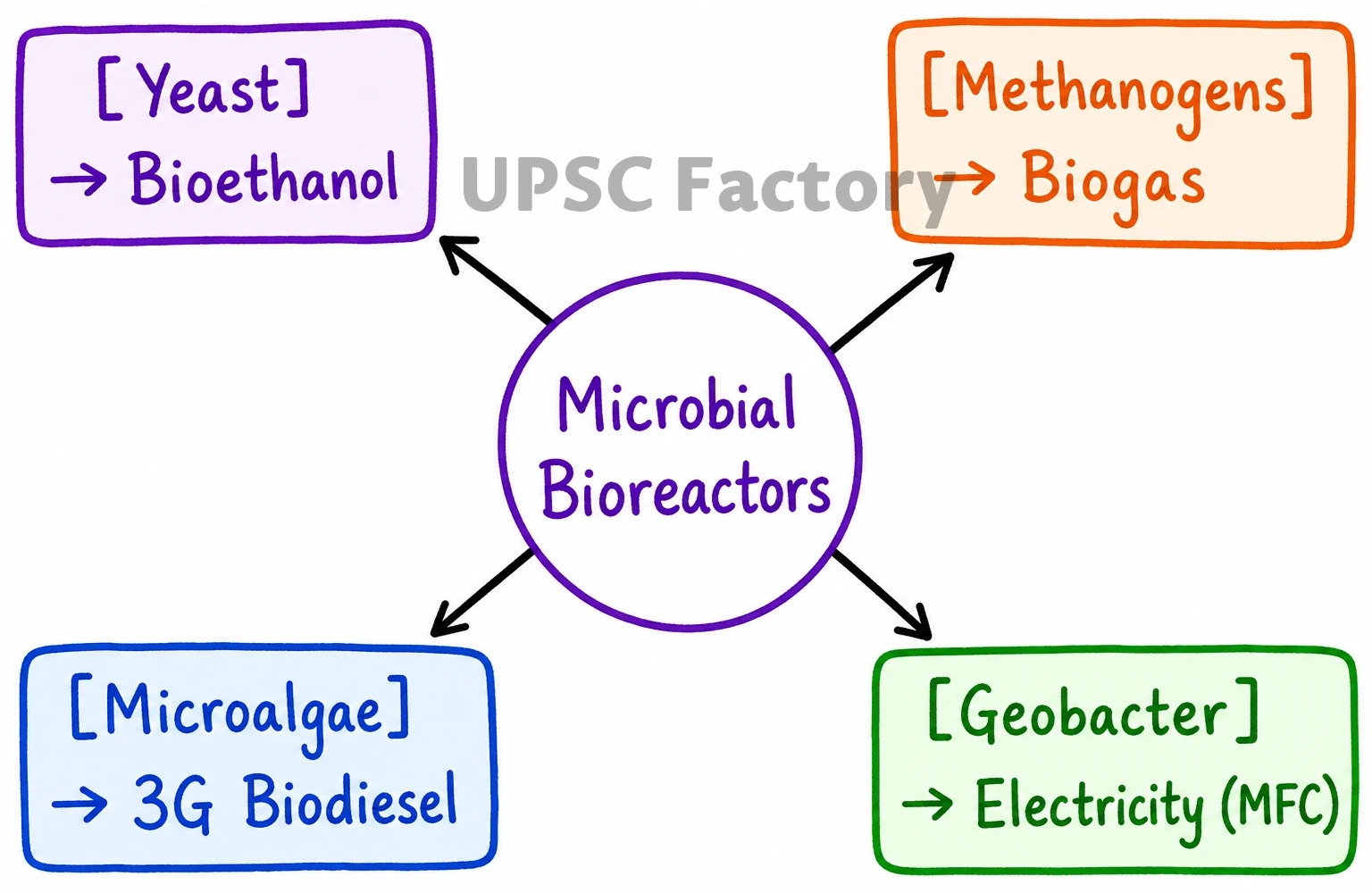
- Bioethanol Generation: Yeast (Saccharomyces cerevisiae) ferments sugars and lignocellulosic biomass into 1G and 2G ethanol (PM JI-VAN Yojana).
- Biogas Production: Methanogenic bacteria break down agricultural and municipal waste via anaerobic bio-methanation into combustible methane (GOBARdhan Scheme).
- Microalgal Biodiesel: Oleaginous microalgae rapidly accumulate high lipid content, which is extracted and transesterified into 3G biodiesel.
- Biohydrogen Generation: Cyanobacteria and dark fermentative bacteria use sunlight or organic waste to biologically produce pure green hydrogen.
- Microbial Fuel Cells (MFCs): Electrogenic bacteria (e.g., Geobacter) directly convert organic wastewater matter into electricity through metabolic electron transfer.
- Syngas Fermentation: Specialized anaerobic bacteria (Clostridium) convert industrial waste gases (CO, CO2) directly into ethanol.
Strategic Role in Energy Security
- Waste-to-Wealth Transition: Converts non-food municipal/agricultural biomass into usable energy, preventing “food-vs-fuel” conflicts.
- Import Substitution: Accelerates local fuel availability, aiding national blending targets and saving forex reserves (E20 mandate by 2025).
- Decarbonization: Microbe-derived fuels are largely carbon-neutral, aligning with global net-zero climate commitments (Panchamrit).
Leveraging synthetic biology and genetic engineering to optimize microbial metabolic pathways is crucial for scaling biofuel commercialization and ensuring long-term sustainable energy security.