Model Answer:
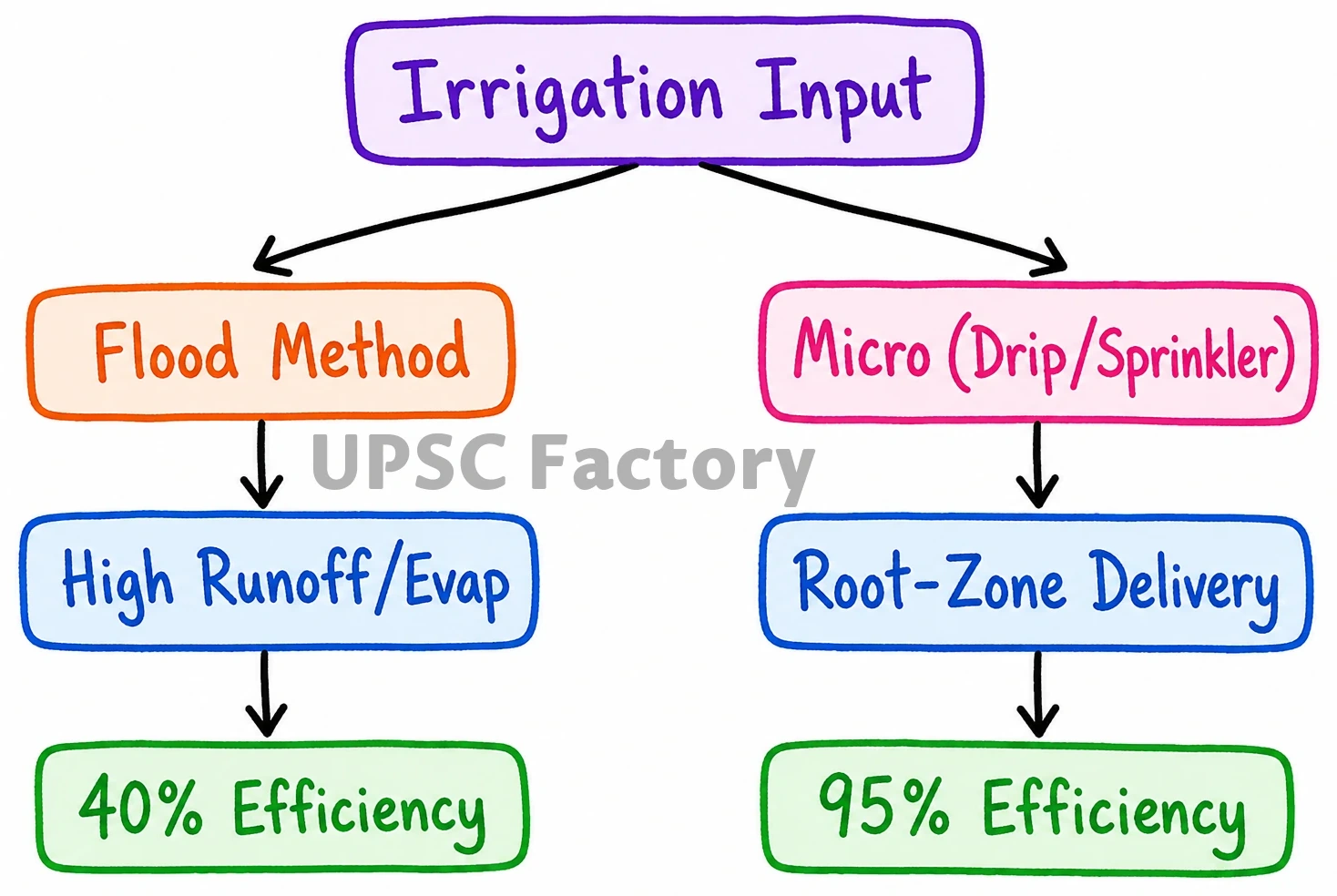
Agriculture consumes ~80% of India’s freshwater. Amid NITI Aayog’s warnings of acute water stress, micro-irrigation (MI) is critical for agricultural sustainability.
How Micro-Irrigation Mitigates the Water Crisis
- Enhanced Water Use Efficiency: Drip/sprinkler systems raise efficiency to 80-95%, replacing wasteful flood irrigation (PMKSY: Per Drop More Crop).
- Groundwater Conservation: Minimizes deep percolation and checks over-extraction in critical, over-exploited blocks (Punjab, Haryana).
- Zero Evaporation Loss: Delivers water directly to plant root zones, preventing surface runoff and evaporation.
- Arid Area Cultivation: Facilitates farming in semi-arid regions, actively aiding crop diversification (Israel’s desert agriculture model).
Extent and Limitations (Constraints to Resolution)
- Capital & Maintenance Costs: High initial setup expenses and frequent emitter clogging deter smallholder adoption.
- The Rebound Effect (Jevons Paradox): Water saved is often used to expand cultivation of water-intensive crops instead of being conserved.
- Energy Dependency: Requires continuous electricity/solar power for pressurization, unlike gravity-fed canal systems.
- Low Penetration: Currently covers only ~15% of India’s potential area due to fragmented landholdings and low awareness.
While micro-irrigation is foundational, permanently solving the water crisis requires complementing it with crop realignment, rainwater harvesting, and participatory aquifer management.